
Zr 702 / Zr 705Grades quoted
ASTM B551Plate and sheet reference
0.02 to 70 mmThickness across three bands
6.51 / 6.64 g/cm3Reference density for weight estimates
Acceptance is by the ordered specification. Values are RFQ references only. Final grade, chemistry, dimensions, inspection and documentation are confirmed by the purchase specification and mill test certificate.
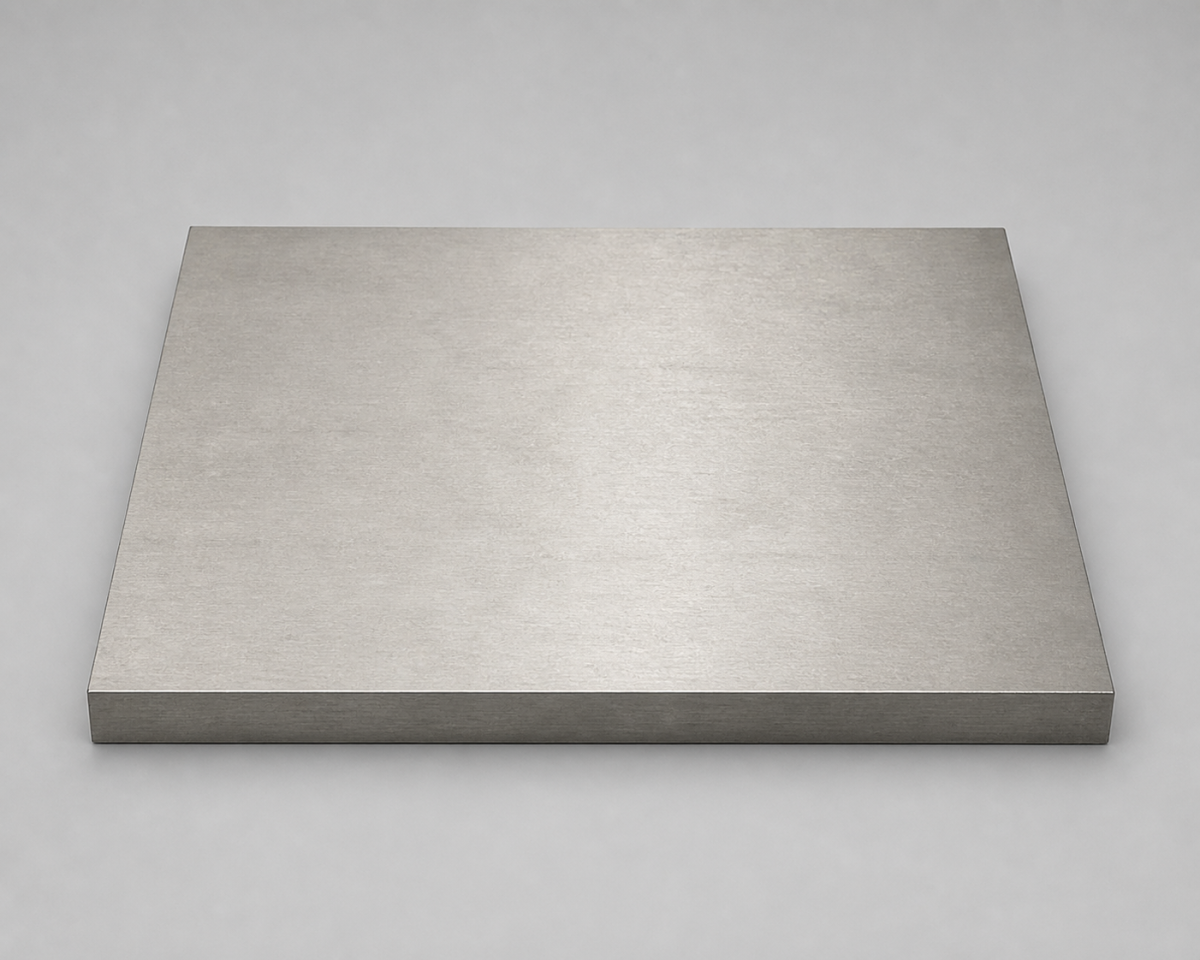
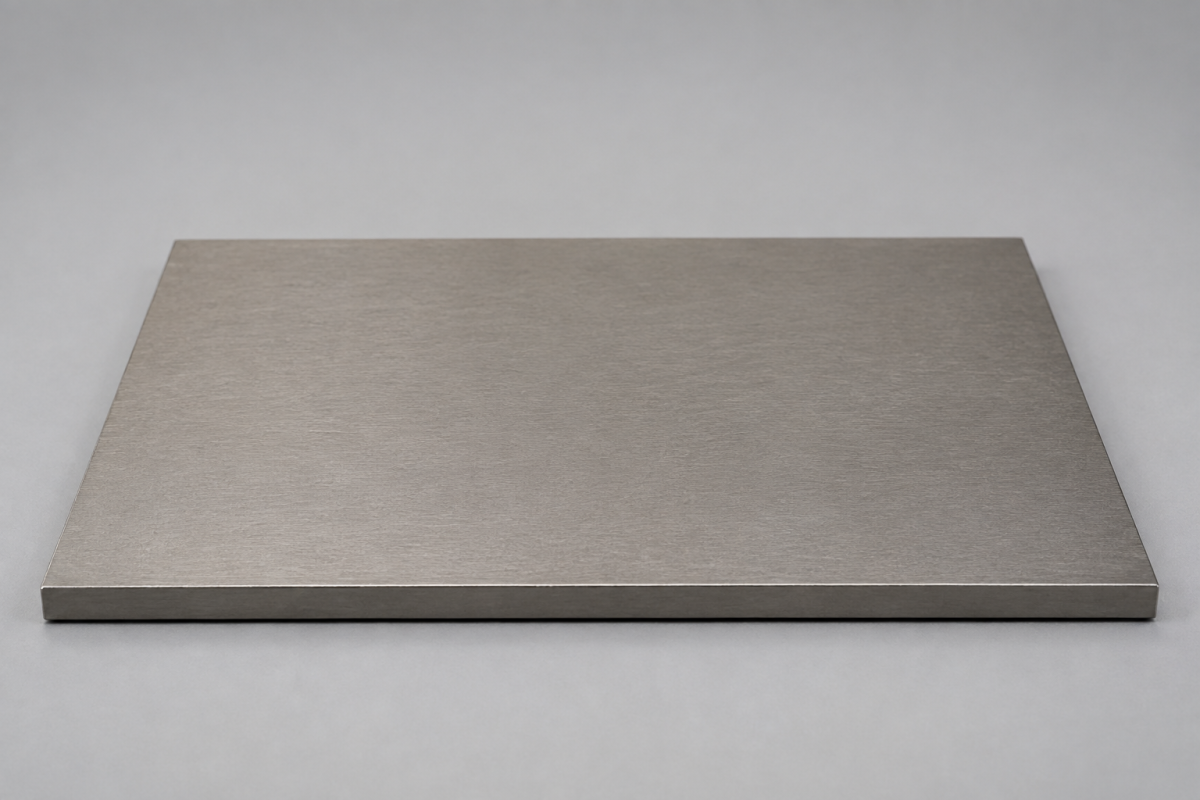
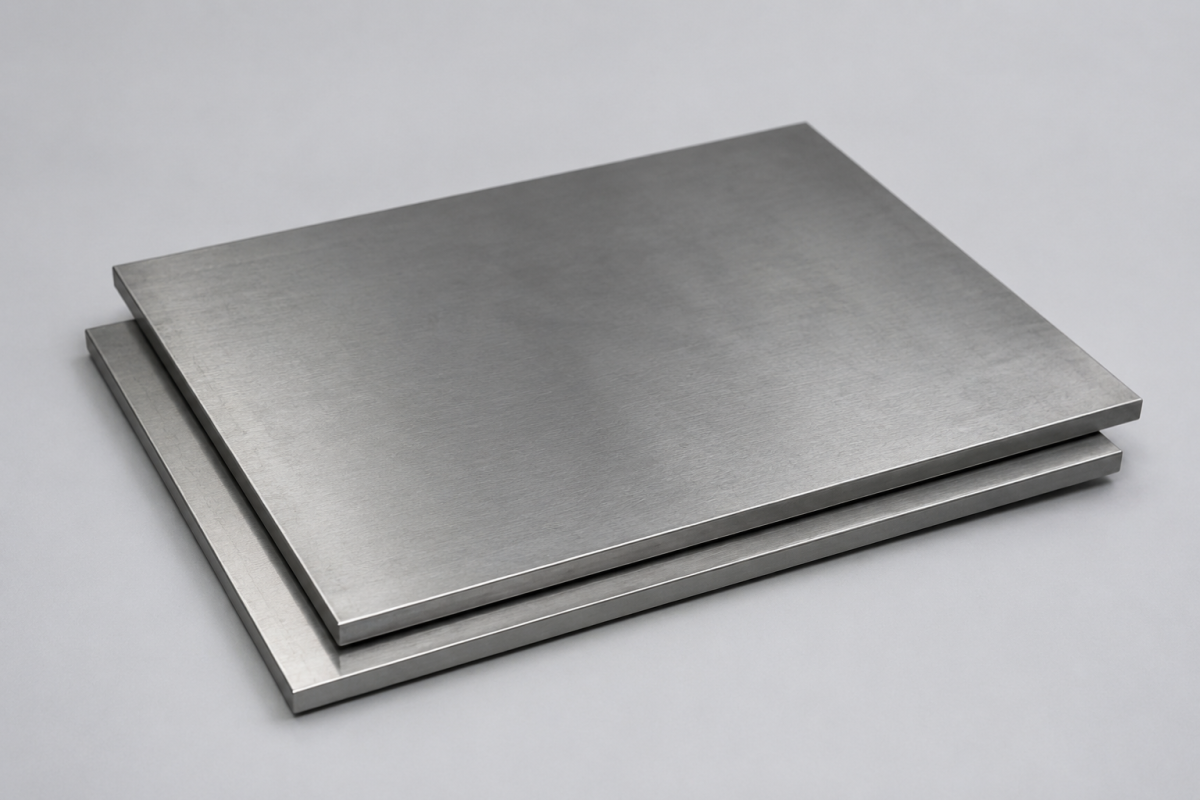
Beiyu Titanium supplies zirconium plate and sheet in Grade 702 (UNS R60702) and Grade 705 (UNS R60705, Zr-2.5Nb) against ASTM B551, from 0.02 mm foil-gauge sheet to 70 mm plate. The width a given thickness can be supplied in depends on which of three bands it falls in, and those bands are the first thing to check against a drawing.
What sizes of zirconium plate and sheet can be supplied?
The published supply ranges list three bands rather than one envelope, and each band carries its own width limit.
| Thickness | Width | Length | Supply-range row |
|---|---|---|---|
| 0.02 to 0.3 mm | To 300 mm | To the customer's requirement | Sheet, foil gauge |
| 0.5 to 3 mm | To 1200 mm | To 6000 mm | Sheet |
| 3 to 70 mm | To 2500 mm | To 6000 mm | Plate |
Two things follow from reading the bands rather than the outer limits. A 0.2 mm part 600 mm wide is outside the listed range at that thickness, where the listed width stops at 300 mm, so it goes to quotation instead of being read off the table. The same applies between 0.3 and 0.5 mm: the two bands stop at 0.3 and resume at 0.5, so a thickness in the gap is not covered by either row. At exactly 3 mm both the sheet row and the plate row apply, and their width limits differ: the sheet row stops at 1200 mm while the plate row runs to 2500 mm, so a 3 mm piece between 1200 and 2500 mm wide is inside the listed range on the plate row. The standard draws its own line somewhere else. ASTM B551 section 3.3 calls a flat product more than 3.2 mm thick plate, one from 0.13 to 4.8 mm thick and at least 150 mm wide sheet, and one from 0.13 to 4.8 mm thick and under 150 mm wide strip. At 3 mm the form under B551 is therefore sheet, or strip if the piece is narrower than 150 mm. Above 4.8 mm the width does not enter into it and the form is plate. Between 3.2 and 4.8 mm both definitions are satisfied at once, and that band sits inside our 3 to 70 mm row, so the order has to say which of the two tolerance tables it is being bought against. Put the Beiyu row and the B551 form on the order as separate lines instead of assuming the two use the same word, because B551 selects its thickness tolerance table by its own term.
Grade 702 or Grade 705?
| Grade | UNS | Alloy type | Ordered when |
|---|---|---|---|
| Zirconium 702 | R60702 | Unalloyed zirconium | Corrosion resistance governs and the part is not carrying a strength requirement of its own |
| Zirconium 705 | R60705 | Zr-2.5Nb | Strength governs as well as corrosion, typically a pressure part |
Both grades are supplied to ASTM B551 for plate and sheet, so on this page the choice between them is a materials decision and not a standards decision. Grade 702 is unalloyed zirconium; Grade 705 is the niobium grade, at 2.0 to 3.0 percent under the B551 chemistry table. Their minimums in ASTM B551 Table 3 differ accordingly: 380 MPa tensile and 205 MPa yield for 702, against 550 and 380 MPa for 705, both at 16 percent elongation in 50 mm. The same table sets the bend radius at 5T for 702 and 3T for 705, and footnotes that bend tests do not apply to material over 4.8 mm thick, which is most of the plate range. Where a drawing does not name the grade, say what the medium is and what the part has to hold, because the choice is not open once the part carries a strength requirement of its own.
How much does zirconium plate weigh?
Weight per square metre is thickness in millimetres multiplied by density in g/cm³. The figures use 6.51 g/cm³ for Grade 702 and 6.64 for Grade 705, the reference values Beiyu Titanium uses for weight estimates and in its quotations. They are not printed in the supply ranges, and they are estimating references rather than guaranteed properties.
| Thickness (example) | Grade 702, per m² | Grade 705, per m² |
|---|---|---|
| 0.5 mm | 3.26 kg | 3.32 kg |
| 1 mm | 6.51 kg | 6.64 kg |
| 3 mm | 19.53 kg | 19.92 kg |
| 5 mm | 32.55 kg | 33.20 kg |
| 10 mm | 65.10 kg | 66.40 kg |
| 25 mm | 162.75 kg | 166.00 kg |
| 50 mm | 325.50 kg | 332.00 kg |
| 70 mm | 455.70 kg | 464.80 kg |
For a piece rather than a square metre, the weight calculator has Zirconium 702 and 705 settings at the same densities.
Do not treat a calculated figure as the shipping weight. ASTM B551 section 10.8 allows the actual shipping weight of any one item of an ordered thickness and width, in any finish, to exceed the estimated weight by as much as 10 percent, so a tonnage written from a calculator needs that headroom in it.
What does ASTM B551 hold the material to?
The supply ranges above say what can be made. ASTM B551 says what the piece has to meet once it is ordered against the standard, and four of its requirements decide whether a delivery passes incoming inspection.
Condition. Section 6.3 supplies strip, sheet and plate in the recrystallized annealed condition unless the purchase order specifies otherwise, so a different metallurgical condition has to be written on the order (section 5.1.6). Section 9.1 then limits plate to two conditions, hot-rolled and hot-rolled annealed; the cold-rolled conditions in that table belong to sheet and strip, not to plate. Hot-rolled material takes one of four surfaces from section 9.2, not descaled, mechanically descaled, mechanically descaled and pickled, or as-ground, and section 9.6 supplies both hot- and cold-rolled sheet and plate with a sheared edge.
Chemistry. Table 1 sets Grade 702 at 99.2 percent zirconium plus hafnium minimum, with maxima of 4.5 percent hafnium, 0.2 percent iron plus chromium, 0.16 percent oxygen, 0.05 percent carbon, 0.025 percent nitrogen and 0.005 percent hydrogen. Grade 705 runs 95.5 percent zirconium plus hafnium minimum with 2.0 to 3.0 percent niobium and an oxygen maximum of 0.18 percent, the other maxima unchanged. Section 7.2 takes the analysis from the ingot rather than the finished piece, except hydrogen and nitrogen, which are determined on the finished product.
| Element | Grade 702 | Grade 705 |
|---|---|---|
| Zirconium + hafnium, min | 99.2 | 95.5 |
| Hafnium, max | 4.5 | 4.5 |
| Iron + chromium, max | 0.2 | 0.2 |
| Niobium | Not specified | 2.0 to 3.0 |
| Oxygen, max | 0.16 | 0.18 |
| Carbon, max | 0.05 | 0.05 |
| Nitrogen, max | 0.025 | 0.025 |
| Hydrogen, max | 0.005 | 0.005 |
Thickness tolerance, and this is the one that surprises people. Table 7 is not a plus-or-minus band. It lists how far plate may run over the ordered thickness, by thickness and by width, and its footnote fixes the under tolerance at 0.25 mm for any plate up to 250 mm thick. For widths to 2130 mm the over tolerance is 1.14 mm at 3.2 to 9.5 mm thick, 1.40 mm at 9.5 to 19 mm, 1.78 mm at 25 to 50 mm and 3.18 mm at 50 to 75 mm. Our published width runs to 2500 mm, and 2130 to 2500 mm falls in the next column of the same table, where those four figures become 1.27, 1.52, 1.90 and 3.81 mm, so read the width column before the thickness row. Thickness is measured along the longitudinal edge, at least 10 mm and not more than 75 mm in from it. A drawing that calls for a symmetric tolerance is asking for something the standard does not give, and which way it differs depends on where the band is set: a plus or minus band set at the over figure is looser underneath, while one set at 0.25 mm is tighter on top. Either way it has to be written on the order.
Documents and marking. Section 17.1 has the producer furnish a certificate that the material was manufactured, sampled, tested and inspected to the specification, with a report of the test results. Section 18.1 marks each plate, sheet and strip with the specification number, the heat number, the manufacturer's identification and the nominal thickness, in characters at least 9.52 mm high that a hot alkaline cleaning solution will remove without rubbing. On material over 150 mm wide those characters run lengthwise in rows, and the heat number has to appear at least three times across the width and again at intervals of no more than 0.6 m along the length, which are two separate requirements. Section 18.1.1 also lets the purchaser permit corner marking instead, so a drawing that wants one or the other should say which. Section 13 requires one longitudinal tensile test per lot, one hydrogen and nitrogen chemistry test per lot of finished product, and two bend tests, one longitudinal and one transverse. The bend tests apply to strip and sheet, and Table 3 exempts material over 4.8 mm thick, so for most of the 3 to 70 mm plate row there are none to report.
What should a zirconium plate enquiry include?
| Line | What to state |
|---|---|
| Grade | Zirconium 702 or 705 |
| Thickness | Nominal thickness with the tolerance the drawing needs; it also sets which width band applies (at 3 mm both rows are listed) |
| Width and length | Plate size, or the finished blank size |
| Condition and surface | As the drawing requires |
| Quantity | Pieces or total weight |
| Standard and certificate | ASTM B551, and the certificate level |
Where the other zirconium forms are listed
Round bar is listed against ASTM B550 on zirconium bar and wire, with the wire row on that page listed against AWS A5.24 and ASME SFA-5.24 for welding use, and tube against ASTM B658 and B523 on zirconium pipe and tube. The full range sits under zirconium products.
Specification detail with sources
The Beiyu Titanium supply ranges list zirconium sheet at 0.02 to 0.3 mm thick in widths to 300 mm, with the length for that band supplied to the customer's requirement (Beiyu supply statement, 19 September 2026) and at 0.5 to 3 mm thick in widths to 1200 mm and lengths to 6000 mm, and zirconium plate at 3 to 70 mm thick in widths to 2500 mm and lengths to 6000 mm, against ASTM B551. Zirconium is the one metal among the refractory-metal entries in those ranges where the standards are paired with each product form rather than listed once for the element, so B551 sits against plate and sheet, B550 against round bar, and AWS A5.24 with ASME SFA-5.24 against wire. Those last two are the bare welding rod and electrode specifications, while ASTM B550/B550M covers zirconium bar and wire in its own scope at section 1.1 and sets a uniform-feeding temper for welding wire at section 8.1, so the wire row and B550 are not alternatives to one another. Two grades are carried across the forms, Grade 702 (UNS R60702) and Grade 705 (UNS R60705).
The densities of 6.51 and 6.64 g/cm³ are the values Beiyu Titanium uses for weight estimates and in its quotations. They are not printed in the supply ranges, which publish no density figure for zirconium, so they are shown here as estimating references and not as supply-range values.
Compare refractory metal products
Refractory metals categoryProduct
Material
Reference
Best for
Zirconium Bar and Wire
Zr702 / Zr705
ASTM B550 / AWS A5.24
Bar and wire for chemical-process parts
>
Tantalum Pipe and Tube
Ta / Ta alloy
ASTM B521
Acid-resistant pipe and tube
>
Niobium Pipe and Tube
Nb1 / Nb1Zr
ASTM B394
Tube and pipe RFQs
>
Tantalum Plate and Sheet
Ta / Ta alloy
ASTM B708
Plate, sheet and lining parts
>
Niobium Bar and Sheet
Nb1 / Nb1Zr
ASTM B392 / B393
Bar, sheet and machined blanks
>
Molybdenum Bar and Rod
Mo / TZM
ASTM B387
High-temperature rods and parts
>
Tungsten Bar and Rod
W / heavy alloy
By drawing / ASTM B777
High-density and high-temperature parts
>
Zirconium Pipe and Tube
Zr702 / Zr705
ASTM B658 / B523
Acid-service tube and pipe
>
Zirconium Plate and Sheet
Zr702 / Zr705
ASTM B551
Plate, sheet and lining parts
Related zirconium products
Zirconium category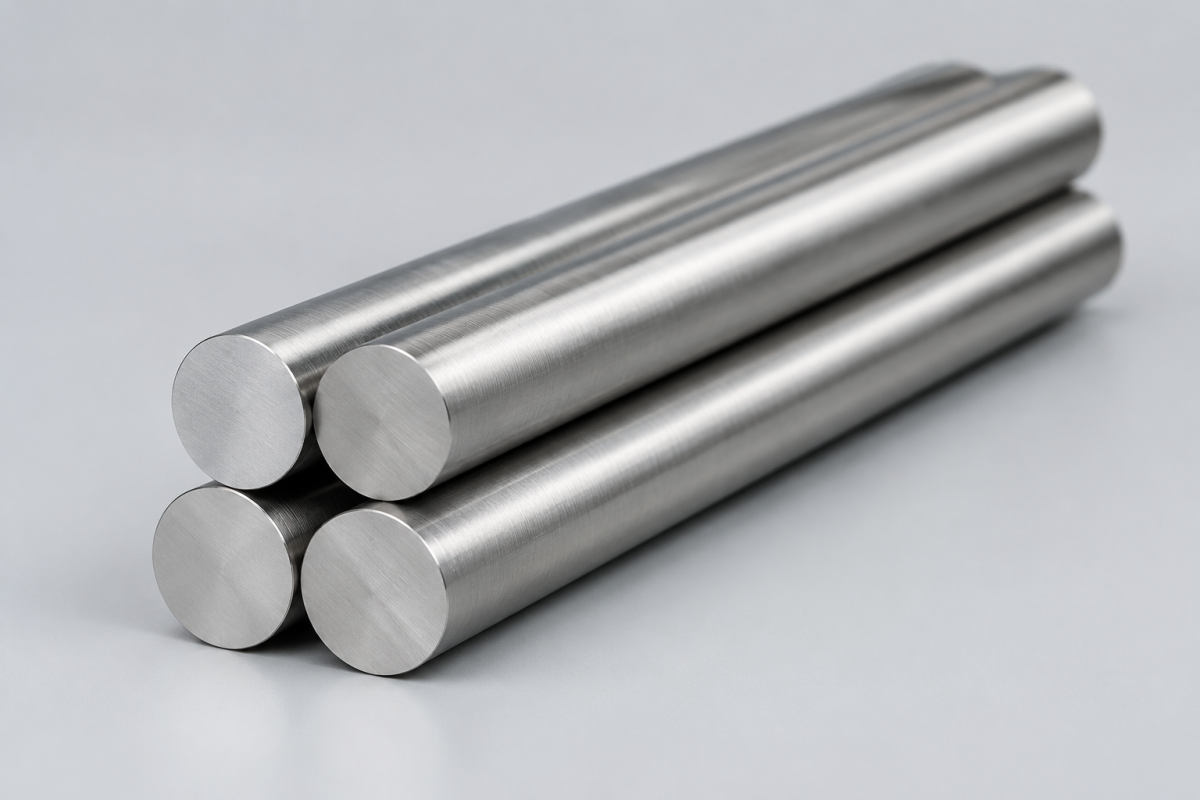
Request a quote for Zirconium Plate and Sheet
Send the grade, thickness, width and length, condition, quantity, and the standard and certificate requirements. Beiyu replies with quotation and documentation scope.