
Grade 7 is commercially pure titanium with 0.12 to 0.25 wt% palladium per ASTM B265, UNS R52400, Werkstoff 3.7235. Strength matches Grade 2 at 345 MPa minimum tensile, so the palladium buys corrosion performance in reducing acids rather than mechanical properties.
Grade 7 titanium is commercially pure titanium with a small palladium addition. ASTM specifies it as unalloyed titanium with 0.12 to 0.25 percent palladium under UNS R52400; Ti-0.15Pd is the common trade shorthand, not the specified value. The metal behaves like Grade 2 in strength and forming, but the palladium gives it the best corrosion resistance of any unalloyed titanium grade, which is the only reason to pay for it.
European designation: In the EN and DIN system this is Werkstoff 3.7235 (Ti-Pd); in ASTM it is UNS R52400 (Grade 7), bar to ASTM B348 or DIN 17862, sheet to ASTM B265 or DIN 17860.
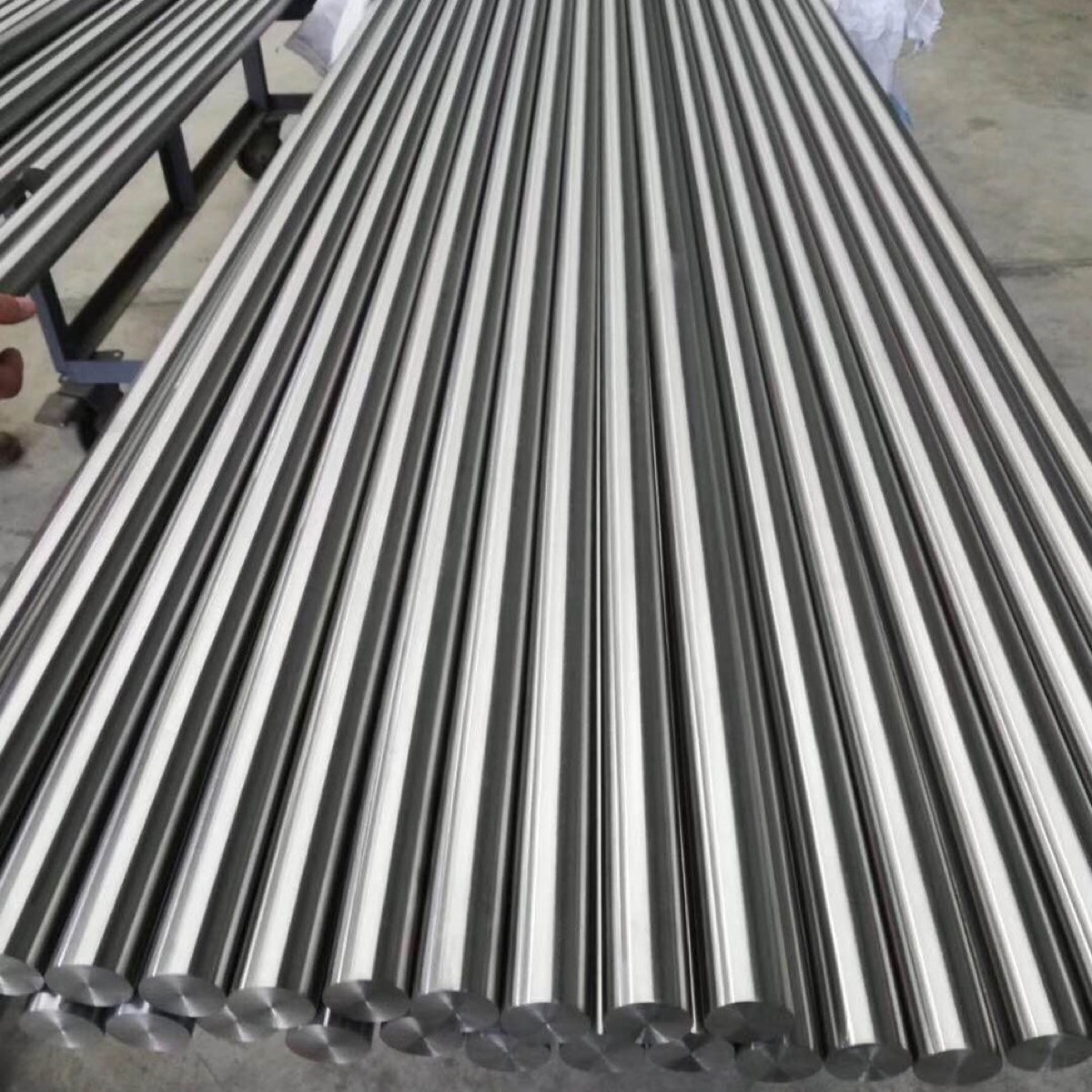
What Grade 7 titanium is
Grade 7 sits in the commercially pure family alongside Grade 1, 2, 3 and 4. It is, in effect, Grade 2 with 0.12 to 0.25 percent palladium added. That single change does not alter the mechanical numbers in any useful way, so a Grade 7 bar and a Grade 2 bar of the same size carry the same load. What changes is electrochemistry. Grade 7 is covered by the usual titanium product standards under the Grade 7 / UNS R52400 designation, including ASTM B265 for sheet and plate, ASTM B348 for bar and billet, ASTM B338 for tube, ASTM B381 for forgings and ASTM B363 for fittings.
| Field | Value the guide states |
|---|---|
| Family | Commercially pure, alongside Grades 1, 2, 3 and 4 |
| Composition | Grade 2 with 0.12 to 0.25 percent palladium added |
| UNS | R52400 |
| Oxygen | 0.25 percent maximum, per ASTM B265 Table 1 |
| Iron | 0.30 percent maximum, per ASTM B265 Table 1 |
| Carbon | 0.08 percent maximum, per ASTM B265 Table 1 |
| Nitrogen | 0.03 percent maximum, per ASTM B265 Table 1 |
| Hydrogen | 0.015 percent maximum, per ASTM B265 Table 1 |
Composition and why the palladium matters
Titanium protects itself with a thin oxide film. In oxidising conditions that film stays intact, which is why Grade 2 handles seawater and chlorides well. In reducing conditions, such as hot dilute hydrochloric or sulfuric acid, the film can break down and the metal starts to corrode. The palladium in Grade 7 shifts the metal’s corrosion potential into the range where the oxide film stays passive, so the protection holds in acids and crevices where Grade 2 is borderline or fails. The amount needed is small, which is why the addition is only about 0.15 percent.
Grade 11 is the matching palladium grade based on Grade 1 rather than Grade 2, used where maximum formability is wanted. Grade 7 is the common choice because it keeps Grade 2 strength.
Mechanical properties
Grade 7 matches Grade 2:
| Property | Value the guide states (matching Grade 2) |
|---|---|
| Minimum tensile strength | 345 MPa (50 ksi) |
| Minimum yield strength | 275 MPa (40 ksi) |
| Minimum elongation | 20 percent |
| Density | 4.51 g/cm3 |
- Minimum tensile strength: 345 MPa (50 ksi)
- Minimum yield strength: 275 MPa (40 ksi)
- Minimum elongation: 20 percent
- Density: 4.51 g/cm3
These are commercially pure numbers. Grade 7 is a corrosion grade, not a high-strength grade. If a part needs high strength, the answer is Grade 5 (Ti-6Al-4V), not Grade 7.
Where Grade 7 earns its cost
Specify Grade 7 only where the service is genuinely aggressive and Grade 2 would be at risk:
| Condition the guide names | Detail |
|---|---|
| Hot dilute reducing acids | Hydrochloric, sulfuric and phosphoric acid |
| Crevice corrosion conditions | Hot chloride brines under gaskets, deposits or tube-to-tubesheet joints |
| Process upsets | Where pH or temperature swings into the reducing range |
- Hot dilute reducing acids: hydrochloric, sulfuric and phosphoric acid at concentrations and temperatures that attack unalloyed titanium.
- Crevice corrosion conditions: hot chloride brines under gaskets, deposits or tube-to-tubesheet joints.
- Process upsets where pH or temperature swings into the reducing range.
In plain seawater, neutral chlorides and oxidising acids, Grade 2 already performs, and Grade 7 adds cost without adding service life.
Grade 7 vs Grade 2
Same metal, same strength, same fabrication. The only difference is the palladium and the corrosion behaviour it buys. Choose Grade 2 as the default for corrosion service, and step up to Grade 7 when the medium is a reducing acid or a hot crevice environment. Grade 7 costs more because palladium is a precious metal and its price moves, so the extra cost is real and worth confirming at the time of order.
| Compared with | What the guide states |
|---|---|
| Grade 2 | Same metal, same strength, same fabrication. The only difference is the palladium and the corrosion behaviour it buys |
| Grade 5 | Grade 5, Ti-6Al-4V, is the high-strength alloy. Buyers searching for Grade 7 bolts or fasteners are often after strength, but Grade 7 is the wrong grade for that |
Grade 7 vs Grade 5 (a common mix-up)
Buyers searching for Grade 7 titanium bolts or fasteners are often after strength, but Grade 7 is the wrong grade for that. Grade 5, Ti-6Al-4V, is the high-strength alloy with roughly 895 MPa tensile, and it is what structural and high-load fasteners are made from. Grade 7 fasteners exist, but their job is corrosion resistance in chemical service, not load. Decide first whether the part is driven by strength or by corrosion, then pick Grade 5 or Grade 7 accordingly. The titanium grades comparison guide sets the grades side by side.
Typical applications
Grade 7 shows up wherever titanium meets aggressive chemistry: chemical processing and reactors, hydrometallurgy and autoclave service, chlor-alkali plants, pulp bleaching, phosphoric acid and fertiliser plants, and geothermal brine handling. In equipment terms that means heat exchangers, condensers, columns, pumps, valves, fittings and fasteners for those duties.
| Where the guide says it appears | Detail |
|---|---|
| Chemical processing and reactors | Aggressive chemistry |
| Hydrometallurgy and autoclave service | Aggressive chemistry |
| Chlor-alkali plants | Aggressive chemistry |
| Pulp bleaching | Aggressive chemistry |
Forms and standards
Grade 7 / UNS R52400 is available in the same forms as Grade 2:
| Form | Standard the guide names |
|---|---|
| Sheet and plate | ASTM B265 |
| Strip and coil | Supplied in the same forms as Grade 2 |
| Round bar | ASTM B348 |
| Tube | ASTM B338 |
| Forgings | ASTM B381 |
| Fittings | ASTM B363 |
| ERTi-7 welding wire | AWS A5.16, so welds keep the same corrosion grade as the base metal |
- Grade 7 sheet and plate to ASTM B265
- Grade 7 strip and coil
- Grade 7 round bar to ASTM B348
- Grade 7 pipe to ASTM B338, forgings to ASTM B381, fittings to ASTM B363
- ERTi-7 welding wire to AWS A5.16, so welds keep the same corrosion grade as the base metal
The titanium standards reference lists the ASTM, ASME and equivalent specifications to state on an order.
Cost and how to specify it
The palladium drives both the price and its movement, so a Grade 7 quotation is tied to the palladium market at the time of order. Keep the cost where it belongs by specifying Grade 7 only on the wetted parts that need it, and Grade 2 elsewhere. On an enquiry, state the grade, the standard, the form and dimensions, the service medium and temperature, and the certificate scope. Grade 7 is supplied with EN 10204 3.1 mill test certificates and heat-number traceability on request.
| Point | What the guide states |
|---|---|
| What drives the price | The palladium drives both the price and its movement |
| Quotation validity | A Grade 7 quotation is tied to the palladium market at the time of order |
Common questions
What is Grade 7 titanium? Commercially pure titanium with about 0.15 percent palladium, designated UNS R52400, used for its corrosion resistance in reducing acids and crevices.
Is Grade 7 stronger than Grade 2? No. The mechanical properties are the same. The difference is corrosion resistance.
Grade 7 or Grade 5? Grade 5 for strength, Grade 7 for corrosion. They solve different problems and are not interchangeable.
Why is Grade 7 expensive? Palladium is a precious metal and its price moves, so the extra cost over Grade 2 tracks the palladium market.
For Grade 7 titanium by form, standard and quantity, send an RFQ to [email protected].
Reading a Grade 7 certificate: the palladium figure and how it was obtained
Grade 7 is bought for what a small palladium addition does in reducing acid service, so the palladium figure is the one line on the certificate that carries the commercial reason for the order. The value has a named basis in the standard rather than a house method.
| What is reported | Method ASTM B348 references | What naming it settles |
|---|---|---|
| Alloy composition, including palladium | ASTM E539 and ASTM E2371 | The two spectrometric routes named in the referenced documents |
| Oxygen and nitrogen | ASTM E1409 | Interstitials that govern formability on this grade |
| Hydrogen | ASTM E1447 | Determined by a named method rather than assumed |
| Tensile properties | ASTM E8, at the strain rate the specification sets, 0.003 to 0.007 in./in./min through the specified yield strength | How the strength figures were generated |
Naming a method settles how a value was produced. It does not add an examination stage the order did not request.
What a Grade 7 order should state beyond the grade
| Line | Why a Grade 7 order in particular needs it |
|---|---|
| Governing standard with the grade | The palladium band belongs to the specification, not to the shorthand name |
| Product form and section | Decides which tolerance table and which acceptance apply |
| Delivery condition, stated apart from surface finish | The metallurgical state and the finish are two fields |
| Reporting scope | Decides what appears beyond the results the specification already mandates |
| Certificate type | EN 10204 3.1 mill test certificate with heat number traceability |
A Grade 7 enquiry that names the standard alongside the grade can be quoted against the correct composition band on the first pass. One that names only the commercial shorthand invites a quotation against a figure the specification does not contain.
Specification detail with sources
ASTM B265 Table 1 fixes the full Grade 7 chemistry, not only the palladium line: oxygen is capped at 0.25 percent, iron at 0.30, carbon at 0.08, nitrogen at 0.03 and hydrogen at 0.015 percent, the same interstitial ceilings the standard applies to Grade 2. That identity is why the two grades share strength and forming behaviour, and it means an incoming Grade 7 certificate is read exactly like a Grade 2 certificate, with the palladium result as the single added acceptance value to verify.
Two related palladium grades belong in the same enquiry conversation. ASTM B265 Grade 16, UNS R52402, holds palladium at 0.04 to 0.08 percent and carries the same strength minimums as Grade 2, and TIMET’s published technical literature on the 0.05 percent palladium grades documents corrosion behaviour in many media comparable to Grade 7. Grade 11, UNS R52250, applies the palladium addition to the Grade 1 base, for which ASTM B265 lists a minimum tensile strength of 240 MPa and a minimum yield strength of 170 MPa, so it is chosen where deep drawing and forming govern rather than strength.