
Titanium clad steel plate is ordered as a composite, so total thickness alone is not enough. The line item must name the titanium cladder and steel backer separately, give each thickness, define the bonding route, invoke ASTM B898 or a project specification, set bond and ultrasonic acceptance, and assign edge preparation, forming and welding responsibilities. The five company pages below show different published capabilities. They do not rank suppliers or prove a plate is qualified for a pressure vessel.
How this five-company source set was built
The comparison used the query titanium clad steel plate supplier manufacturer on 1 September 2026. Inclusion required a company-owned source that explicitly described titanium bonded to carbon or stainless steel and exposed at least one material pair, thickness, size, bond, inspection or fabrication field. Beiyu, India-based companies, marketplaces, directories and rankings were excluded. Supplier process claims remain attributed. The vessel code, project design and approved fabrication procedure decide whether an offered plate can be used.
| Company | Owned resource | Published scope | Proof still due |
|---|---|---|---|
| NobelClad | Titanium clad capability | Explosion-bonded titanium cladder/backer combinations and project context | Exact pair, thicknesses, plate size, bond/test route and production slot |
| JFE Steel | Roll-clad titanium plate | Rolled bonding route, tube-sheet context, shapes, surface and range prompts | Material pair, available range, bond map, properties and fabrication basis |
| Taicheng Clad Metal | Titanium clad steel page | Cladder/backer examples, layer bands, size, bond routes and B898 prompts | Offered pair, one route, actual plate, acceptance and source records |
| Fugo Tech | Clad plate capability | Titanium-steel material combinations, project forms and document context | Producer/site, metal pair, route, inspection plan and current capability |
| Nippon Titanium Metals | Titanium clad plate page | Grade/backer combinations, B898 route, layer ranges, sizes and uses | Source mills, exact pair, bond process, tests, dimensions and delivery |
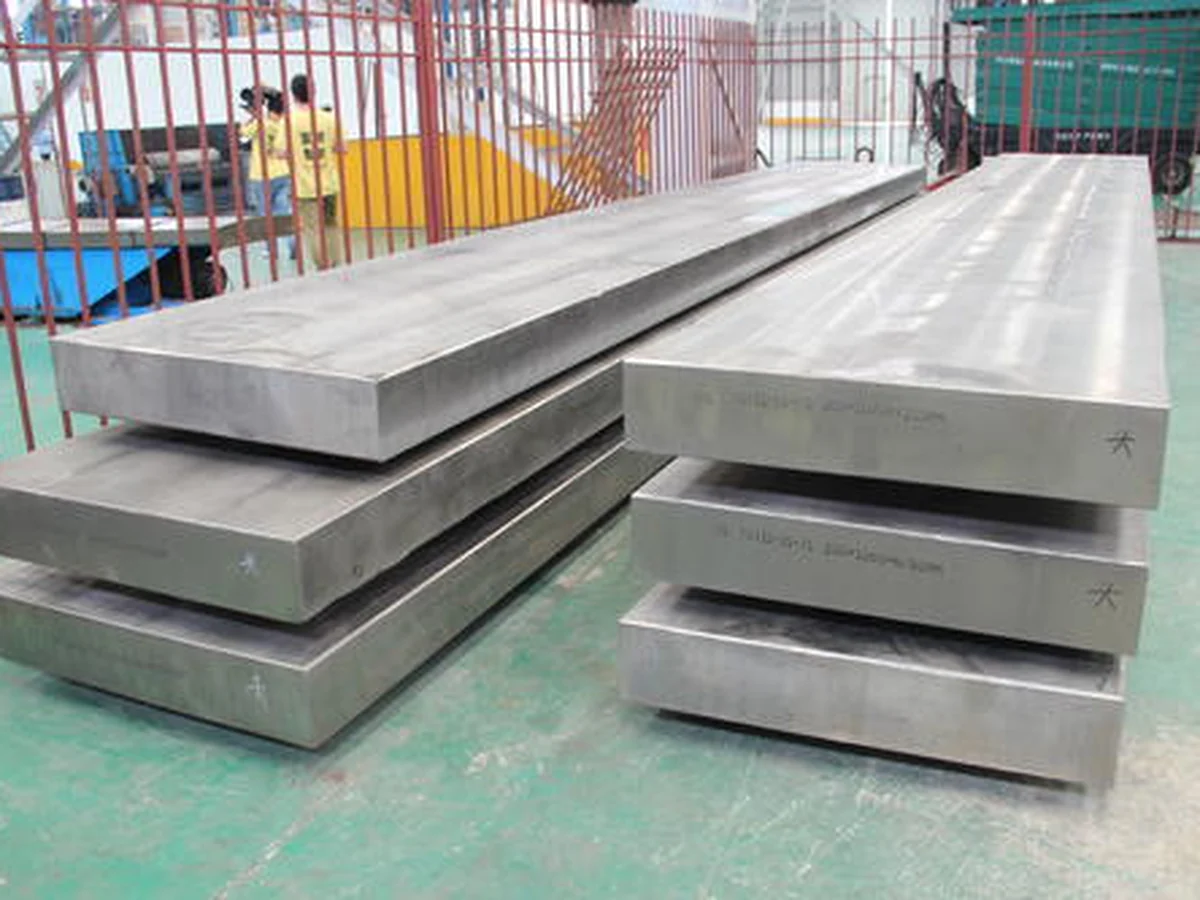
Write both metals and both thicknesses
A complete line might identify Grade 1 or Grade 2 titanium cladder, SA-516 Grade 70N backer, cladder thickness, backer thickness and finished total thickness. Add the cladder orientation, permitted intermediate layer, plate size, edge condition, flatness and surface finish. Invoke ASTM B898 with revision or a project-specific route, then state every supplementary requirement rather than assuming the standard contains the vessel designer’s full acceptance plan. If stainless steel is the backer, name its grade separately. Do not accept Ti/steel as a material designation. Ask the supplier to return a plate sketch showing cladder side, rolling or explosion layout, margins, test coupons, UT coordinates and piece marks.
| Control point | Buyer input | Required supplier return |
|---|---|---|
| Material pair | Titanium grade/specification plus steel grade/specification | Source mill, heats, chemistry, condition and permitted interlayer |
| Layer geometry | Cladder, backer and total thickness; size, tolerance and orientation | Measured map, trim margins, flatness, mass and cladder-side mark |
| Bond route | Explosion, roll, hybrid or approved route and repair limits | Named site, sequence, heat treatment, repairs and process records |
| Bond acceptance | B898/project revision, UT coverage, unbond limits and shear/bend tests | Technique/map, coupon location, actual results and disposition |
| Fabrication | Edges, forming direction, weld details, lining transitions and protection | Fabricator boundary, procedure needs, allowances and delivery state |
Bonding route changes fabrication questions
Explosion bonding and roll bonding can both produce useful plate, but they leave different questions for a specific vessel. The designer and fabricator need the delivered thermal history, cladder surface condition, flatness, residual margins and available forming data. A head or shell course may put the bond through cold or hot forming, welding, local grinding and heat exposure. Agree who qualifies forming and attachment weld procedures, how the titanium side is shielded from iron contamination, and where bond integrity is rechecked after fabrication. If multiple plates will be joined, plan seam locations and lining transitions before purchase. Large-plate capability matters only when the ordered material pair, thickness combination, test plan and shipping route fit the project.
Use the UT map and edge plan to accept the plate
The release pack should link each plate mark to both source MTCs, the bonding batch, heat treatment if any, dimensional map and bond-inspection record. Review UT coverage, coordinate system, calibration, reportable indications, allowed unbond zones and final disposition. Confirm cladder and backer thickness separately across the agreed grid; a compliant total can still hide the wrong layer distribution. Inspect trimmed edges to see the bond line and any separation, repair or contamination. Record cladder-side surface defects, flatness and handling damage before forming. Verify coupon identity and actual shear, bend or other ordered results. Protect the titanium face from steel slings, forks, grinding dust and wet carbon-steel contact during transport and storage.
Normalize the composite plate line
Send a single plate schedule that separates materials, layers, bond route, acceptance and downstream fabrication. Require bidders to mark every unavailable combination or alternate route. Compare usable plate area and test coverage before price per tonne because trimming margins, coupons and unbond dispositions change the material that reaches fabrication.
| RFQ group | Buyer states | Supplier returns |
|---|---|---|
| Equipment | Service chemistry, design cases, code, forming and weld plan | Material assumptions, limits and required design/fabricator decisions |
| Composite | Cladder/backer specs, conditions, each thickness and interlayer rule | Source mills/heats, exact pair, delivered state and deviations |
| Plate | Finished size, tolerances, flatness, surface, edges and orientation | Production/trim size, usable area, mass and measured maps |
| Bond/testing | Route, B898/project revision, UT, coupons and repair limits | Process site, ITP, coverage, criteria, actual results and repairs |
| Traceability | Plate marking linked to both metals and every processing step | Indexed genealogy, MTCs, bond batch, maps and release certificate |
| Commercial | Quantity, sequence, packing, transport limits and required date | Minimum batch, schedule, shipping plan, validity and exclusions |
Beiyu enquiry route for titanium clad steel plate
Beiyu sits outside the five-company comparison. Its clad-plate enquiry records the process service, titanium cladder and steel backer grades, separate layer thicknesses, total thickness, plate size, bond route, B898 or project revision, UT map, coupon tests, unbond and repair limits, surface, edges, forming/welding boundary, double-metal genealogy, quantity and transport constraints. Capability is checked against the exact composite schedule rather than a generic titanium clad label.
Use the titanium clad steel plate, general titanium clad plate comparison, titanium in pressure-vessel cladding and titanium chemical equipment fabricators for the product route, broader comparison and adjacent engineering controls. Send drawings, quantity, inspection scope, required date and destination with the controlled schedule. Resolve every returned exception before award.
Related supplier lists and supply ranges
- titanium sheet and plate supply range
- Alloy 625 Plate Suppliers
- Grade 12 Titanium Plate Suppliers
- Grade 23 Titanium Plate Suppliers
- Grade 5 Titanium Plate Suppliers
- Inconel 600 Plate Suppliers
- Nickel 201 Plate Suppliers
- all supplier lists by product family
Specification detail with sources
Beiyu Titanium publishes this list and is not part of the comparison above. For readers who want the publisher’s own figures on the same basis they would ask of any supplier on this page, the material is specified to ASTM B265, and each order carries an EN 10204 type 3.1 certificate with heat and pour numbers by order scope.
Beiyu supplies thin plate and sheet 0.5 to 3 mm thick in widths to 1500 mm, and heavy plate 3 to 70 mm thick in widths to 2500 mm, both in lengths to 6000 mm, with surface condition stated on the order.
These are Beiyu published supply figures and inspection parameters, not limits taken from the standard; limit values belong to ASTM B265 and are confirmed against the exact edition named on the purchase order. Certification is stated as a production capability, and no stock position, delivery time or price is implied by any figure on this page.