
Grade 2 / 5Common titanium fastener grades
DIN / ISO / ASTMStandard by RFQ
Thread checkGo/no-go gauge when required
MTC / 3.1Traceability by lot
Acceptance is by the ordered specification. Final dimensions, tolerances, grade, inspection and documentation are confirmed by the drawing, purchase order and mill test certificate.
Titanium Bolts, Nuts, Screws and Custom Fasteners
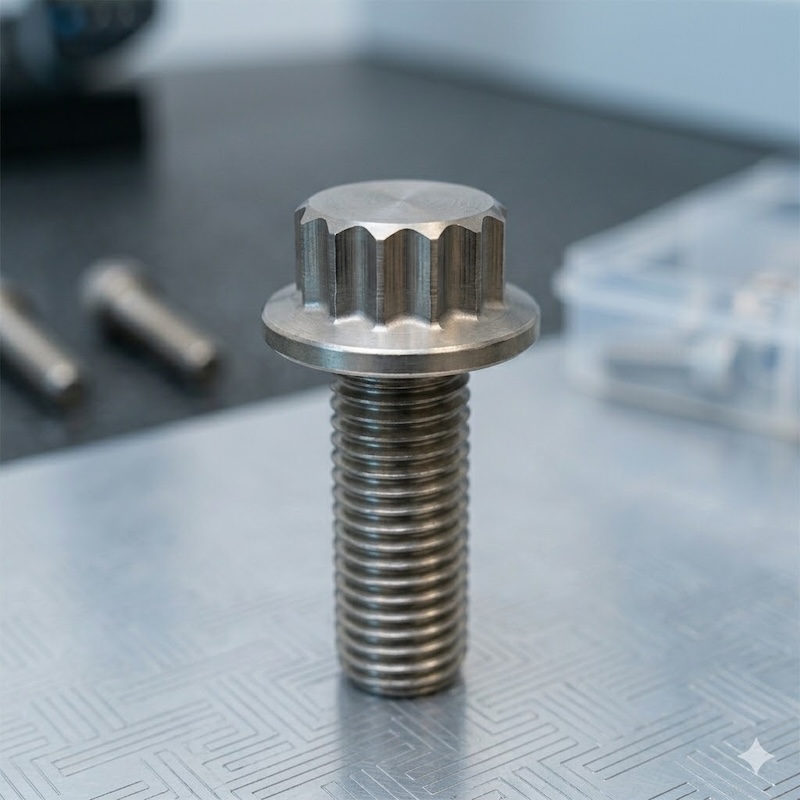
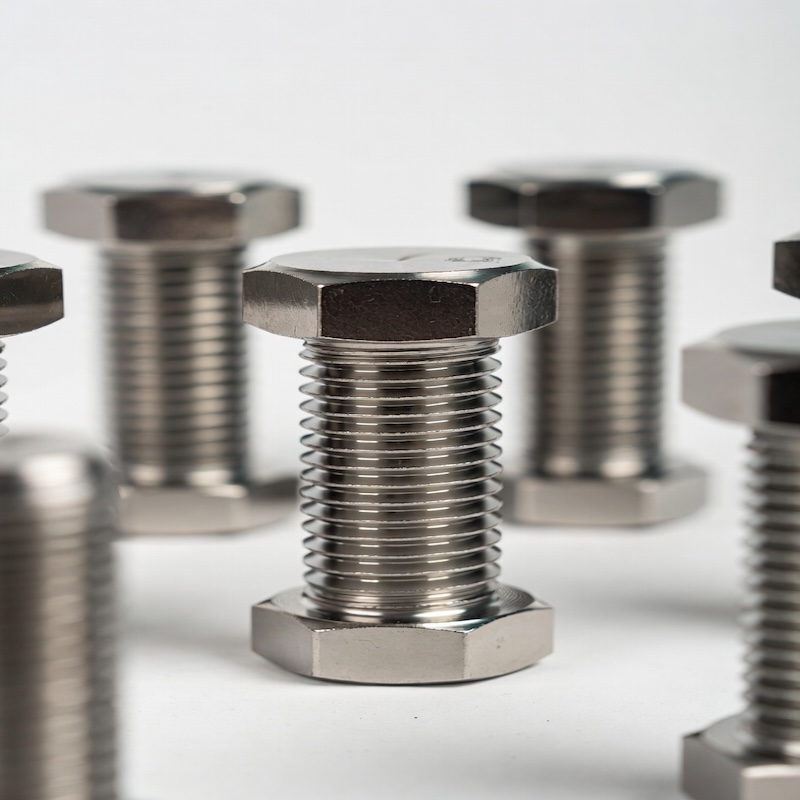
Beiyu supplies titanium fasteners for aerospace-related assemblies, marine hardware, medical equipment, chemical equipment, cycling components, industrial fixtures and custom machined parts. Common products include titanium bolts, hex nuts, washers, screws, threaded rods, studs and drawing-based fasteners.
Grade 2 titanium fasteners are commonly used where corrosion resistance and moderate strength are required. Grade 5 / Ti-6Al-4V is selected where higher strength-to-weight ratio is needed. Grade 7 and Grade 12 may be reviewed for chemical or marine environments where corrosion behavior is more important than standard mechanical strength classes.
Grades and Standards
| Common grades | Grade 2, Grade 5 / Ti-6Al-4V, Grade 7, Grade 12. |
|---|---|
| Material references | ASTM B348 bar material, ASTM F67 / ASTM F136 for medical-related titanium where applicable, and project-specific fastener standards. |
| Thread standards | Metric, UNC, UNF or drawing-based thread requirements. |
| Product forms | Bolts, screws, nuts, washers, studs, threaded rods and custom machined fasteners. |
Size Range and Surface Finish
Fastener RFQs should specify thread standard, nominal diameter, length, head type, drive type, tolerance, grade, quantity and surface condition. Common head styles include hex head, socket head, countersunk head, button head and custom machined head forms according to drawings.
Surface finish may include machined, polished, pickled, passivated or anodized surface depending on application. For fasteners used in chemical, marine or medical-related assemblies, buyers should confirm cleanliness, burr control, thread quality and whether galling prevention or lubricant requirements must be considered.
Common Applications
| Sector and use |
|---|
| Aerospace-related lightweight assemblies and brackets |
| Marine hardware exposed to seawater or chloride environments |
| Chemical equipment covers, clamps and fixtures |
| Medical instruments and implant-related manufacturing where the specified grade allows |
| Sports, cycling and high strength-to-weight components |
Inspection and Documentation
| Check | Scope |
|---|---|
| Material certificate | Fastener orders, on request |
| Chemical composition | Fastener orders, on request |
| Mechanical properties | Fastener orders, on request |
| Dimensional inspection | Fastener orders, on request |
| Thread gauge inspection | Fastener orders, on request |
| Surface inspection | Fastener orders, on request |
| PMI testing | Critical applications, to be specified before production or procurement |
| Hardness testing | Critical applications, to be specified before production or procurement |
| Tensile testing | Critical applications, to be specified before production or procurement |
| Salt spray testing | Critical applications, to be specified before production or procurement |
| Third party inspection | Critical applications, to be specified before production or procurement |
Packaging and Export Information
| Item | Practice |
|---|---|
| Protection | Threads, heads and surface finish |
| Small parts | Commonly packed by size and item number, then placed in cartons or wooden cases for export |
| Traceable orders | Labels should identify grade, size, quantity, heat number and purchase order reference |
RFQ Information Needed
| Fastener spec | Options |
|---|---|
| Fastener type | Bolt, nut, washer, screw, stud or custom part |
| Material | Grade and material standard |
| Thread and geometry | Thread standard, diameter, length, head type and drive type |
| Drawing | Required for non-standard fasteners |
| Finish and commercial | Surface finish, quantity and packaging requirement |
| Verification | Certificate, testing and inspection requirements |
FAQ
Which titanium grade is used for high-strength fasteners?
Grade 5 / Ti-6Al-4V is commonly used when higher strength-to-weight ratio is required. Grade 2 is more common for corrosion-resistant fasteners where moderate strength is acceptable.
Can titanium fasteners be anodized?
Anodized surface can be specified for color identification or appearance requirements. Buyers should confirm color, surface preparation, batch consistency and whether the fastener will be used in a decorative or functional assembly.
What information is needed for custom titanium screws?
Send a drawing or sample information with grade, thread type, diameter, length, head type, drive type, tolerance, surface finish, quantity and certificate requirements.
Related Bar Material and Fastener RFQ Pages
For custom titanium bolts, screws, nuts and washers, buyers often specify the upstream bar material together with the finished fastener drawing. Review the titanium bar hub, Grade 2 titanium bar, Grade 5 Ti-6Al-4V titanium bar, the ASTM B348 bar guide and the titanium grades comparison guide before confirming thread, diameter, length, head type, quantity and MTC requirements.
Common applications
Review fabrication and machining support22
Ti
Titanium
Chemical equipment boltingConfirm medium, temperature, drawing tolerance, inspection and documentation scope before quotation.Marine hardware and assembliesConfirm medium, temperature, drawing tolerance, inspection and documentation scope before quotation.Aerospace-related nonstandard partsConfirm medium, temperature, drawing tolerance, inspection and documentation scope before quotation.Medical and industrial fixture fastenersConfirm medium, temperature, drawing tolerance, inspection and documentation scope before quotation.
Specification detail with sources
Titanium fastener stock starts as bar, and the bar definition is dimensional rather than descriptive. ASTM B348 separates bar from billet by cross-sectional area, placing the boundary at 16 square inches, 10,323 square millimetres, and it further limits rectangular bar to a width not exceeding 254 millimetres with a thickness above 4.8 millimetres (ASTM B348, bar and billet definitions). Fastener diameters sit far below that boundary, which is why the classification question on a fastener enquiry is about the finished part rather than about the stock it is machined from.
The composition limits behind a fastener certificate are heat analysis limits taken at the melt. For Grade 2 the oxygen limit is 0.25 percent maximum with iron at 0.30 percent maximum, and for Grade 5 the aluminium range is 5.5 to 6.75 percent with vanadium at 3.5 to 4.5 percent (ASTM B348, chemical requirements). Those figures are produced by named methods rather than by a general practice: ASTM B348 references ASTM E1409 for oxygen and nitrogen, ASTM E1447 for hydrogen and ASTM E1941 for carbon, with rounding to ASTM E29 before any value is compared to a limit (ASTM B348, referenced documents and test methods). Naming a method settles how a value was produced. It does not add an examination the order did not ask for. Beiyu Titanium supplies fasteners with an EN 10204 3.1 mill test certificate carrying heat number traceability, with the reporting scope set by the order.
Size range and materials for titanium fasteners
A fastener enquiry is settled by three lines rather than one: the thread size, the material with its grade, and the standard the head and thread geometry follow. The size band also decides which materials are available, which is the part most often assumed.
| Thread size | Materials supplied at this size |
|---|---|
| M0.3 to M3 | Titanium Grade 2, Grade 7 and Grade 12 |
| M3 to M64 | Titanium Grade 2, Grade 5, Grade 7 and Grade 12; zirconium 702; tantalum; niobium; nickel and nickel alloys |
Bolts, screws, nuts and washers are produced across that range by turning, pressing and milling, on CNC lathes, milling machines and cold heading presses. The route for a given part is confirmed at quotation against the drawing, so a drawing carries further than a description.
Head and thread geometry is quoted against DIN, JIS or GB as the order names, and the material is a separate line again: a fastener made from Grade 5 to a DIN head form is two specifications on one part, and the certificate reports against the material one. The ranges above are the Beiyu Titanium supply envelope; sizes and head forms outside them are quoted against the drawing.
Compare related titanium components
Titanium accessories categoryProduct
Material
Reference
RFQ focus
Titanium Flanges
Gr2 / Gr5 / Gr7 / Gr12
ASTM B381
Pipe connection RFQs
>
Titanium Pipe Fittings
Gr2 / Gr7 / Gr12
ASTM B363
Elbows, tees and reducers
>
Titanium Fasteners
Gr2 / Gr5
DIN / ISO / ASTM
Bolts, nuts and screws
Grade 2 Titanium Flange
Grade 2
ASTM B381
Commercially pure titanium flange
>
Titanium Agitator Shafts
Gr2 / Gr5 / Gr7 / Gr12
Drawing
Long rotating shafts
>
Titanium Elliptical Heads
Gr2 / Gr7
Drawing / ASME
Pressure-equipment formed parts
>
Related RFQ pages
Titanium accessories category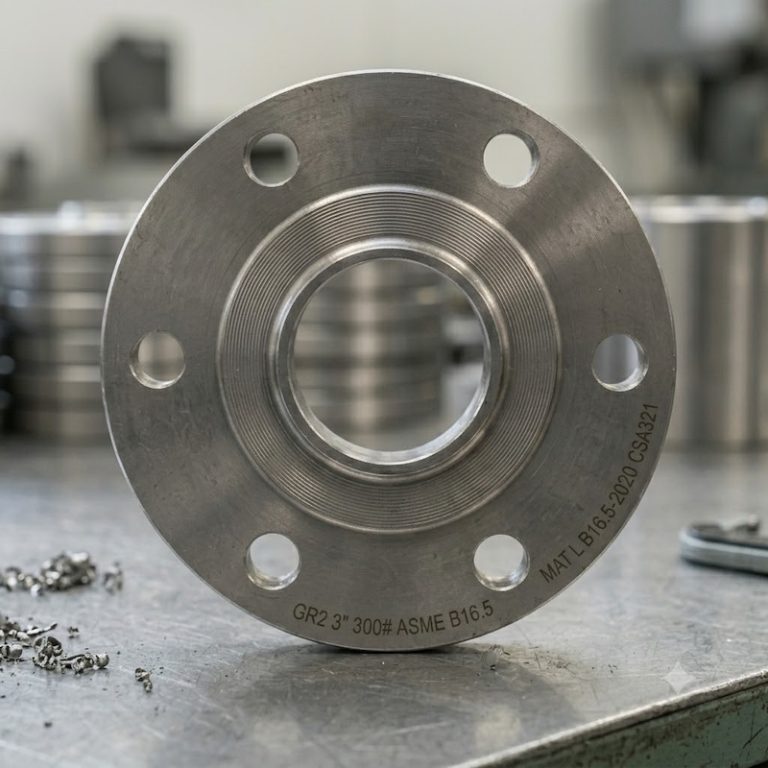
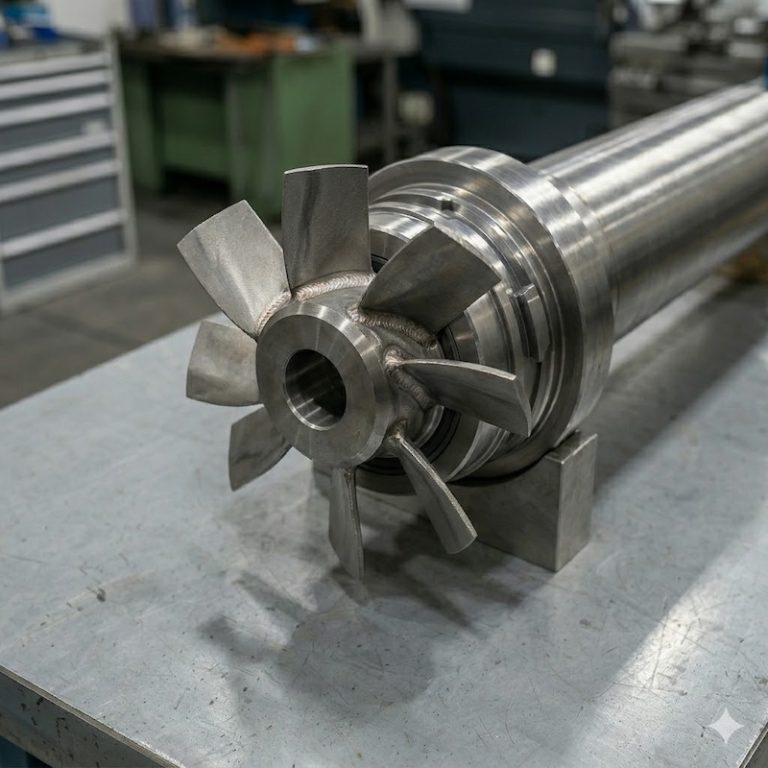
A supplier comparison for this family, built from one search on one day and read from each company's own site, is at Titanium Fastener Suppliers: Six Company Pages Compared.
Request a quote for Titanium Fasteners | Grade 2 / Grade 5 Bolts, Nuts and Screws
Send grade, drawing or standard, dimensions, quantity, inspection scope and delivery destination. Beiyu replies with quotation, lead time and documentation scope.
Titanium fastener suppliers and manufacturers
Beiyu Titanium supplies titanium bolts, nuts, washers and studs in commercially pure Grade 2 and Grade 5 (Ti-6Al-4V), made to the specified thread standard, diameter, length and head type. Include any required MTC, EN 10204 3.1 and heat-number traceability scope with the fastener RFQ; the quotation and purchase order confirm the final document scope.