
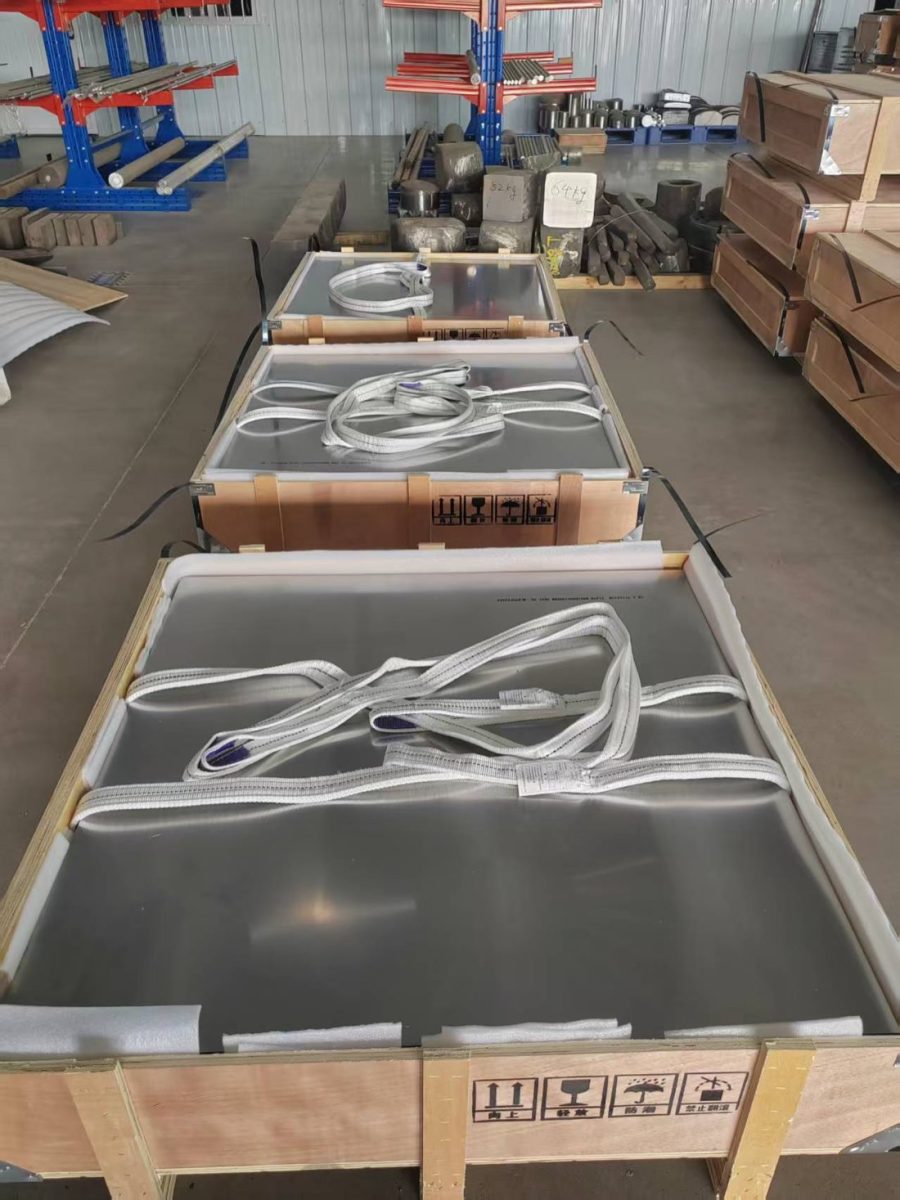
Grade 2 titanium sheet looks like a simple commercially pure flat-product purchase, yet the source pages expose four routes: ASTM B265 or ASME SB-265 industrial sheet, AMS 4902 aerospace material, ASTM F67 medical material and cut stock sold from a service center. Those labels cannot be merged into one certificate line. The buyer must hold chemistry, condition, thickness, rolling direction, surface and forming requirements constant before five prices mean the same thing.
How the five company sources were selected
We froze the query Grade 2 titanium sheet supplier ASTM B265 on 1 September 2026. An eligible result had to be owned by the supplying company and identify Grade 2 sheet or a sheet-and-plate route plus at least one usable field such as standard, thickness, condition, processing, traceability or inventory. Beiyu, excluded-geography companies, marketplaces, directories, independent rankings and pages that only defined Grade 2 without a flat-product supply route were removed. Discovery order is not a supplier score.
A public page can identify a likely supply route. It cannot prove allocated stock, current program approval, final schedule, lot compliance or suitability of material not yet produced or assigned. Those points remain dated quotation fields.
Company pages that met the rule
| Company source | Page role | Visible fields | RFQ check |
|---|---|---|---|
| United Titanium | Grade 2 sheet inventory page | ASTM/ASME B265 certification, sheet thicknesses, standard dimensions and cut-to-size route | Return the exact item, heat, country/mill source, finished cut size and current allocation |
| Titanium Industries | Titanium sheet range page | Grade 2 sheet, B265/SB-265/F67 references, thickness band and service-center processing | Choose one specification scope and confirm original mill release, grain direction and cut tolerance |
| ATI | Producer Grade 2 page | UNS identity, composition, mechanical requirements and B265/AMS/F67 routes | Bind the offered product form, specification, condition and actual heat values to the order |
| Continental Steel & Tube | Grade 2 supply page | Chemistry, multiple forms and the sheet/plate specification route | Prevent bar, plate, tube or generic-grade evidence from standing in for the ordered sheet |
| Dongmeng Group | Grade 2 sheet/plate page | B265/SB-265 identity, dimensions, rolling language and MTC field | Separate sheet from plate and return finished thickness, flatness, surface and document scope |
The set includes producer, stockholder, processor and export-supply roles. That difference matters: one party may melt and roll the sheet, another may only hold master sheets, and another may cut blanks. The RFQ should name which organization controls the heat, rolling, anneal, flattening, surface finishing, subdivision and final release. A service-center certificate package must preserve the original mill identity rather than replacing it with a generic statement of compliance.
Freeze the Grade 2 sheet route before comparing price
| Decision | Choices visible in the source set | Required written return |
|---|---|---|
| Specification | ASTM B265 Grade 2, ASME SB-265, AMS 4902, F67 or customer-controlled combination | One revision list, precedence rule and written exceptions |
| Sheet geometry | Nominal or minimum thickness, width, length, flatness, squareness, edge and rolling direction | Finished usable envelope, tolerance source and cut-plan return |
| Condition | Annealed/cold-rolled/hot-rolled route, surface scale removal and buyer forming state | Mill condition, thermal history, surface process and evidence |
| Material identity | UNS R50400 heat chemistry, oxygen/iron/interstitial control and no silent CP-grade substitution | Original MTC with actual values and retained heat trace |
| Acceptance | Tensile orientation, bend/forming need, surface, dimensions, cleanliness and optional PMI | Methods, sample location, criteria, lot definition and reports |
A request for “Grade 2 sheet” leaves too much open. Sheet thickness can sit near a supplier’s internal plate boundary; a quotation can therefore change the dimensional convention, tolerance table or processing route without changing the alloy label. State whether the final blank must remain within tolerance after leveling, cutting and protective-film removal. If parts will be bent or deep drawn, give the forming direction, minimum inside radius, blank orientation and surface that faces the tool. Ask the supplier to return rolling direction on the sheet or cut plan when anisotropy matters. Do not convert a catalogue’s application list into a corrosion warranty; the design basis still needs medium composition, concentration, temperature, aeration, velocity and crevice details.
For a formed chemical-equipment liner, start from the finished developed blank rather than a round-number stock sheet. Mark weld seams, grain direction, trim allowance, corner radii, lifting points and zones that cannot contain edge damage. Decide whether the fabricator or sheet supplier owns flattening and whether a protective film is compatible with cleaning and welding. Iron-bearing shop contamination can be introduced after a perfect MTC is issued, so define handling, segregation, cleaning and verification at the correct stage. If the drawing calls for medical or aerospace controls, list those separately; a Grade 2 chemistry result does not by itself establish program approval, special-process qualification or finished-part validation.
Architectural skin creates a different Grade 2 sheet check. Freeze panel module, reveal width, clip spacing, wind-load deflection, thermal movement and oil-canning criterion before selecting gauge. Mock up bead blasting, hairline texture or anodized color on the production heat because viewing angle and lot-to-lot surface variation can dominate acceptance. Show drainage, isolation washers and dissimilar-metal joints on the façade detail. Agree which face receives removable film, when film is stripped, and how fingerprints, adhesive residue and transit abrasion are judged under project lighting. These appearance controls are not mill chemistry tests and should remain on a separate finish sample and inspection record.
A conflict between visible page fields is a verification prompt, not proof that a company cannot supply the item. Preserve the difference, request a clean technical return and let the purchase order control final identity, geometry, responsibility and acceptance.
Send one controlled RFQ
| RFQ line | Buyer input | Supplier return |
|---|---|---|
| Material | Grade 2/R50400, specification/revision, application and approval boundary | Exact offered scope, source, exceptions and precedence |
| Sheet | Thickness × width × length, quantity, tolerance, flatness, edge and grain direction | Finished dimensions, tolerance basis, cut plan and weight basis |
| Process | Rolling/anneal state, surface, film, cleaning and prohibited contact | Mill/processor route, thermal history and handling controls |
| Inspection | Chemistry, mechanical orientation, dimensions, surface and special checks | ITP, sampling, methods, criteria and actual lot results |
| Documents | Original MTC, CoC, processor records, traceability and marking | Release index linked to heat, parent sheet and every blank |
| Commercial | Master sheet or cut blanks, quantity, packing, required date and destination | Current stock/production status, yield, MOQ, schedule, validity and exclusions |
Remove any source that cannot return the exact material, deliverable, finished geometry and acceptance evidence. Compare price, schedule and terms only after technical lines, responsibility boundary and document scope are aligned.
Where Beiyu fits
Beiyu is outside the five-company set. Its Grade 2 sheet enquiry route asks for the controlling B265/SB-265/AMS/F67/customer revision, exact sheet dimensions and thickness convention, annealed or other ordered condition, rolling direction, flatness and surface, forming or fabrication inputs, actual heat chemistry, inspection and certificate scope, quantity, cut plan, packing and destination. Availability is confirmed for the exact combination rather than inferred from the overall sheet range.
The fields in this section describe only Beiyu’s published enquiry route. They do not score the companies above and do not transfer to another company’s catalogue.
Related Beiyu pages
- Grade 2 titanium sheet
- Titanium sheet supplier pages compared
- ASTM B265 titanium sheet and plate guide
- How to compare titanium quotations
Published by Beiyu Titanium. Beiyu is outside the five-company set. The sequence is a dated discovery snapshot after the stated exclusions, not a rating or endorsement.
Related supplier lists and supply ranges
- titanium sheet and plate supply range
- Grade 4 Titanium Sheet Suppliers
- Grade 7 Titanium Sheet Suppliers
- Niobium Sheet Suppliers
- Ti-15-3-3-3 Titanium Sheet Suppliers
- Titanium Sheet Suppliers
- Titanium Tube Sheet Suppliers
- all supplier lists by product family
Specification detail with sources
Beiyu Titanium publishes this list and is not part of the comparison above. For readers who want the publisher’s own figures on the same basis they would ask of any supplier on this page, the material is specified to ASTM B265, and each order carries an EN 10204 type 3.1 certificate with heat and pour numbers by order scope.
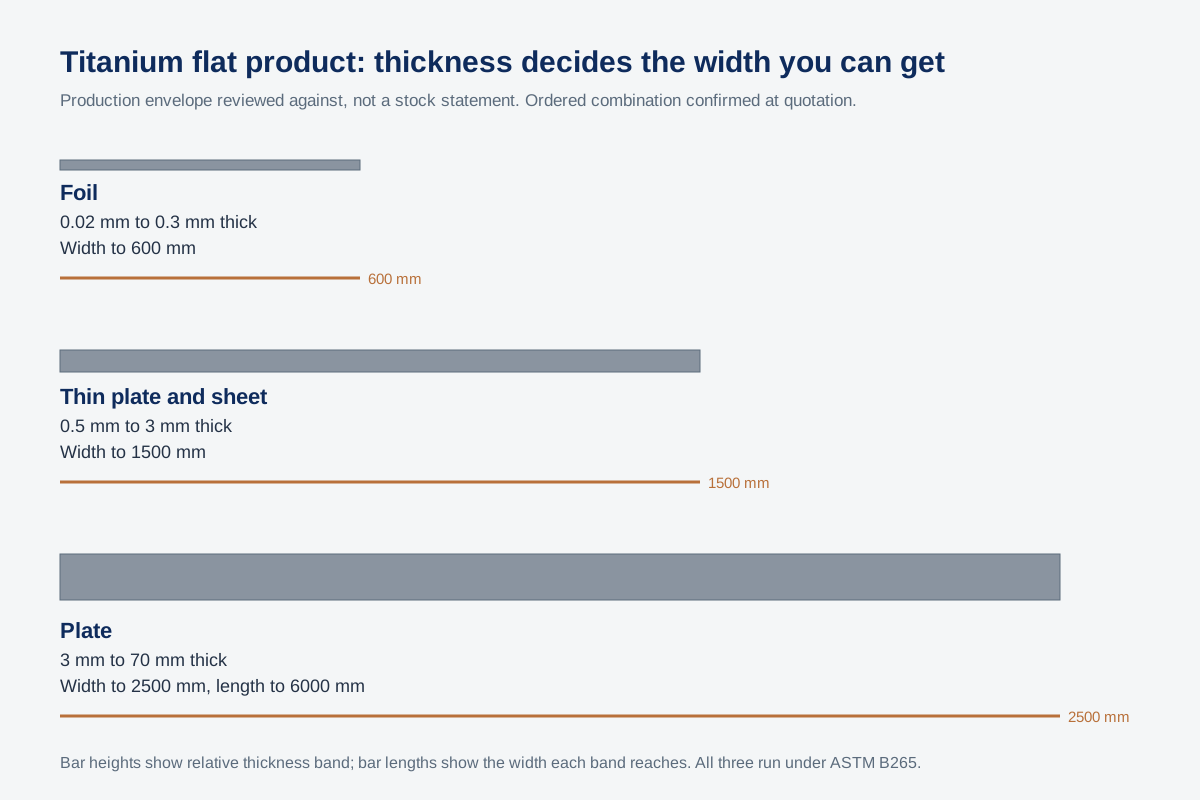
Beiyu supplies sheet and thin plate 0.5 to 3 mm thick in widths to 1500 mm, and heavy plate 3 to 70 mm thick in widths to 2500 mm, both in lengths to 6000 mm, with surface condition stated on the order.
These are Beiyu published supply figures and inspection parameters, not limits taken from the standard; limit values belong to ASTM B265 and are confirmed against the exact edition named on the purchase order. Certification is stated as a production capability, and no stock position, delivery time or price is implied by any figure on this page.