
The word block hides several supply routes. A Grade 5 titanium blank may be forged, rolled, cut from plate or cut from large bar, and those routes do not create the same grain orientation, examination access, surface allowance or machining yield. A useful RFQ fixes UNS R56400, the controlling material route, condition, finished part envelope, buy-to size, datums and ultrasonic acceptance. These five pages help locate sources; they are not a performance ranking.
How this five-company source set was built
The comparison used the query Grade 5 titanium forged block supplier R56400 ASTM B381 on 1 September 2026. Eligible company pages had to identify Grade 5 or F5 block material, connect it to forging or an explicitly disclosed alternative route, and publish a dimension, condition, inspection or traceability field. Beiyu, India-based companies, marketplaces, directories and rankings were excluded. Source terminology was preserved as a question for the bidder. It was not used to relabel a rolled or cut block as a forging.
| Company | Owned resource | Published scope | Proof still due |
|---|---|---|---|
| TSM Technology | Forged-block product page | F5/B381 route, dimensional envelope, stress relief and UT mapping prompts | Exact heat, production route, condition, map, criteria and capability |
| Saky Alloy | Grade 5 block page | R56400 block with forged, rolled or cut alternatives and document fields | Which route is offered, stock origin, allowance and inspection |
| Lasting Titanium | Titanium block range | Grade 5 block examples with size and manufacturing prompts | Actual forged envelope, condition, route, tolerance and records |
| Marmara Metal | Titanium block product page | Grade 5 B381 block route and project-specific buying fields | Source heat, section, working, allowance, NDE and current capacity |
| Tricor Metals | Forgings and billet page | Forged blocks, input stock, custom profiles and processing context | Correct R56400 identity, exact route, dimensions, tests and genealogy |
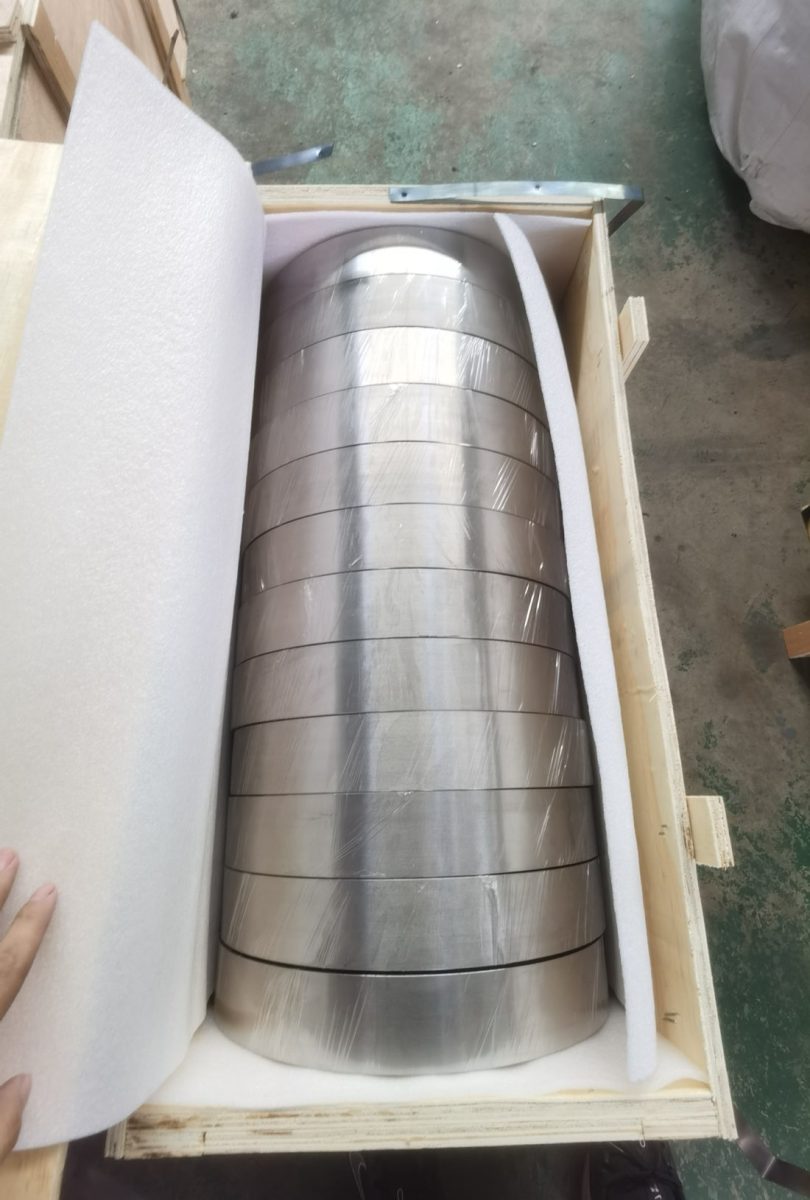
A block is not a finished machining blank
Start from the finished component model. Add roughing stock separately on each face, name the datum scheme, and state whether the supplier delivers as-forged, proof-machined, six-side machined or ground stock. Then define Grade 5 / UNS R56400 and the controlling B381, B348, AMS or customer route with revision. Do not allow a bidder to substitute plate, bar or rolled block without a written engineering review. Mark the required material orientation and any grain-flow objective on the drawing. If the part contains a deep pocket, narrow web or highly stressed lug, show those features so the source can propose a forged envelope and UT scan plan that still reach the critical volume.
| Control point | Buyer input | Required supplier return |
|---|---|---|
| Identity/route | Grade 5/R56400 and exact forging, bar, plate, AMS or customer revision | One offered route, source, heat, condition and deviations |
| Envelope | Finished model, buy-to length/width/thickness, allowance and datums | Measured six-face return, mass, squareness and usable stock |
| Working | Forging direction, reduction objective and prohibited substitution | Starting stock, stages, orientation marks and process record |
| Surface | Alpha-case removal, scale, interstitial-contamination control and finish | Removal method, proof machining, visual/PT result and residual stock |
| Volume inspection | UT method, scan grid, zones, reflectors and acceptance | Technique, coverage map, calibration, indications and disposition |
Forging direction and stock allowance change yield
Consider a rectangular aerospace fixture with pockets machined from both sides. A low-priced block can become the expensive option if its usable sound zone is smaller, its orientation is unmarked or surface removal consumes the pocket floor. Agree which face corresponds to the forging direction and carry those marks through proof machining. Define allowance by face rather than adding one vague oversize value. Ask the supplier to show how saw kerf, scale removal, alpha-case removal, squareness correction and test coupons affect the shipped envelope. If stress relief or annealing is proposed, require the actual condition and furnace record. The buyer can then compare net recoverable geometry instead of price per gross kilogram.
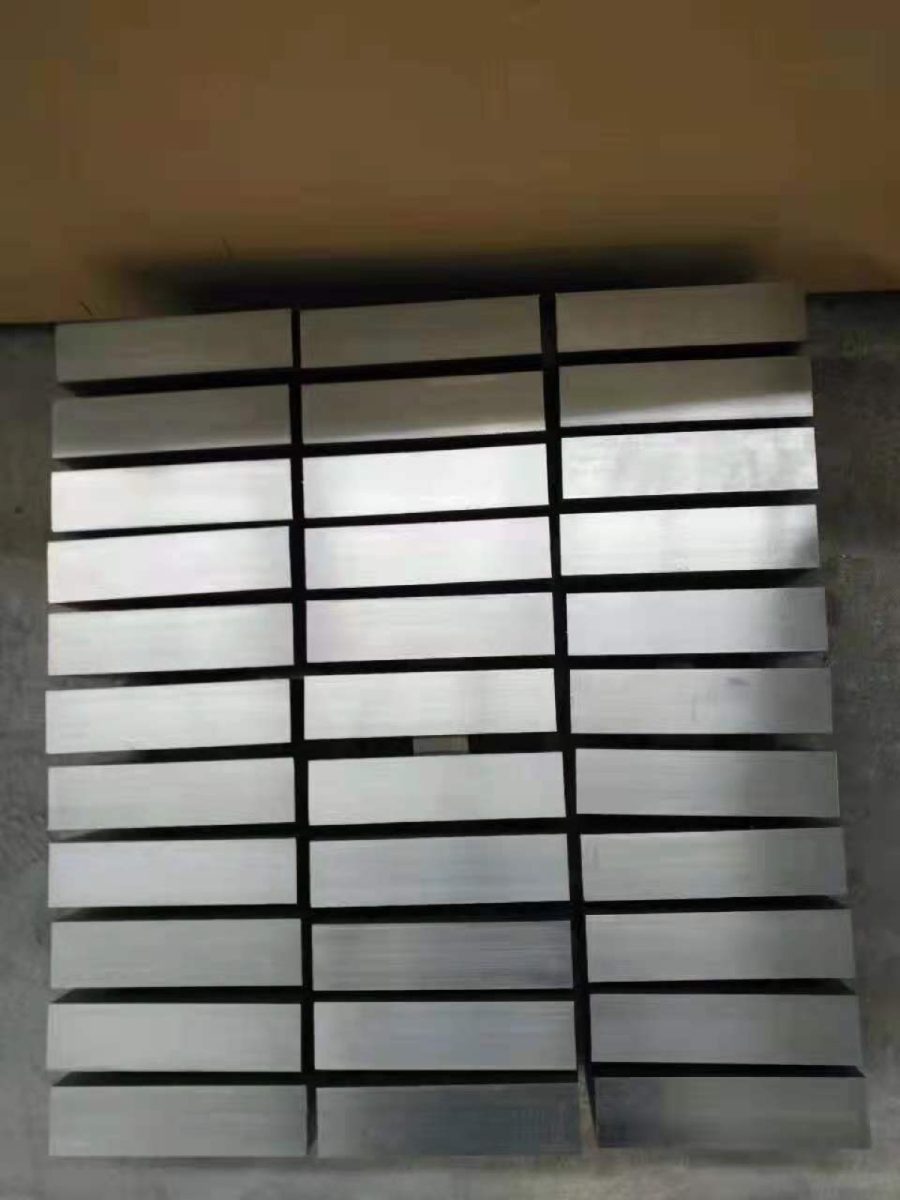
Use a mapped UT and dimensional return
A single UT passed statement does not explain whether the center, corners and near-surface zones were scanned. The technique should identify probes, calibration blocks, scan directions, grid spacing, coverage limits and the disposition of reportable indications. Tie the map to orientation marks on the physical block. Dimensional inspection should report length, width, thickness, squareness, flatness and the agreed datums, not only nominal size. Confirm R56400 heat chemistry, ordered condition and mechanical results from the original record. Inspect machined faces for smeared contamination, grinding burns, laps or residual scale. Before releasing a cut piece, preserve the heat, parent-block and orientation identity on the remnant and packing list.
Normalize the usable block envelope
Every bidder should return gross size, minimum usable size and the deductions between them. Keep the route, orientation and NDE beside the dimensional line so reviewers cannot compare a forged blank with an unspecified cut block. Ask for a trial or first-article plan when a new geometry consumes most of the supplied stock.
| RFQ group | Buyer states | Supplier returns |
|---|---|---|
| Part | Finished model, critical features, loads and regulatory route | Manufacturing risks, source limits and requested buyer decisions |
| Material | R56400, exact revision, condition, source and substitution rule | Producer, heat, parent stock, route, thermal state and exceptions |
| Size/yield | Buy-to envelope, per-face allowance, datums and orientation | Gross/usable size, mass, removal plan and predicted yield |
| Inspection | Chemistry, mechanical, dimensions, surface, PT/UT map | ITP, methods, coverage, criteria, actual results and dispositions |
| Traceability | Marking through cutting and machining, remnant control | Heat-parent-block-piece genealogy and indexed records |
| Commercial | Trial/production quantity, packing, destination and date | MOQ, input availability, schedule, validity and exclusions |
Beiyu enquiry route for Grade 5 forged blocks
Beiyu sits outside the five-company comparison. Its Grade 5 block enquiry begins with the finished model, R56400, the governing material revision and an explicit forged or alternative route. The return fixes buy-to dimensions, face allowances, orientation, condition, alpha-case removal, proof-machined surfaces, UT map, dimensional report, heat genealogy, quantity, protected packing and destination. The quotation distinguishes gross block from the minimum usable envelope so machining yield is visible before award.
Use the Grade 5 titanium forging block, general titanium forging comparison, titanium forging grade selection and forged disc thickness and UT fields for the product route, broader comparison and adjacent engineering controls. Send drawings, quantity, inspection scope, required date and destination with the controlled schedule. Resolve every returned exception before award.
Related supplier lists and supply ranges
- Titanium Fasteners
- Grade 2 Titanium Flange Suppliers
- Grade 5 Titanium Fastener Suppliers
- Grade 7 Titanium Strip Suppliers
- On-Site Sodium Hypochlorite Generator Manufacturers
- Top Refractory Metal Suppliers
- all supplier lists by product family
Specification detail with sources
Beiyu Titanium publishes this list and is not part of the comparison above. For readers who want the publisher’s own figures on the same basis they would ask of any supplier on this page, the material is specified to ASTM B381, and each order carries an EN 10204 type 3.1 certificate with heat and pour numbers by order scope.
Forged ring and disc stock covers OD 50 to 2000 mm, ID 10 to 900 mm and height 20 to 400 mm; finished geometry is quoted from the drawing.
These are Beiyu published supply figures, not limits taken from the standard; limit values belong to the standards named above and are confirmed against the exact edition on the purchase order. Certification is stated as a production capability, and no stock position, delivery time or price is implied by any figure on this page.