
Grade 7 titanium strip combines a palladium-bearing Grade 2-type alloy with slit-coil geometry. The alloy identity alone does not define a usable strip: the buyer still needs ASTM B265 product form, thickness and slit width, edge condition, camber, coil inside diameter, maximum outside diameter or weight, surface and traceability. Five company pages explicitly expose Grade 7/R52400 strip or coil, but their visible ranges can only be compared through one controlled RFQ.
How this five-company source set was built
We froze the query Grade 7 titanium strip supplier ASTM B265 R52400 on 1 September 2026. Eligible sources had to be company-owned, explicitly connect Grade 7/R52400 with strip or coil, and expose a product, standard, rolling, slitting, dimension or condition field. Beiyu, excluded-geography companies, marketplaces, directories and independent rankings were removed. Sheet-only Grade 7 pages and generic strip pages without an explicit Grade 7 row were also removed. The resulting order records the source set, not a ranking.
| Company | Page type | What the page exposes | What the buyer must verify |
|---|---|---|---|
| Chalco Titanium | Coil/strip range page | Grade 7/R52400, B265, rolling, slitting and coil fields | Return exact grade, finished strip dimensions, edge, coil build, condition and actual documents |
| Elgiloy Specialty Metals | Dedicated Grade 7 strip page | R52400, B265 strip/foil scope and annealed data | Confirm current production window, thickness/width tolerance, surface, edge and lot release |
| Jeterry Titanium | Titanium strip category | Explicit Grade 7 titanium alloy strip product line | Request B265 edition, R52400 heat proof, dimensions, rolling/slitting route and tests |
| Sekonic Metals | Strip and coil page | Grade 7/R52400 plus B265 procurement fields | Bind listed grades and dimensions to one offered coil, heat and certificate package |
| Titanium Industries | Titanium coil page | Grade 7/R52400, coil stock context and cut-to-length/slitting service | Return parent mill/heat, master-coil size, slit specification, finished tolerance and stock state |
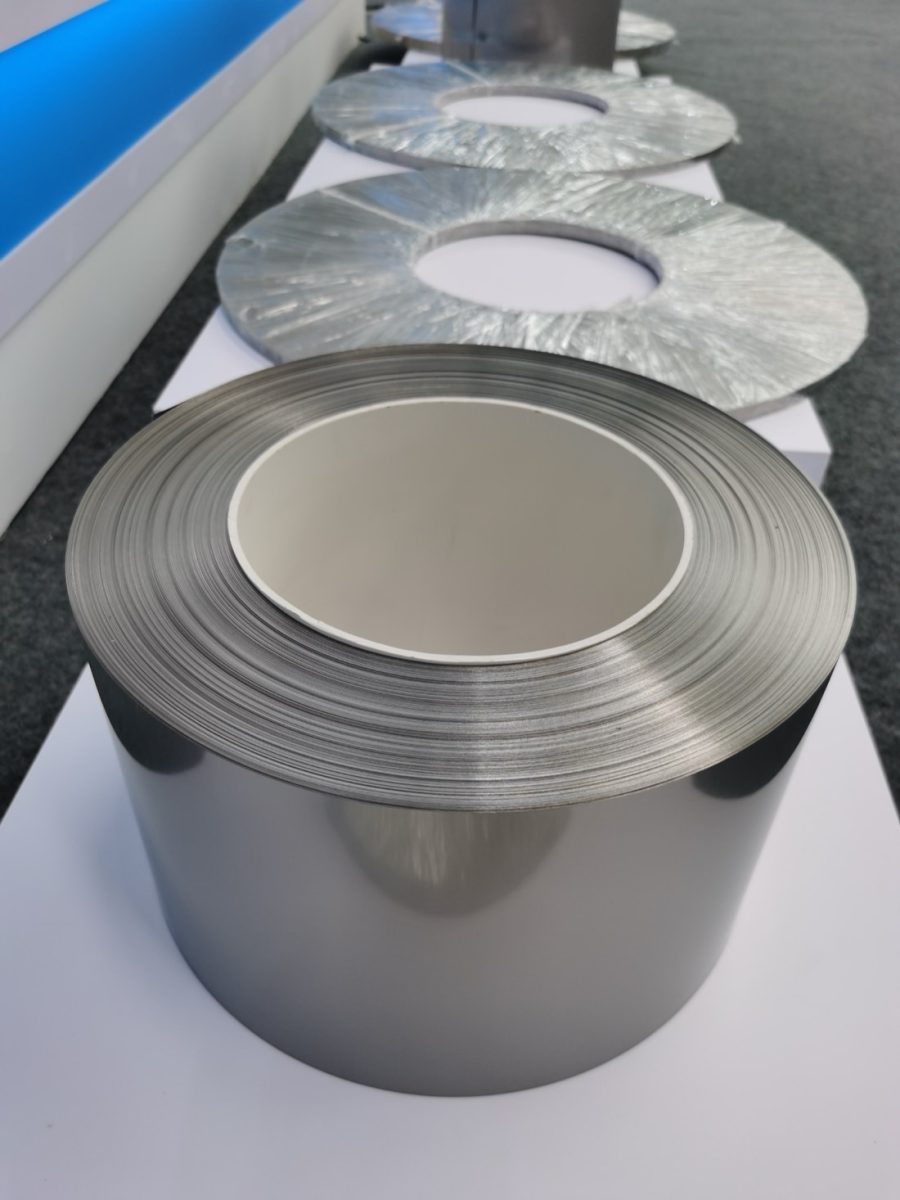
Bind Grade 7 chemistry to the finished slit coil
A B265 sheet-and-strip certificate does not prove that slitting preserved the ordered width, edge and surface. Name strip as the deliverable and give the finished thickness/width tolerances instead of relying on a master-coil range. Define camber over a gauge length, burr measurement and which side may carry the burr. If an automatic feeder is used, specify coil ID, maximum OD or mass, eye orientation, winding direction and permitted telescoping. Grade 7 chemistry should be tied to the parent heat and then to each daughter coil. Corrosion language remains a design input, not a blanket service warranty.
| Decision field | Buyer input | Required supplier return |
|---|---|---|
| Identity | Grade 7 / UNS R52400, ordered Pd/interstitial limits and B265 revision | Actual heat chemistry and trace from master coil to each slit coil |
| Strip geometry | Thickness, slit width, tolerances, camber, flatness and length basis | Finished measurements, method, sampling and usable-length criteria |
| Edge/surface | Slit or deburred edge, burr direction/height, surface finish, scratches and cleanliness | Edge process, inspection lighting, defect limits and protective interleave |
| Coil build | Inside diameter, maximum outside diameter/weight, winding tension and splice rule | Actual coil map, eye orientation, packaging and splice disclosure |
| Service/fabrication | Corrosion design basis, forming direction, joining and contamination controls | Supplier exceptions plus buyer/design-authority acceptance |
Where quotations diverge in practice
For strip feeding into welded heat-exchanger tube production, start from the tube mill’s incoming strip window: finished width, thickness, camber, edge squareness, burr, surface cleanliness and coil build. A coil can meet B265 chemistry and tensile requirements but still disrupt forming or seam tracking. Define whether slit edges are as-cut, dressed or rounded, how oil or protective film is controlled, and whether weld trials are required from each new parent heat or width. Return coil sequence and splice positions so the tube producer can preserve traceability through forming, welding and tube testing. Add payoff-reel direction, accumulator capacity, strip steering datum, roll-form pass setup, seam-gap window and inline trim ownership. These production inputs are specific to continuous feedstock and should not be borrowed from cut-sheet receiving criteria.
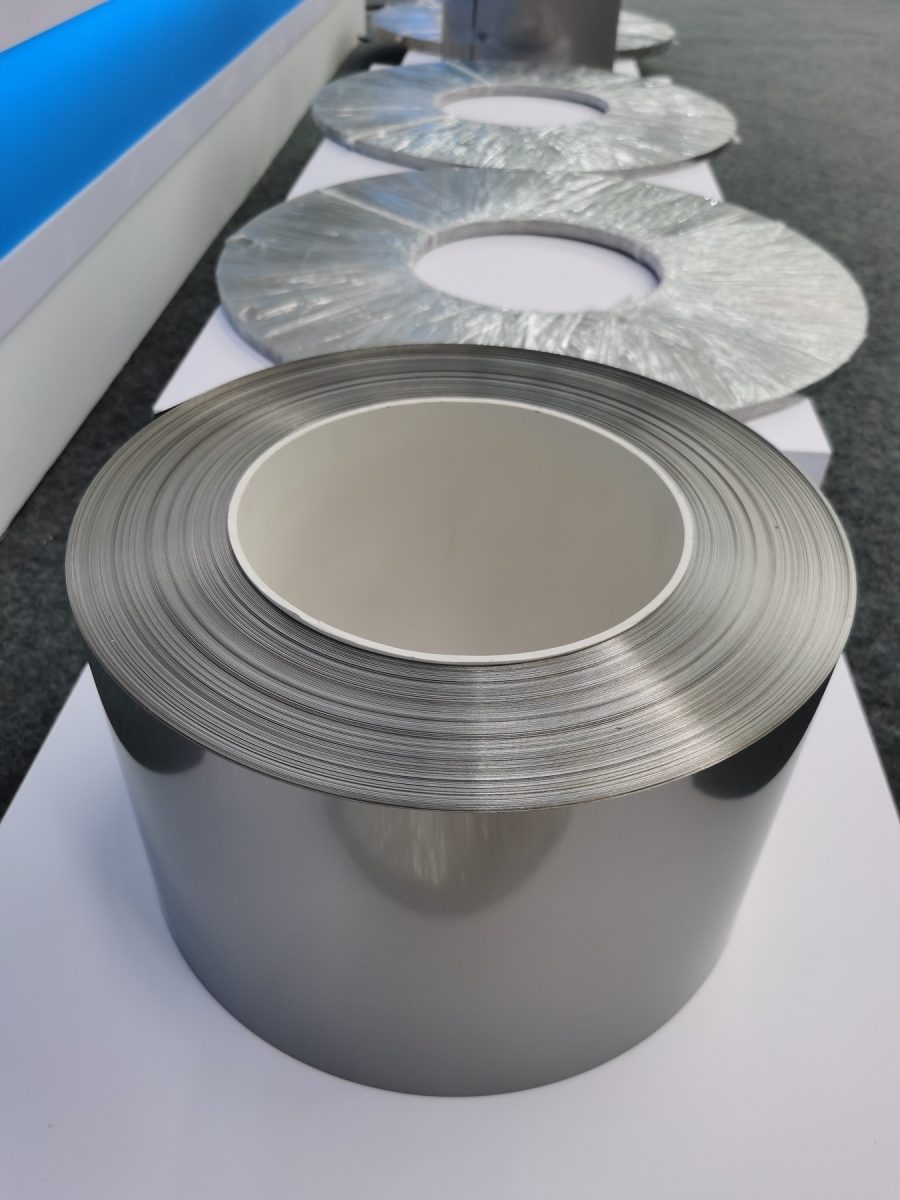
Inspection and traceability traps
Supplier pages often blur sheet, strip, coil and foil. Resolve the ordered form before using a dimensional table, and make the quotation identify the table or customer drawing that controls. Review the original MTC for R52400 and actual Pd, then add processor records for rolling, annealing, slitting and final inspection. Avoid importing a chemistry row from a page that contains internal inconsistencies; the governing order and original certificate control. Packaging records should map heat, master coil, daughter coil and net weight without forcing operators to open moisture protection just to identify material.
Send one controlled RFQ return schedule
Send the same return schedule to every candidate and require line-by-line answers. Blank cells, unpriced options and exceptions should remain visible so that an attractive total cannot conceal a different material route or document package.
| RFQ group | Buyer states | Supplier returns |
|---|---|---|
| Service/spec | Application, Grade 7/R52400, B265 revision and design boundary | Exact offered scope, heat source, deviations and compatibility exceptions |
| Strip | Thickness × slit width, tolerances, camber, flatness and usable length | Finished capability, method, sampling and actual coil results |
| Edge/surface | Edge profile, burr, surface, cleanliness, interleave and defect limits | Slitting/finishing route, inspection criteria and protection method |
| Coil | ID, maximum OD/weight, eye, winding, telescoping and splice rule | Actual build, coil map, splice disclosure and handling limits |
| Documents | MTC, product analysis if ordered, processor records and coil traceability | Release index linked to heat, master coil and every daughter coil |
| Commercial | Quantity by width, trial coil, packing, destination and required date | MOQ, yield/scrap basis, schedule, validity and exclusions |
How Beiyu handles the same enquiry
Beiyu is outside the five-company comparison. Its Grade 7 strip enquiry route asks for R52400 heat chemistry with actual palladium result, B265 revision and strip definition, finished thickness/width and tolerances, camber, edge/burr, condition and surface, coil ID/OD/weight and winding, fabrication/service inputs, inspection, master-to-daughter-coil traceability, quantity, packing and destination. A Grade 7 sheet page is not treated as proof of slit-coil capability.
Use the Grade 7 titanium strip, general titanium strip and coil suppliers comparison, how to compare titanium quotations, ASTM B265 sheet, plate and strip guide to check the product route, the broader supplier landscape and the relevant specification/RFQ controls. Send one controlled RFQ with drawings, quantity, inspection scope, required date and destination; compare returned exceptions before comparing totals.
Related supplier lists and supply ranges
- Titanium Fasteners
- Grade 2 Titanium Flange Suppliers
- Grade 5 Titanium Fastener Suppliers
- Grade 5 Titanium Forged Block Suppliers
- On-Site Sodium Hypochlorite Generator Manufacturers
- Top Refractory Metal Suppliers
- all supplier lists by product family
Specification detail with sources
Beiyu Titanium publishes this list and is not part of the comparison above. For readers who want the publisher’s own figures on the same basis they would ask of any supplier on this page, the material is specified to ASTM B265, and each order carries an EN 10204 type 3.1 certificate with heat and pour numbers by order scope.
Sheet and thin plate run 0.5 to 3 mm thick in widths to 1500 mm; heavy plate runs 3 to 70 mm thick in widths to 2500 mm; foil and strip run 0.02 to 0.3 mm thick in widths to 600 mm.
These are Beiyu published supply figures, not limits taken from the standard; limit values belong to the standards named above and are confirmed against the exact edition on the purchase order. Certification is stated as a production capability, and no stock position, delivery time or price is implied by any figure on this page.