
An on-site sodium hypochlorite generator is a process package with brine preparation, water conditioning, electrolysis, gas handling, product storage and controls. A cell rating alone leaves important interfaces undefined. Buyers need available-chlorine output and concentration at a stated feed quality, plus electrical consumption, cooling, ventilation, cleaning, alarms, spares and factory acceptance. The five sources below publish relevant system or cell routes. Their presence here does not establish project fitness, certification or current availability.
How the five company sources were selected
The comparison used the query on-site sodium hypochlorite generator manufacturer on 1 September 2026. A company-owned system page, catalogue or cell page qualified when it exposed a useful output, concentration, feed, cell, gas-safety, control or maintenance field. Beiyu, India-based sources, marketplaces, directories and ranking pages were removed. Discovery order is preserved. One cell-only source is retained because it clarifies the integration boundary; its row is not presented as a complete packaged generator.
| Company | Owned resource | Published scope | Evidence still due |
|---|---|---|---|
| Grundfos | Selcoperm company catalogue | Cell/system layout, coated electrodes, output families, brine/water controls, degassing and airflow prompts | Selected model, duty, feed limits, strength, consumption, room ventilation, alarms and service scope |
| ProMinent | CHLORINSITU III page | Output range, product-concentration route and membrane-system boundary | Exact size, water/salt limits, utilities, by-products, ventilation, cleaning, controls and FAT |
| TJNE | Electrochemical equipment site | Hypochlorite equipment, electrochlorination cells, anodes and related equipment | System model, output, strength, feeds, utilities, safety system, FAT and spares |
| AIS Water | Company product catalogue | Chlorine-generator families and titanium cell/electrode context | Current model, output/concentration, feed water, electrical duty, hydrogen controls and certification |
| Geemblue | Titanium electrolytic-cell page | 100 g/h and 8000 ppm examples, brine/seawater route, coating and acid-wash prompts | Complete integration scope, validated duty, feed, power, coating, cleaning interval and tests |
Define the package boundary in available chlorine
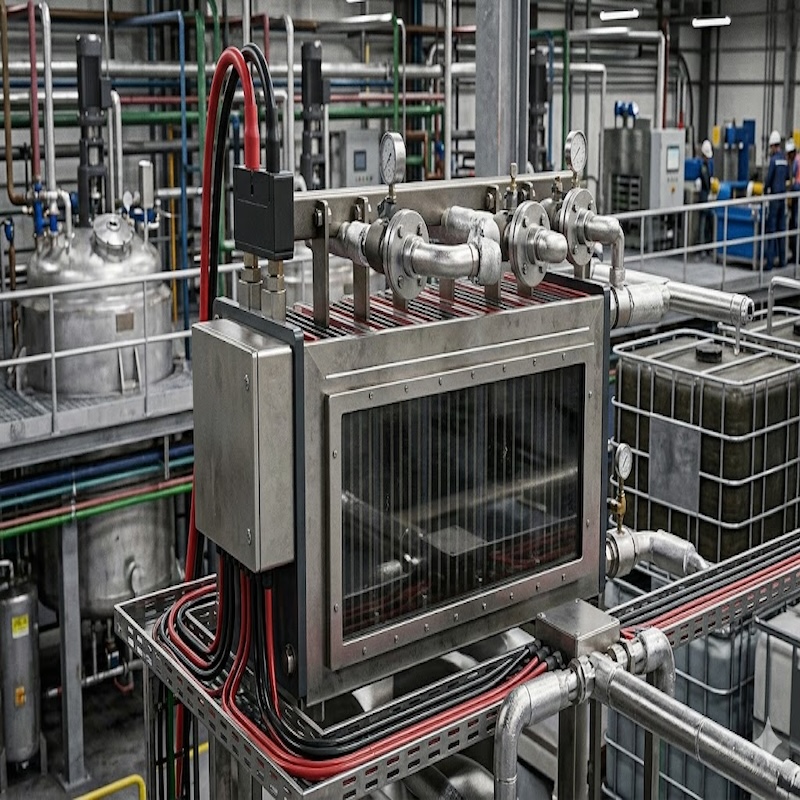
State required available-chlorine production in mass per hour or day and product concentration at the delivery point. Include turndown, operating hours, redundancy, storage autonomy and dosing demand. Give raw-water analysis, treated-water target, salt specification, incoming temperature and ambient conditions. The supplier should return salt, water and energy consumption at the contract duty, with units and test tolerances. Mark responsibility for softening, brine tank, transfer pumps, rectifier, cell, cooling, degassing, hydrogen dilution, ductwork, product tank, dosing pumps, PLC, analyzers and building ventilation. A clear battery-limit drawing prevents duplicated equipment and unowned safety functions.
| Control point | Buyer input | Required supplier return |
|---|---|---|
| Production | Available chlorine mass, product strength, turndown, hours and redundancy | Contract duty, tolerance, selected trains, storage basis and test method |
| Feeds/utilities | Water analysis, salt grade, temperatures, power, cooling and instrument air | Limits, pretreatment, consumption per product mass and connection loads |
| Gas safety | Hydrogen generation case, dilution target, room classification and discharge point | Degassing, fans, airflow proof, alarms, interlocks and safe-state sequence |
| Process boundary | Brine, cell, rectifier, tanks, dosing, ventilation, drains and interfaces | PFD, P&ID, equipment list, battery limits, materials and exclusions |
| Controls | Operating modes, remote signals, analyzer needs, alarms and cybersecurity boundary | Cause-and-effect, I/O list, set points, permissions and data retention |
Hydrogen handling belongs inside the sizing case
Electrolysis produces hydrogen alongside hypochlorite, so gas management must follow the maximum credible production condition and failure states. Ask for the hydrogen generation basis, dilution airflow, fan redundancy, airflow proving, duct material, discharge location and response to loss of ventilation. The cause-and-effect schedule should show whether power to the rectifier stops, valves move and alarms reach the operator. Feed temperature and chloride quality can affect performance and maintenance, while hard water can increase deposit formation. Agree water treatment, flush and acid-cleaning connections, chemical concentration, isolation and waste-neutralization responsibility. Layout review should preserve removal space for electrodes, cells, pumps and rectifier components. The offered footprint needs service clearances, not only skid outline dimensions.
Test the promised output with defined inputs
A factory acceptance test should identify the assembled train, instrumentation, calibration status and test feed. Record salt quality, water quality, temperature, flow, current, voltage, run duration, product flow and available-chlorine concentration. Calculate output and specific consumption using the conventions stated in the contract schedule. Simulate critical trips such as low flow, loss of ventilation, tank high level, rectifier fault and emergency stop where the test plan permits. Review leak checks, electrical protection, earthing, labels, materials and software version. When a full wet FAT is impractical, state which functions are simulated and which performance points remain for site acceptance. Preserve baseline cell voltage and cleaning data for later maintenance comparisons.
Compare complete systems on one operating case
Give every bidder the same feed analysis, ambient range, duty profile and site interfaces. Require a contract-data return and a separate list of assumptions. Normalize annual salt, water, power, cleaning chemical, electrode and service costs against the declared production case. Keep optional redundancy and safety equipment visible rather than folding them into an unexplained package price.
| RFQ group | Buyer states | Supplier returns |
|---|---|---|
| Duty | Output, concentration, turndown, operating profile, redundancy and storage | Contract point, trains, availability assumptions and test tolerance |
| Consumption | Feed water/salt cases, tariff basis and annual operating hours | Salt, water, energy, cooling and chemical consumption with units |
| Safety/control | Hydrogen case, ventilation, area rules, alarms, remote interface | Hazard controls, C&E, I/O, safe state, certifications and exclusions |
| Acceptance | Document review, FAT/SAT points, performance run and training | Procedures, instruments, raw readings, calculations and closeout records |
| Commercial | Battery limits, spares, service, destination and required date | Scope split, lifecycle parts, schedule, validity and separately priced options |
Beiyu enquiry route for the electrolyzer hardware
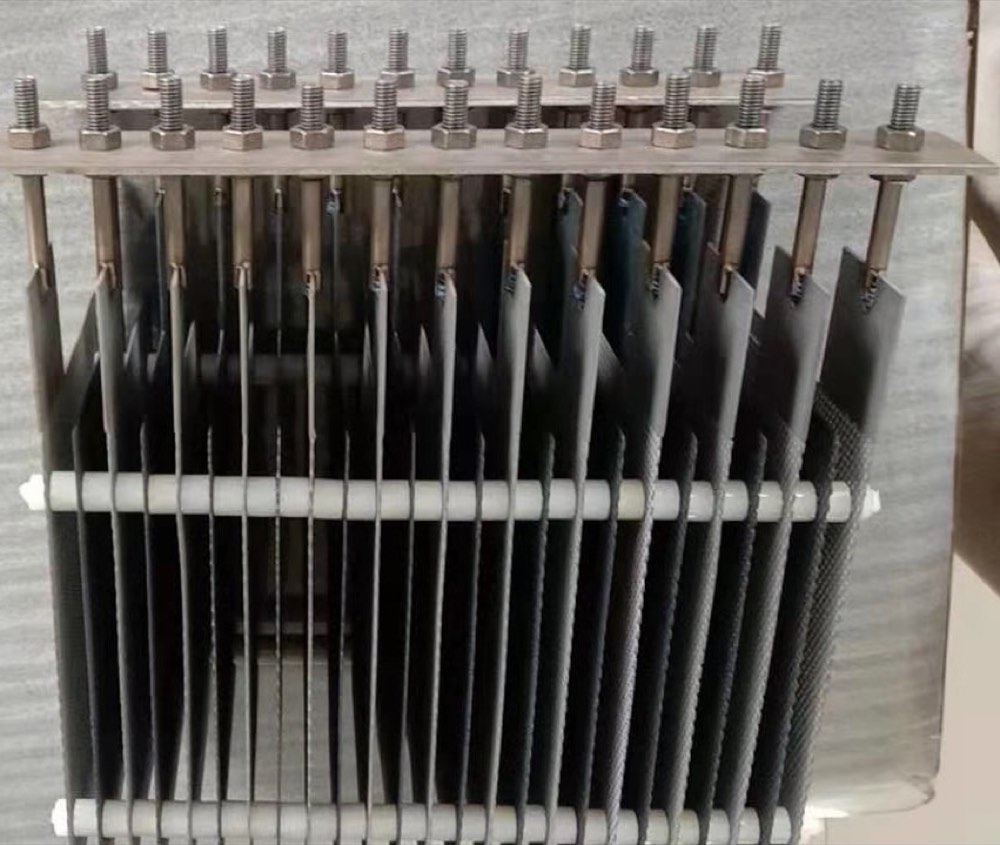
Beiyu sits outside the five-source comparison. Its enquiry route records the cell duty, brine and water limits, electrode geometry, coating, current/voltage, cooling, connections, cleaning method, inspection, spares and traceability. For a complete generator request, the system integrator must own the mass balance, hydrogen safety, controls, tanks, ventilation and contracted performance across the declared battery limits. The returned documents separate Beiyu’s cell or anode scope from the package designer’s obligations.
Related Beiyu routes: chlorine generator for water treatment, sodium hypochlorite anode supplier comparison, MMO coated titanium anodes, sodium hypochlorite titanium anode group. Send the controlled duty sheet or drawing, quantity, inspection scope, required date and destination. Close every written exception before award.
Related supplier lists and supply ranges
- Titanium Fasteners
- Grade 2 Titanium Flange Suppliers
- Grade 5 Titanium Fastener Suppliers
- Grade 5 Titanium Forged Block Suppliers
- Grade 7 Titanium Strip Suppliers
- Top Refractory Metal Suppliers
- all supplier lists by product family
Specification detail with sources
Beiyu Titanium publishes this list and is not part of the comparison above. For readers who want the publisher’s own figures on the same basis they would ask of any supplier on this page, the material is specified to ASTM B265 and ASTM B338, and each order carries an EN 10204 type 3.1 certificate with heat and pour numbers by order scope.
In the coating systems Beiyu supplies, the ruthenium system runs chlorine evolution below 2000 A/m2 with a 5 to 20 micrometre coating carrying 5 to 20 g/m2 of precious metal, and is used in brine and seawater duty with hydrochloric content below 20 percent. This item is quoted from the drawing rather than from a fixed size table, so the ordered dimensions, tolerances and acceptance criteria come from the drawing and the purchase order.
These are Beiyu published supply figures, not limits taken from the standard; limit values belong to the standards named above and are confirmed against the exact edition on the purchase order. Certification is stated as a production capability, and no stock position, delivery time or price is implied by any figure on this page.