
Tungsten melts at 3410 °C (6170 °F, about 3683 K). That is the ASM Handbook figure behind the reference values on this site, and the same number NASA gave for tungsten in its 1966 table of high-melting materials. No other metal has a higher melting point. Reference databases do not all agree on the last digits: the NIST ITS-90 fixed-point database lists 3687 K (3414 °C) with an uncertainty of 7 K, and PubChem shows 3422 °C. For choosing or ordering tungsten the 12 °C spread does not matter. The temperatures that limit a tungsten part in service sit far lower, starting with oxidation in air above 400 °C.
Three published figures and where they come from
| Source | Melting point given | Same figure in other units | Notes |
|---|---|---|---|
| ASM Handbook data (the reference value used on this site) | 3410 °C | 6170 °F; about 3683 K (calculated) | NASA TN D-3531 (1966) Table II, the Merck Index (via the HSDB entry in PubChem) and the US ATSDR toxicological profile for tungsten (2005) give the same figure |
| NIST ITS-90 fixed-point database (SRD 60) | 3687 K | 3414 °C (calculated) | Listed with an uncertainty of 7 K; the Royal Society of Chemistry periodic table gives 3414 °C and credits the CRC Handbook |
| PubChem, element 74 (US National Institutes of Health) | 3422 °C | 3695 K; 6192 °F | Values credited to Jefferson Lab and Los Alamos National Laboratory (US Department of Energy) |
NIST’s 7 K uncertainty around 3687 K covers about 3407 °C to 3421 °C. The ASM figure falls inside that band; the 3422 °C figure sits just above its upper end. None of these sources says why its figure differs from the others, and this page does not offer a reason. Where a drawing or a calculation needs one number, write which source it came from.
Tungsten against other high-melting materials
| Material | Melting point | Source |
|---|---|---|
| Tungsten | 3410 °C | ASM Handbook data; NASA TN D-3531 Table II |
| Rhenium | 3180 °C | NASA TN D-3531 Table II |
| Tantalum | 2996 °C | ASM Handbook data; NASA TN D-3531 Table II |
| Molybdenum | 2610 °C | ASM Handbook data; NASA TN D-3531 Table II |
| Niobium | 2468 °C | ASM Handbook data; NASA TN D-3531 Table II |
| Titanium, unalloyed | 1668 °C | ASM Handbook data |
| Copper | 1084.62 °C | ITS-90 defining fixed point (freezing point of copper) |
| Carbon | Does not melt at atmospheric pressure; sublimes | NASA TN D-3531 lists 3727 °C with the note “sublimes”; the Royal Society of Chemistry gives sublimation at 3825 °C |
The refractory figures here are the same set used across this site, so they match the molybdenum vs tungsten comparison and the refractory metal selection guide. The titanium value and its grade-by-grade spread are covered on the titanium melting point page.
Below 3410 °C: temperatures that limit a tungsten part
Tungsten is chosen for heat, yet melting is seldom what ends its service. In air it is stable at room temperature and, as the ATSDR profile puts it, susceptible to oxidation above 400 °C; tungsten for hot duty is run in vacuum or an inert atmosphere for that reason. Without air, the questions move to recrystallization and to how brittle the metal is once it has cooled. NASA reports on tungsten describe a ductile-to-brittle transition well above room temperature.
| Temperature | What was reported | Source |
|---|---|---|
| About 316 °C (600 °F, 589 K) | Ductile-to-brittle transition of recrystallized polycrystalline tungsten, unirradiated, in NASA tests | NASA technical note, 1970 (NTRS 19700029060) |
| Above 400 °C | Elemental tungsten becomes susceptible to oxidation in air | ATSDR Toxicological Profile for Tungsten (2005), chapter 4 |
| About 1316 °C (2400 °F), 1 hour | Fully recrystallized, in one lot of electron-beam-melted tungsten | NASA technical note (NTRS 19660006200) |
| Above about 1704 °C (3100 °F) | As-swaged specimens recrystallized during testing | NASA Memo 3-9-59E (1959) |
| 3410 °C | Melting | ASM Handbook data |
The two recrystallization lines come from different material tested in different ways, and they land almost 400 °C apart. Treat them as markers from those tests rather than as a limit for every lot. If a part will run hot, put the service temperature, the atmosphere and the time at temperature on the enquiry next to the size.
How a metal that melts at 3410 °C becomes bar, plate and wire
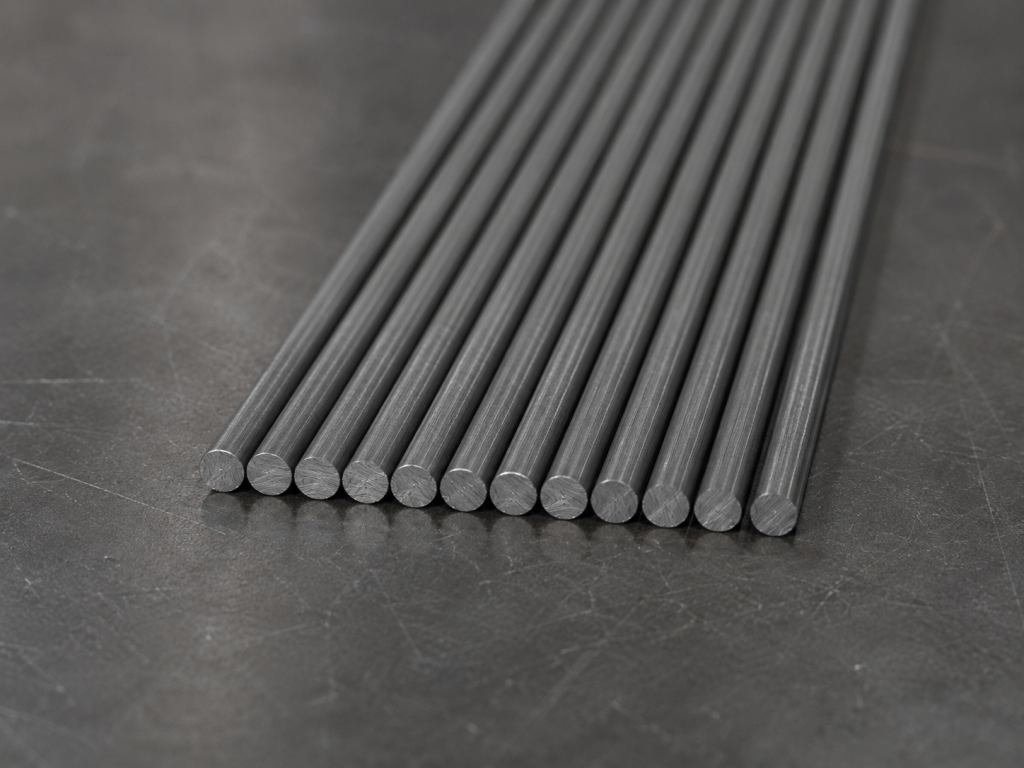
Powder metallurgy is the route behind the tungsten mill products on this site, and the one the US Geological Survey describes: it lists mill products, such as lamp filaments and other tungsten metal parts, among the things powder metallurgical processes are used to make. A 1965 NASA report on powder-metallurgy tungsten gives the melting point as approximately 6170 °F and notes that arc- and electron-beam-melted tungsten was under development at the time, while powder-metallurgy tungsten remained of major interest. Tungsten bar and rod on this site is either pressed and sintered or worked after sintering, and is supplied in a sintered, forged, swaged or ground condition. Those routes differ in density, in machining and in surface, so the route goes on the enquiry as a separate line from the dimensions.
Heavy alloy and copper-tungsten: the second phase melts first
| Material | How it is consolidated | Phase that melts far below tungsten | Source |
|---|---|---|---|
| Tungsten heavy alloy (W-Ni-Fe; ASTM B777 when specified) | Liquid-phase sintering of tungsten powder | Nickel-iron binder (heavy alloys as a class use nickel, iron, copper or cobalt) | OSTI 2417875, US DOE-funded review (2023) |
| Copper-tungsten (W-Cu) | Powder metallurgy | Copper, freezing point 1084.62 °C | ASTM B702 scope; ITS-90 |
In both materials the phase holding the tungsten together melts far below 3410 °C, so the pure-tungsten figure does not describe the alloy. Copper sits more than 2300 °C below tungsten (calculated). Weight is a separate question; heavy alloy density by class is on the tungsten density page.
Supply forms for high-temperature tungsten parts
| Form | Range | Governing document |
|---|---|---|
| Sheet and plate | 1.0 mm to 25 mm thick, width to the requirement | ASTM B760 |
| Round bar and rod | Ø1.6 mm to 70 mm | Buyer’s material specification or drawing |
| Wire | Ø0.1 mm to 1.6 mm | Written into the order for each item |
| Pipe | Ø80 mm, wall 3 mm to 5 mm, length to 3000 mm | Written into the order for each item |
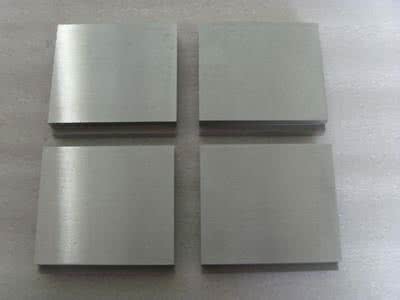
The Beiyu Titanium tungsten range covers W1 and W2 and the W-Ni-Fe, W-Mo, W-Cu and W-La compositions, and ASTM B777 is the governing specification only when the order is for tungsten heavy alloy. For tungsten bar and rod, send the grade, diameter, length, condition, quantity and the documents required; an EN 10204 3.1 inspection certificate is issued when agreed for the ordered route.
Common questions
Is tungsten’s melting point 3410 °C or 3422 °C? Both figures appear in reference sources. This site uses 3410 °C, the ASM Handbook figure; the NIST ITS-90 fixed-point database lists 3687 K (3414 °C) with a 7 K uncertainty, and PubChem shows 3422 °C.
What is the melting point of tungsten in Fahrenheit and kelvin? 3410 °C is 6170 °F and about 3683 K. On the 3422 °C figure the values are 6192 °F and 3695 K.
Does tungsten have the highest melting point of any element? Of the metals, yes. The US Geological Survey Minerals Yearbook puts tungsten’s melting point above every other metal’s. Carbon does not melt at atmospheric pressure but sublimes, which the Royal Society of Chemistry puts at 3825 °C.
What is the boiling point of tungsten? Published figures run from 5555 °C (Royal Society of Chemistry; Jefferson Lab via PubChem) to 5930 °C (Los Alamos via PubChem), and the ATSDR profile gives 5900 °C at 760 mm Hg.
For why tungsten is used where it is, from cemented carbide to lamp and X-ray parts, see what tungsten is used for; its magnetic behaviour is covered on is tungsten magnetic.
Specification detail with sources
The 3410 °C (6170 °F) figure for tungsten is the ASM Handbook value used as this site’s reference, and NASA TN D-3531 (1966, Table II) lists the same figure together with rhenium at 3180 °C, tantalum at 2996 °C, molybdenum at 2610 °C and niobium at 2468 °C. The NIST ITS-90 fixed-point database (SRD 60) gives tungsten’s melting point as 3687 K with an uncertainty of 7 K, the Royal Society of Chemistry periodic table gives 3414 °C crediting the CRC Handbook, and PubChem gives 3422 °C (3695 K, 6192 °F) from Jefferson Lab and Los Alamos National Laboratory. Copper’s freezing point of 1084.62 °C (1357.77 K) is a defining fixed point of the International Temperature Scale of 1990 (BIPM, ITS-90, Table I).
The ATSDR Toxicological Profile for Tungsten (2005, chapter 4) states that elemental tungsten is stable in dry air at room temperature and susceptible to oxidation above 400 °C. A 1970 NASA technical note (NTRS 19700029060) reports a ductile-to-brittle transition at 600 °F (589 K) for unirradiated recrystallized polycrystalline tungsten; a NASA technical note on electron-beam-melted tungsten (NTRS 19660006200) reports a lot fully recrystallized after 1 hour at 2400 °F; and NASA Memo 3-9-59E (1959) reports as-swaged specimens recrystallizing during testing above 3100 °F. The USGS Minerals Yearbook (2021, tungsten) describes tungsten as the metal with the highest melting point of all metals. USGS Open-File Report 2005-1028 lists tungsten mill products among the products of powder metallurgical processes, and a 2023 OSTI review (2417875) describes tungsten heavy alloys as tungsten powders consolidated by liquid-phase sintering with lower-melting nickel, iron, copper and cobalt.