
Mo / TZMCommon molybdenum material choices
ASTM B387Bar and rod reference
10.22 g/cm3Typical molybdenum density
High temperatureService reviewed by application
Acceptance is by the ordered specification. Values are RFQ references only. Final grade, chemistry, dimensions, inspection and documentation are confirmed by the purchase specification and mill test certificate.
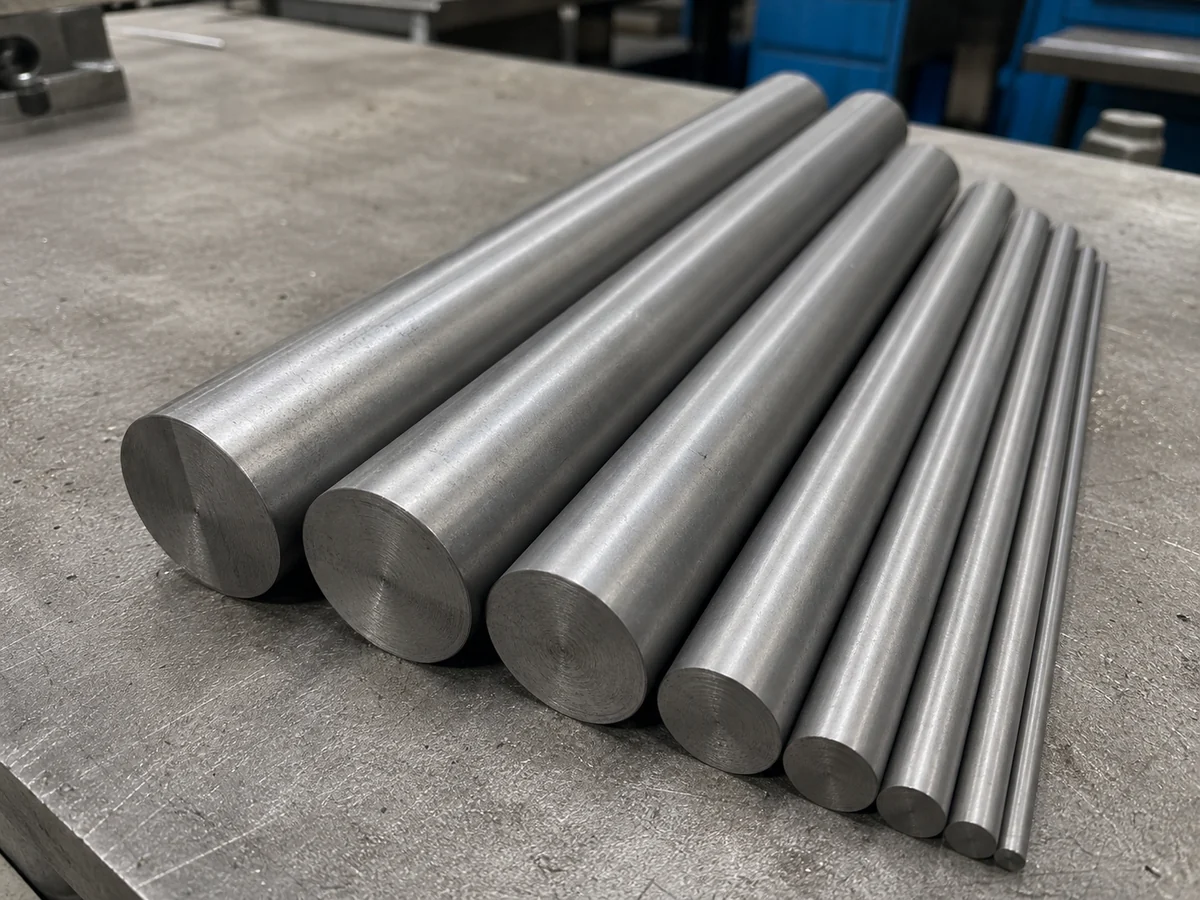
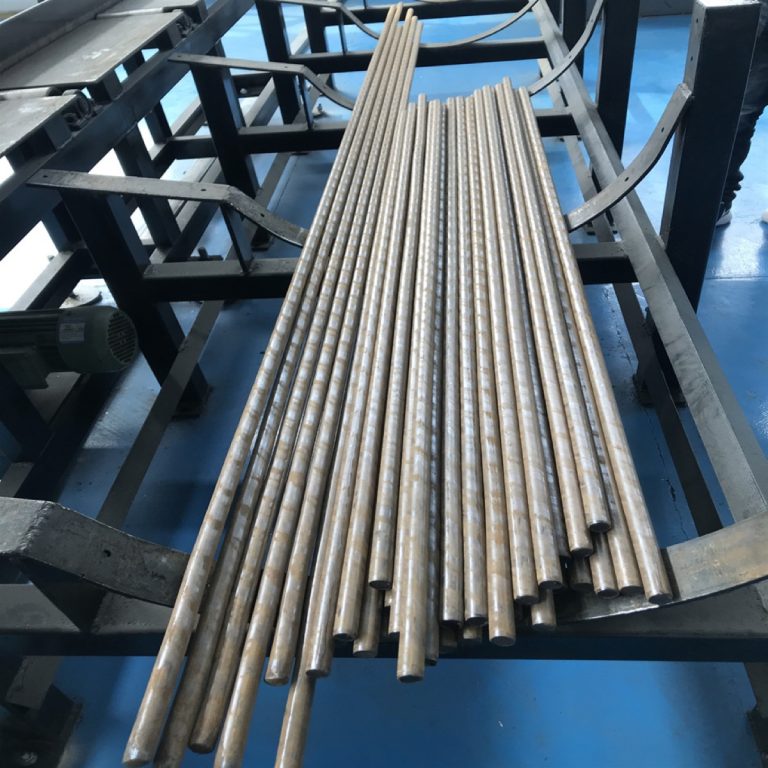
Molybdenum (Mo) bar and rod combines a very high melting point (2,610 °C), high stiffness and good strength at elevated temperature with low thermal expansion. It is a standard choice for vacuum and inert-atmosphere high-temperature hardware. Beiyu Titanium supplies molybdenum round bar and rod from 3 mm to 150 mm diameter, cut to drawing in lengths up to 3000 mm, in pure molybdenum or TZM to ASTM B387.
Grades and standards
| Grade | UNS / type | Standard |
|---|---|---|
| Pure molybdenum | R03600 (Mo ≥99.95%) | ASTM B387 |
| TZM (Mo-0.5Ti-0.08Zr) | R03640 | ASTM B387 |
Supplied as sintered/forged or machined rod, in the stress-relieved or recrystallised condition, with mill test certificate on request. TZM offers higher recrystallisation temperature and creep strength than pure Mo.
Typical size range
- Diameter: 3 mm to 150 mm (custom on request)
- Length: cut to drawing
- Surface: black/sintered, ground or polished
Applications
Vacuum-furnace hot zones, supports and fasteners
Heating elements and electrodes (glass melting, sapphire growth)
Semiconductor and coating hardware (incl. sputtering-target backing)
Aerospace and high-temperature tooling
Service notes
Molybdenum oxidises rapidly in air above ~600 °C, so high-temperature use is in vacuum, hydrogen or inert atmospheres. It resists many molten metals and glasses and most mineral acids at moderate temperature.
RFQ information needed
Send grade (pure Mo or TZM), diameter, length, condition/surface, quantity and required documents. Drawing-based parts quoted on request via RFQ.
FAQ
Pure molybdenum or TZM?
TZM keeps strength and resists recrystallisation to higher temperatures; pure Mo is more ductile and lower cost. Choose by service temperature and load.
Can molybdenum be used in air at high temperature?
No. it oxidises above ~600 °C in air. Use it in vacuum or inert/reducing atmospheres, or specify a protective coating.
Inspection, documentation and packing
Molybdenum bar and rod is supplied with a mill test certificate on request, in the stress-relieved or recrystallised condition, with heat / lot marking. Bars are protected and crated for export.
Related products and alternatives
Where the highest melting point or maximum density is needed, compare tungsten bar and rod; the trade-offs (machinability, weight, cost) are set out in molybdenum vs tungsten. For higher creep strength, ask about the TZM alloy.
Condition and alloy are two lines, not one
Molybdenum enquiries usually name the metal and the size and stop there, which leaves the two fields that actually decide the part. The first is whether unalloyed molybdenum or an alloyed grade is wanted, since the alloyed grades are supplied in the same forms and are bought for higher temperature strength rather than as a substitute. The second is the condition, because worked and stress relieved material and fully recrystallised material behave differently in service and are not interchangeable at the same nominal purity.
Both fields have to be written down, since neither is implied by a diameter or a drawing tolerance. Where the part is machined, the surface state belongs on its own line as well: as-worked, ground and cleaned are different deliveries. Written out, the enquiry carries the metal or alloy with its grade designation, the condition, the diameter or section with tolerance, the length, the surface state and the inspection scope. Material is supplied against a mill test certificate.
Compare refractory metal products
Refractory metals categoryProduct
Material
Reference
Best for
Niobium Pipe and Tube
Nb1 / Nb1Zr
ASTM B394
Tube and pipe RFQs
>
Niobium Bar and Sheet
Nb1 / Nb1Zr
ASTM B392 / B393
Bar, sheet and machined blanks
>
Tantalum Pipe and Tube
Ta / Ta alloy
ASTM B521
Acid-resistant pipe and tube
>
Tantalum Plate and Sheet
Ta / Ta alloy
ASTM B708
Plate, sheet and lining parts
>
Molybdenum Bar and Rod
Mo / TZM
ASTM B387
High-temperature rods and parts
Tungsten Bar and Rod
W / heavy alloy
By drawing / ASTM B777
High-density and high-temperature parts
>
Zirconium Bar and Wire
Zr702 / Zr705
ASTM B550 / AWS A5.24
Bar and wire for chemical-process parts
>
Zirconium Plate and Sheet
Zr702 / Zr705
ASTM B551
Plate, sheet and lining parts
>
Related refractory metal products
Molybdenum category
How much does molybdenum bar weigh per metre?
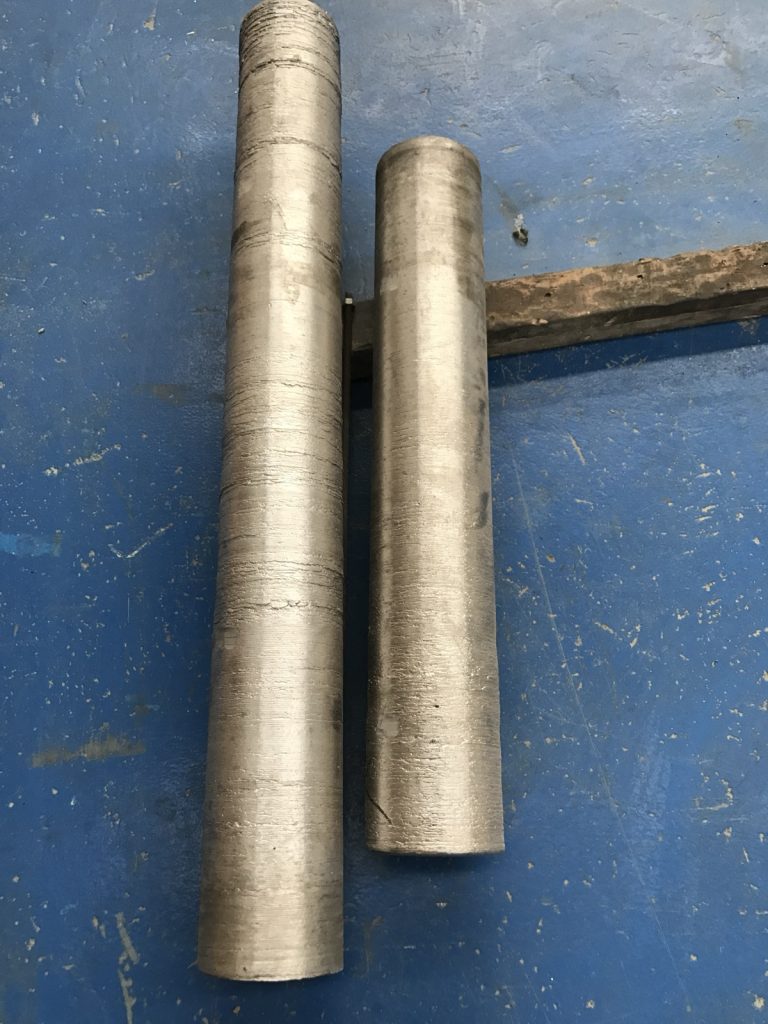
Weight per metre of round bar follows from diameter alone: kg/m = π ÷ 4 × diameter² × density ÷ 1,000, with diameter in millimetres and density in g/cm³. The table uses 10.22 g/cm³, the molybdenum density given on this page. The diameters are examples for estimating only; any diameter from 3 mm to 150 mm can be quoted.
| Diameter (example) | Weight per metre | Weight of a 3 m length (example) |
|---|---|---|
| 3 mm | 0.072 kg | 0.22 kg |
| 10 mm | 0.803 kg | 2.41 kg |
| 25 mm | 5.017 kg | 15.05 kg |
| 50 mm | 20.067 kg | 60.20 kg |
| 100 mm | 80.268 kg | 240.80 kg |
| 150 mm | 180.602 kg | 541.81 kg |
Lengths are cut to drawing, up to 3000 mm. For other sizes, the weight calculator has a molybdenum setting at the same density. Flat stock is covered on molybdenum plate and sheet, which is ordered to ASTM B386 rather than B387.
Specification detail with sources
The Beiyu Titanium supply ranges publish molybdenum round bar at Ø3.0 mm to 150 mm with length to 3000 mm, molybdenum wire at Ø0.1 mm to 6.0 mm and sheet and plate from 0.1 mm to 40 mm thick. Four grades appear against those ranges: Mo1, Mo2, MoLa and TZM. The density of 10.22 g/cm³ shown on this page is the reference value Beiyu Titanium uses for weight estimates and in its quotations, and the melting point of 2610 °C is the handbook constant this site uses for molybdenum; neither figure is taken from those supply ranges.
Two standards are named for molybdenum in those supply ranges, ASTM B386 and B387, listed once for the metal rather than once per product form, so the ranges themselves do not say which document belongs to which form. This page cites B387 on its bar and rod lines and B386 where it points to plate and sheet. A molybdenum bar enquiry should name the document it wants reported against, because the grade does not carry that choice with it, and the certificate has to state the grade and the document separately.
For a view of who else publishes this material and what each one states, see Molybdenum Bar Suppliers: Four Company Pages Compared.
Request a quote for Molybdenum Bar and Rod
Send material grade, standard, size, condition, quantity and certificate requirements. Beiyu replies with quotation, lead time and documentation scope.