
Beiyu Titanium supplies niobium, tantalum, molybdenum, tungsten and zirconium as mill products. This page is about picking which one to specify. The pairwise trade-offs sit one level down, in niobium vs tantalum and molybdenum vs tungsten.
What the five metals are, before anything is compared
Enquiries for these metals usually arrive already narrowed, and often narrowed on the wrong axis. Density and melting point are the two constants the Beiyu Titanium supply range documents print at metal level, which is why they are the two stated here; the figures belong to the metal entry as printed and are not stated for the individual grades beneath it. Everything after that is set by the order.
| Metal | Density | Melting point | Grades in the Beiyu Titanium supply ranges |
|---|---|---|---|
| Tungsten | 19.25 g/cm³ | 3410 °C | W1, W2, W-Ni-Fe, W-Mo, W-Cu and W-La |
| Tantalum | 16.69 g/cm³ | 2996 °C | R05200, with the tungsten bearing R05252 at Ta-2.5W and R05255 at Ta-10W |
| Molybdenum | 10.22 g/cm³ | 2610 °C | Mo1, Mo2, MoLa and TZM |
| Niobium | 8.57 g/cm³ | 2468 °C | R04200 and R04210 |
| Zirconium | Not published in the Beiyu Titanium supply ranges | Not published in the Beiyu Titanium supply ranges | R60702 as ZR702 and R60705 as ZR705 |
The two blank cells are blank on purpose. This page carries only values printed in the Beiyu Titanium supply range documents, and the zirconium entries there list grades, forms and sizes without physical constants. A figure taken from a general reference would not be one of those values, so it is left out rather than blended in.
The tungsten to niobium spread is a handling problem, not a footnote
Tungsten is 19.25 g/cm³ against niobium at 8.57 g/cm³, so the same drawn part in the two metals differs by more than a factor of two in mass. That decides shipping, fixturing and whether an assembly needs rebalancing, and it is worth settling before the grade discussion rather than after. Melting point runs the same way between those two, tungsten at 3410 °C and niobium at 2468 °C, a difference of roughly 940 °C. Both comparisons are between tungsten and niobium only, not across the whole group, since the zirconium row above carries no published figure to compare against.
Which forms each metal is actually available in
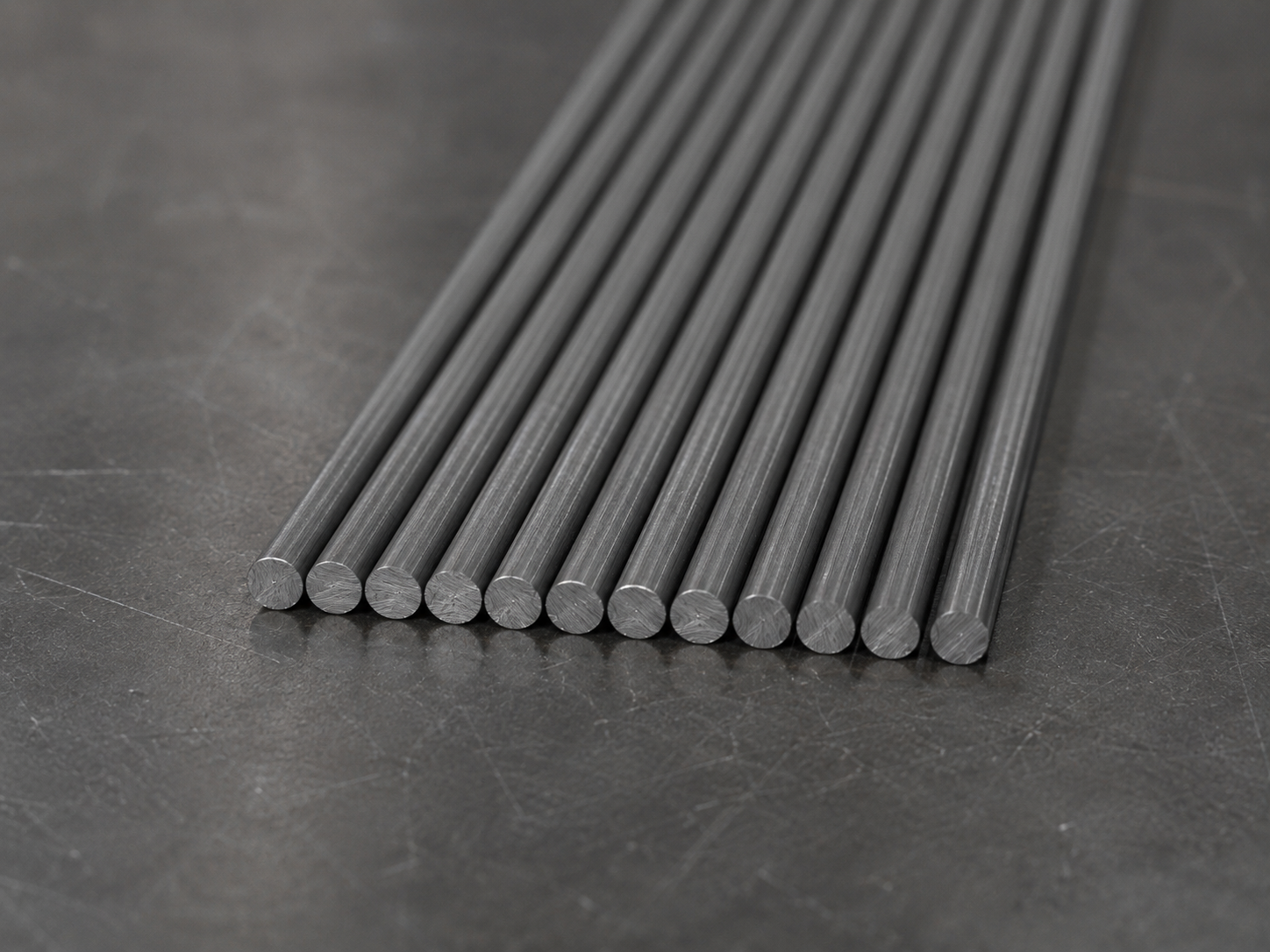
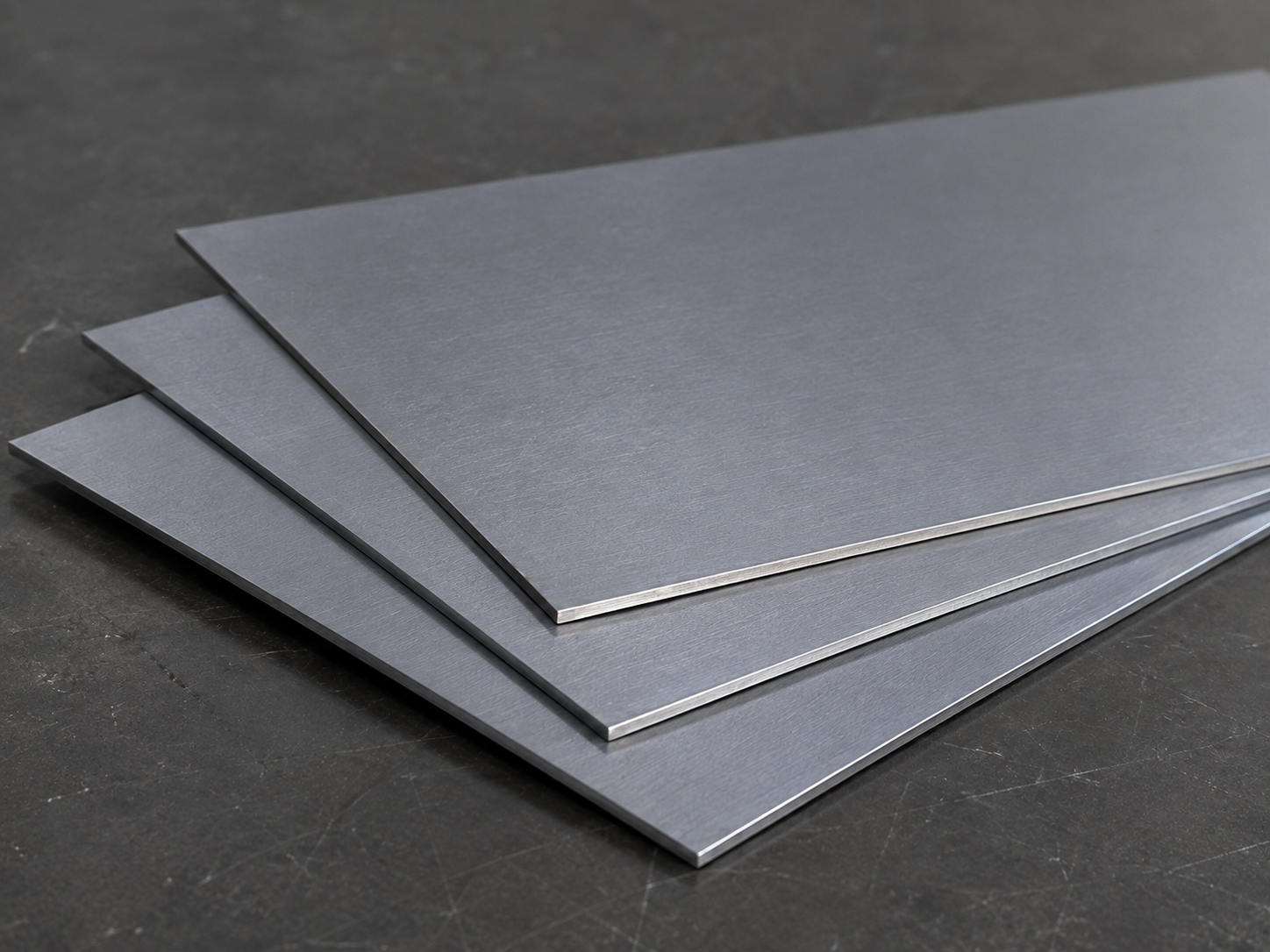
A metal is only a candidate if it comes in the form the part needs, and the five do not offer the same forms at the same sizes. These are the Beiyu Titanium supply ranges. The ordered items behind these ranges are niobium bar and sheet and niobium pipe and tube, molybdenum bar and rod, tungsten bar and rod, and zirconium bar and wire, and zirconium plate and sheet.
| Metal | Bar | Sheet or plate | Wire | Tube or pipe |
|---|---|---|---|---|
| Tungsten | Ø1.6 mm to 70 mm | 1.0 mm to 25 mm thick, width customised to the requirement | Ø0.1 mm to 1.6 mm | Ø80 mm, wall 3 mm to 5 mm, length 3000 mm |
| Tantalum | Ø3.0 mm to 100 mm, length to 3000 mm | 0.03 mm to 10 mm thick, width 30 mm to 1000 mm, length 30 mm to 2000 mm | Ø0.3 mm to 3.0 mm | Ø1.0 mm to 100 mm, length to 12000 mm |
| Molybdenum | Ø3.0 mm to 150 mm, length to 3000 mm | 0.1 mm to 40 mm thick, width 10 mm to 800 mm, length 10 mm to 2000 mm | Ø0.1 mm to 6.0 mm | Ø10 mm to 80 mm, length to 3000 mm |
| Niobium | Ø3 mm to 100 mm, length 6000 mm | 0.03 mm to 10 mm thick, width 30 mm to 1000 mm, length 50 mm to 2000 mm | Ø0.3 mm to 3.0 mm | Ø2.0 mm to 100 mm, length to 8000 mm |
| Zirconium | Ø5 mm to 150 mm, length to 6000 mm | Sheet 0.02 mm to 0.3 mm and 0.5 mm to 3 mm thick; plate 3 mm to 70 mm thick, width to 2500 mm | Ø0.5 mm to 6 mm, length to 6000 mm | Seamless outside diameter 5 mm to 152 mm; welded outside diameter 6.35 mm to 1219 mm |
Two rows in that table are worth reading closely. Tungsten tube is listed at a single regular size, Ø80 mm with 3 mm to 5 mm wall at 3000 mm long, rather than as a range, so a tungsten tube requirement at another diameter is quoted rather than looked up. And zirconium is the only one of the five whose listed tube range extends past 152 mm, running to 1219 mm outside diameter in welded tube, which puts large-diameter welded tube work in zirconium’s column.
Zirconium is the one metal where the standard follows the form
This is a structural difference worth knowing before an order is written. For tungsten, tantalum, molybdenum and niobium, the Beiyu Titanium supply ranges name the standards once for the metal as a whole: ASTM B760 and B777 for tungsten, B386 and B387 for molybdenum, B365, B521 and B708 for tantalum, and B392, B393 and B394 for niobium. Those entries cover every form together, so none of them is paired here with bar or with tube specifically.
Zirconium is listed the other way, with a document against each form: ASTM B550 for bar, B551 for sheet and plate, B658 and B523 for tube, B493 for forgings, and AWS A5.24 (ASME SFA-5.24) for wire. That last row is worth reading twice, because the wire entry points somewhere other than an ASTM B document while the rest of the zirconium range does not.
What an enquiry needs to carry once the metal is chosen
Choosing the metal is the first of five fields, not the whole specification. The grade with its UNS designation comes next, because R05252 and R05255 are different tantalums and R60702 and R60705 are different zirconiums. Then the form and its dimensions with tolerances, the delivery condition, and the inspection and documentation scope, which is where EN 10204 3.1 and heat number traceability are named if they are wanted. Beiyu Titanium reviews those together, and an enquiry that names only a metal and a quantity is at the start of that review rather than at the end of it.
For a view of who else publishes this material and what each one states, see Zirconium Bar Suppliers: Five Company Pages Compared.
Specification detail with sources
Every figure on this page was taken one row at a time, under a reading rule fixed before the table was filled: a cell carries a number only where a source prints one for that metal, and says so plainly where none does. That rule is why the zirconium density and melting point cells read as not published in the Beiyu Titanium supply ranges instead of carrying a number borrowed from a general reference.
The standards were read under the same rule. Tungsten, molybdenum, tantalum and niobium each carry one standards entry covering the metal and all of its forms, so this page reports them at metal level. Zirconium carries an entry against each form, and that asymmetry is reported rather than smoothed out, since flattening it would give four metals a form-level precision their documents do not have.