
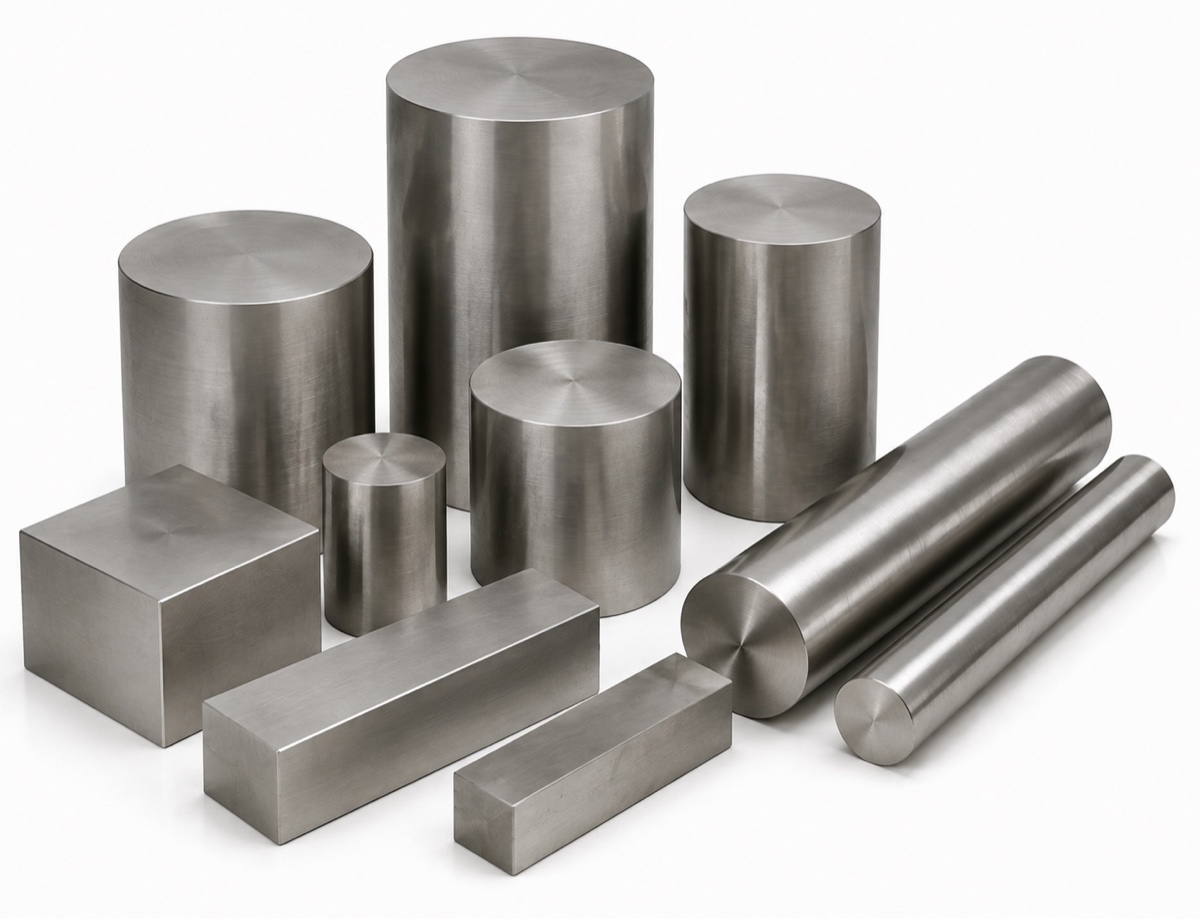
“Titanium billet” may describe mill intermediate stock, large round or rectangular starting material, or a piece that another page would call bar, block or slab. Supplier definitions are not consistent. This comparison records five company pages and makes the buyer fix the cross section, downstream process, alloy, condition, quality level and product specification before comparing price.
How the five titanium billet pages were selected
We checked titanium billet supplier ASTM B348 and titanium alloy billet supplier on 1 September 2026, followed by targeted company-domain checks. Eligible results were accessible company-owned pages that expressly exposed billet as a product or processing stage. Beiyu, marketplaces, directories, duplicate domains, pages limited to finished forgings and inaccessible pages were removed. Sequence records the dated discovery set after exclusions; it is not a supplier score.
| Company page | Published route | Dimensions, grades or standards recorded | RFQ check before comparison |
|---|---|---|---|
| TIMET | Round and rectangular billet | Multiple commercially pure and alloy families; current/custom wording on the page | Return exact alloy, section, condition, specification, quality level and present production basis |
| Titanium Industries | Billet defined by page as at least 16 in² cross-sectional area; lathe-turned route | 4.501-20 in / 114.33-508 mm diameter and length to 20 ft / 6,096 mm; Grades 2, 4 and 5 plus other alloys | Which form, condition, size combination, product specification and actual availability are quoted? |
| Titanium Processing Center | Billet sales page with its own dimensional definition | Questionable area definition, a maximum-diameter mark that appears to use feet, and mixed B348/B381/F67 references | Ask for the correct unit, contractual form, exact product standard and condition; do not normalize the page silently |
| Supra Alloys | Multi-grade titanium stock list including billet among forms | Broad alloy and ASTM/AMS/medical-certifiability language across the stock list | Which grade/form/specification/condition combination is actually offered, and what will its certificate report? |
| Perryman Company | Intermediate breakdown from large ingot toward round billet | Page describes 30- and 33-inch ingots reduced to 4-inch round billet | Treat this as a process route, not stock evidence; confirm alloy, input/output condition and next manufacturing stage |
No single web-page definition settles the order. The purchase document should state finished section and form, then name the governing product requirement appropriate to that deliverable. ASTM B381 applies to titanium forgings and forging stock under its scope; it must not be attached automatically to billet simply because the billet will later be forged.
Separate billet from bar, slab and finished forging
| Decision | Controlled RFQ field | Risk if omitted |
|---|---|---|
| What is the deliverable form? | Round, square or rectangular billet; slab/block; bar; or finished forging, with dimensions | Companies may quote different forms under the same informal noun |
| What happens next? | Forging, rolling, extrusion, machining or other conversion route | Surface, section, conditioning and quality requirements depend on downstream work |
| Which material condition? | Alloy/UNS, melt route when required, heat treatment, surface/conditioning and product specification | A chemistry match alone does not make two starting stocks equivalent |
| Which internal quality level? | Required UT/NDE method, class/acceptance, macrostructure or other agreed checks | Large starting stock can meet dimensions while missing a downstream critical-quality requirement |
Dimension conversions on a supplier page should also be checked rather than copied. Return one unit system on the quotation, with tolerances, straightness or squareness, corner radius where relevant, cut ends, surface-removal allowance and the usable section after conditioning.
Send one controlled titanium billet RFQ
| RFQ line | Buyer input | Required supplier return |
|---|---|---|
| Form and use | Contractual form, intended downstream process, drawing/sketch and quantity | Exact deliverable name, route, usable section and any recommended allowance |
| Material identity | Grade/UNS, melt route when required, product specification/revision and condition | Alloy, heat treatment, governing document and permitted substitutions |
| Geometry | Diameter or width/thickness, length, tolerances, straightness/squareness and corner/end requirements | Finished dimensions in one unit system and conditioning allowance |
| Surface and conditioning | As-forged, machined/turned, ground, peeled or other required surface; defect-removal rule | Delivered surface, removal depth, inspection stage and usable size |
| Quality and traceability | Chemistry/mechanical tests, UT/NDE class, macrostructure or project checks, heat/lot trace | Test method, acceptance criteria, coverage, report and material genealogy |
| Commercial basis | Weight/pieces, cut plan, packing, Incoterm, destination and required date | Stock or production route, minimum, lead time, certificate scope, validity and exclusions |
Where Beiyu fits
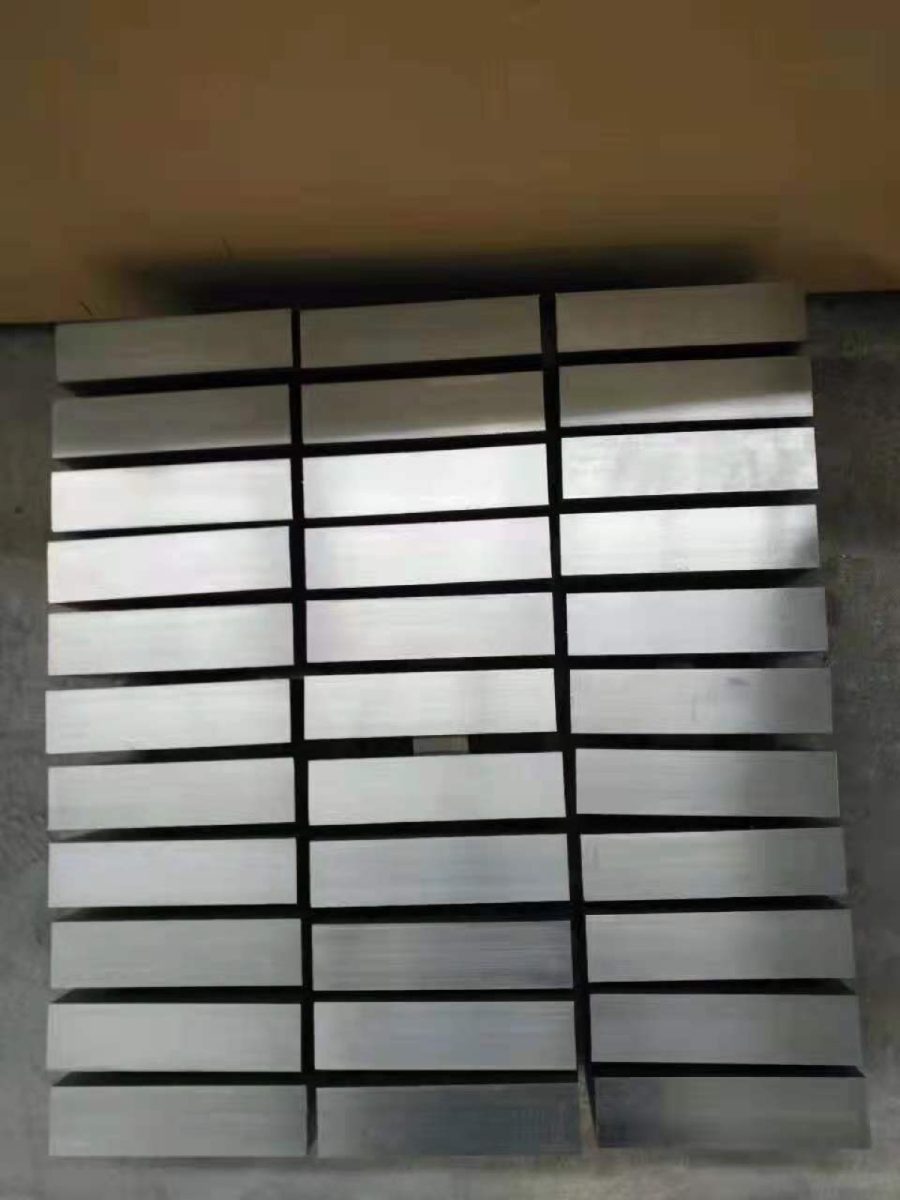
Beiyu is outside the five-company set. Its titanium slabs-and-billet page accepts starting-stock enquiries for forging, rolling and machining routes. Quotations are checked by exact form, alloy, section, length, condition, surface, downstream process, quality/NDE, quantity and document scope.
The live page does not turn one billet or slab range into a stock guarantee. It also keeps billet input separate from a finished forging: an order requiring a forging is reviewed under the applicable forging drawing, specification and inspection plan.
How to use this comparison
First agree internally on what the billet becomes and what usable section the next process needs. Send the remaining suppliers the same form definition, alloy, condition, dimensions, surface allowance and quality plan. Compare price only after product specification, process route, inspection, traceability and delivery basis align.
Related Beiyu pages
- Titanium slabs and billet
- Titanium forging company pages compared
- How to compare titanium quotations
- How to compare titanium suppliers
Published by Beiyu Titanium. Beiyu is outside the five-company set. The order is a dated discovery record, not a ranking for quality, stock, price, delivery, capacity or performance.
Related supplier lists and supply ranges
- Titanium Fasteners
- Grade 2 Titanium Flange Suppliers
- Grade 5 Titanium Fastener Suppliers
- Grade 5 Titanium Forged Block Suppliers
- Grade 7 Titanium Strip Suppliers
- On-Site Sodium Hypochlorite Generator Manufacturers
- all supplier lists by product family
Specification detail with sources
Beiyu Titanium publishes this list and is not part of the comparison above. For readers who want the publisher’s own figures on the same basis they would ask of any supplier on this page, the material is specified to ASTM B348, and each order carries an EN 10204 type 3.1 certificate with heat and pour numbers by order scope.
ASTM B348 draws the bar and billet line itself: a solid section above 16 square inches, 10,323 square millimetres, classifies as billet, which for a round product falls near 115 mm diameter. Beiyu supplies that band inside its 1 to 500 mm round programme, with forged block from 50 to 600 mm where a rectangular section is wanted, all from triple vacuum arc remelted material.
These are Beiyu published supply and process figures, not limits taken from the standard; limit values belong to the standards named above and are confirmed against the exact edition on the purchase order. Certification is stated as a production capability, and no stock position, delivery time or price is implied by any figure on this page.