
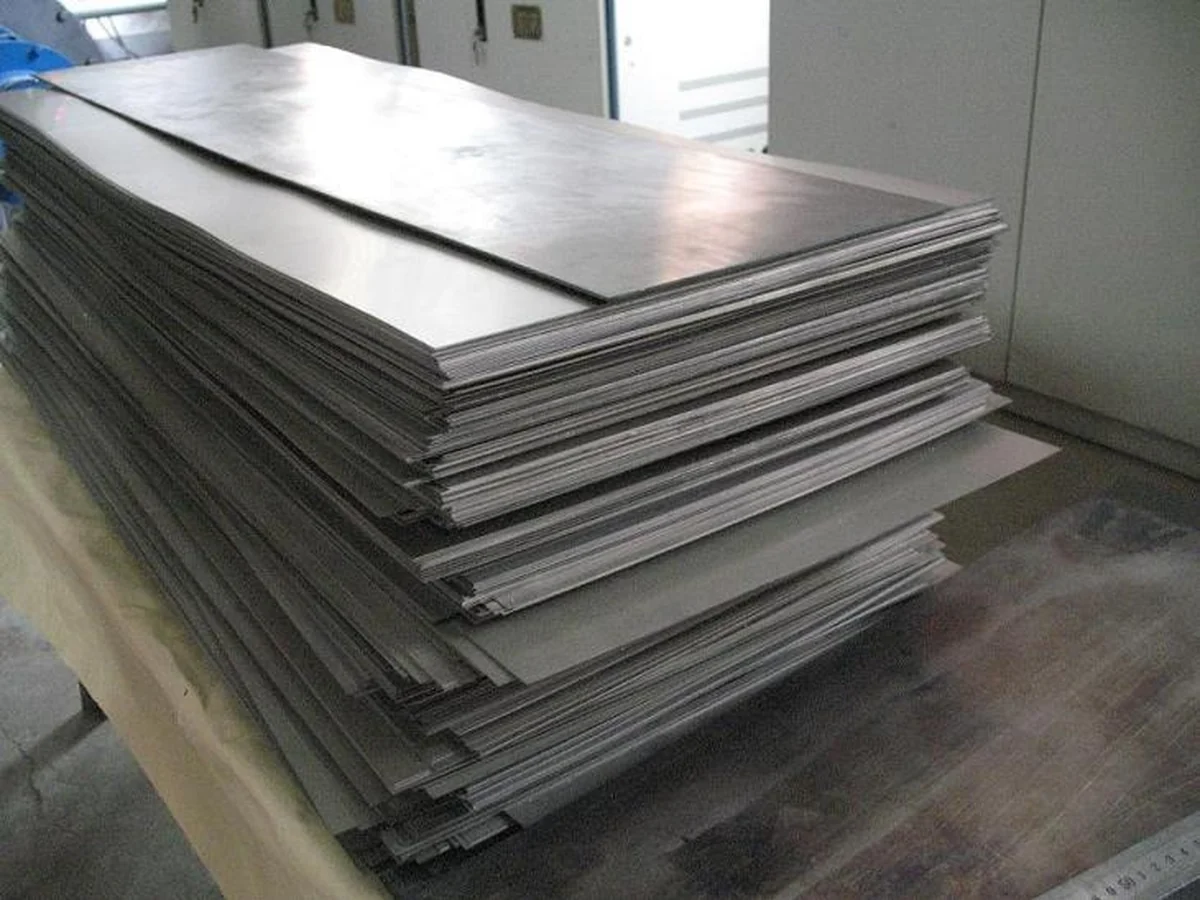
Grade 4 is the higher-strength end of commercially pure titanium, so a substitution from Grade 2 or 3 can change forming margin even when corrosion language sounds similar. Supplier pages may invoke ASTM B265, AMS 4901, ASTM F67 or a generic CP Grade 4 range. A controlled comparison needs the exact sheet standard, heat chemistry, annealed condition, rolling direction, bend or draw requirement, finished size and approval boundary on the same line.
How the five company sources were selected
We froze the query Grade 4 titanium sheet supplier ASTM B265 AMS 4901 on 1 September 2026. An eligible source had to be company-owned, identify Grade 4 sheet or sheet/plate supply, and expose at least one specification, chemistry, condition, dimension, processing or certificate field. Beiyu, excluded-geography sources, marketplaces, directories, third-party rankings and pages limited to Grade 4 bar were removed. The five entries are a reproducible discovery set, not a recommendation order.
A public page can identify a likely supply route. It cannot prove allocated stock, current program approval, final schedule, lot compliance or suitability of material not yet produced or assigned. Those points remain dated quotation fields.
Company pages that met the rule
| Company source | Page role | Visible fields | RFQ check |
|---|---|---|---|
| ATI | Producer CP Grade 4 page | UNS R50700, chemistry/mechanical fields and B265/AMS/F67 routes | Return the ordered product form, specification, actual heat values, condition and producer documents |
| Continental Steel & Tube | Grade 4 supply page | Grade identity, chemistry, sheet/plate forms and SB-265/AMS 4901 route | Confirm sheet size, source, exact standard and whether stock/processing preserves the required condition |
| Titanium Industries | Titanium sheet range page | Grade 4 sheet with B265, AMS 4901, F67 and service-center context | Select the program route and request original mill release plus cut/flatness return |
| TSM Technology | Grade 4 sheet product page | CP Grade 4 chemistry/mechanical tables, application, condition and documents | Bind page claims to the exact heat, sheet dimensions, anneal, surface and test package |
| Mingjie Titanium | Grade 4 sheet page | B265 identity, thickness/width/length, rolling, pickled surface and inspection fields | Return finished dimensions, tolerance, condition, surface, lot testing and current schedule |
The pages use different naming conventions for commercially pure grades, and three combine sheet with plate. Normalize every quotation to Grade 4/UNS R50700, the exact standard and one product form. A warehouse stock statement does not identify the original mill or show that the material retains the required program approval after cutting. A producer data page, meanwhile, does not prove the requested size is currently scheduled. The comparison table is therefore a route map for questions rather than proof of availability.
Control the CP strength-versus-formability tradeoff
| Decision | Choices visible in the source set | Required written return |
|---|---|---|
| Specification | B265 Grade 4, AMS 4901, F67 or buyer drawing/program requirement | Governing revision, precedence, exceptions and source approval |
| Heat identity | UNS R50700 chemistry and interstitial control without Grade 2/3 substitution | Actual heat/product analysis and original mill traceability |
| Condition | Annealed mill sheet, processor-leveled/cut blank or buyer-specific thermal history | Complete mill/processor route and condition evidence |
| Forming input | Rolling direction, bend radius, draw depth, blank orientation, edge and surface | Capability review, sample/first article and protected handling plan |
| Release | Mechanical orientation, dimensions, flatness, surface and program-specific tests | Sampling, methods, criteria, lot map and reports |
The procurement error to avoid is treating “commercially pure” as “all CP grades are interchangeable.” Grade 4’s strength comes with a different ductility and forming response. If the part is bent, drawn or flanged, provide the forming geometry and grain direction instead of asking only for tensile compliance. If the part is machined, define cleanup stock, flatness after subdivision and any restriction on thermal cutting. AMS, ASTM and medical-material routes can share an alloy family but carry different purchaser controls and approval expectations. A supplier listing multiple standards must state which one governs the actual piece; one certificate cannot be assumed to satisfy every route in the list.
For a thin structural aerospace bracket, connect nesting to the engineering drawing. Mark rolling direction, bend lines, hole-edge distances, cosmetic surfaces and forbidden repair zones. Ask whether the service center shears, saws, lasers or waterjets the blank and how heat-affected or work-hardened edges are removed. If the order needs an approved mill, processor or laboratory, request current evidence for the named route rather than a company-level quality logo. A forming trial may be more valuable than ordering a large lot against nominal properties, but the trial must use the same heat, thickness, condition, surface and tool path intended for production.
A flexure or diaphragm program needs fatigue information that ordinary sheet stock tables do not provide. State stroke, preload, cycle spectrum, mean stress, notch geometry and surface-finish direction; then define how laser recast, burrs, scratches and edge roll-over are removed. Preserve witness coupons next to the nested parts and record tool wear during progressive forming. Springback should be measured from the released part after a fixed dwell, not corrected informally at the press. Dye penetrant, dimensional capability and proof cycling answer different failure modes, so place each operation at a named production stage with its own acceptance record.
A conflict between visible page fields is a verification prompt, not proof that a company cannot supply the item. Preserve the difference, request a clean technical return and let the purchase order control final identity, geometry, responsibility and acceptance.
Send one controlled RFQ
| RFQ line | Buyer input | Supplier return |
|---|---|---|
| Program/material | Grade 4/R50700, specification/revision, application and approval list | Exact source/route, standards precedence, exceptions and current approvals |
| Sheet | Thickness × width × length, quantity, tolerance, flatness, edge and grain direction | Finished values, tolerance basis, cut/nesting plan and weight |
| Condition/surface | Anneal, rolling route, finish, film, cleaning and contact restrictions | Thermal/process history, handling and preserved condition |
| Forming | Bend/draw geometry, orientation, minimum radii, trial or first article | Capability response, sample plan and dimensional recovery assumptions |
| Tests/documents | MTC, chemistry, tensile orientation, dimensions, surface and processor records | ITP, actual results and heat-parent sheet-blank trace map |
| Commercial | Master sheet or cut blanks, packing, delivery date and destination | Stock/production status, MOQ, schedule, validity and exclusions |
Remove any source that cannot return the exact material, deliverable, finished geometry and acceptance evidence. Compare price, schedule and terms only after technical lines, responsibility boundary and document scope are aligned.
Where Beiyu fits
Beiyu is outside the five-company set. Its Grade 4 sheet enquiry route asks for UNS R50700 and the controlling B265/AMS 4901/F67/customer revision, actual heat chemistry, sheet dimensions and tolerance, annealed or other ordered condition, grain direction and forming geometry, surface and edge, required approval/inspection records, quantity, processing, packing and destination. Grade 2 or Grade 3 is not substituted without written buyer approval.
The fields in this section describe only Beiyu’s published enquiry route. They do not score the companies above and do not transfer to another company’s catalogue.
Related Beiyu pages
- Grade 4 titanium sheet
- Titanium sheet supplier pages compared
- ASTM B265 titanium sheet and plate guide
- How to compare titanium quotations
Published by Beiyu Titanium. Beiyu is outside the five-company set. The sequence is a dated discovery snapshot after the stated exclusions, not a rating or endorsement.
Related supplier lists and supply ranges
- titanium sheet and plate supply range
- Grade 2 Titanium Sheet Suppliers
- Grade 7 Titanium Sheet Suppliers
- Niobium Sheet Suppliers
- Ti-15-3-3-3 Titanium Sheet Suppliers
- Titanium Sheet Suppliers
- Titanium Tube Sheet Suppliers
- all supplier lists by product family
Specification detail with sources
Beiyu Titanium publishes this list and is not part of the comparison above. For readers who want the publisher’s own figures on the same basis they would ask of any supplier on this page, the material is specified to ASTM B265, and each order carries an EN 10204 type 3.1 certificate with heat and pour numbers by order scope.
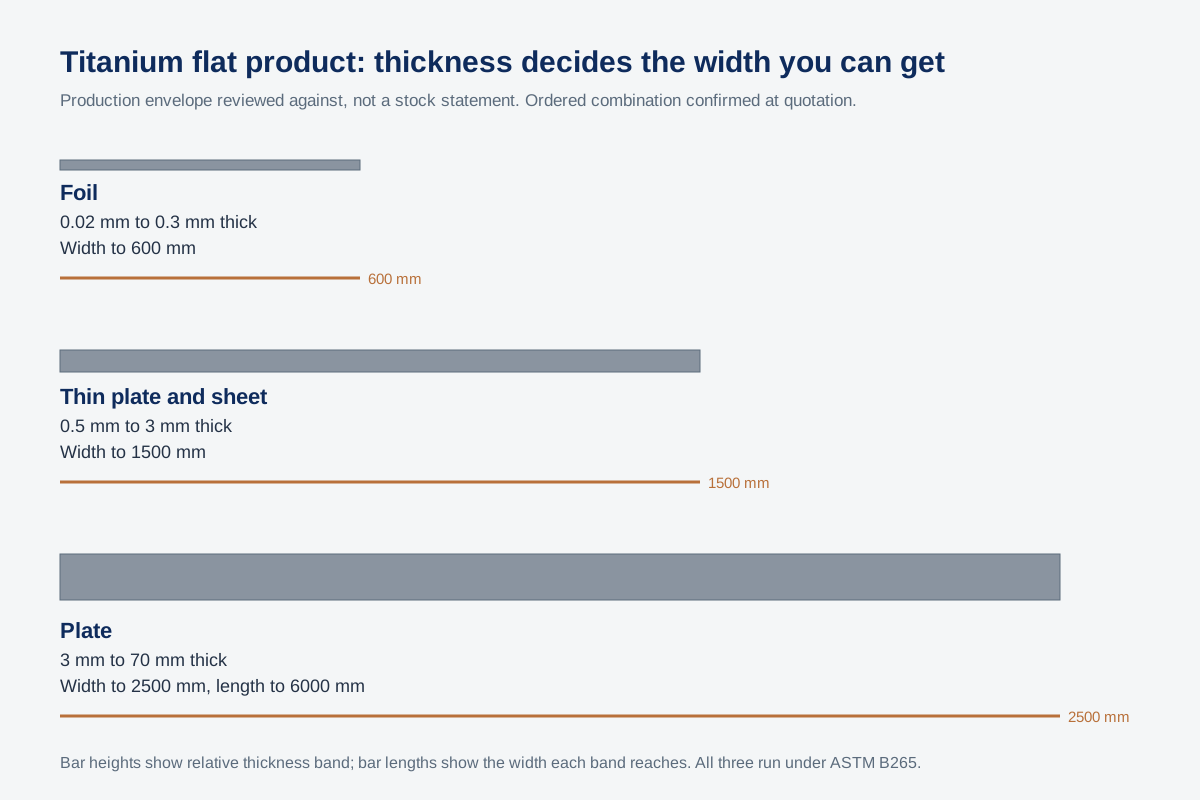
Beiyu supplies sheet and thin plate 0.5 to 3 mm thick in widths to 1500 mm, and heavy plate 3 to 70 mm thick in widths to 2500 mm, both in lengths to 6000 mm, with surface condition stated on the order.
These are Beiyu published supply figures and inspection parameters, not limits taken from the standard; limit values belong to ASTM B265 and are confirmed against the exact edition named on the purchase order. Certification is stated as a production capability, and no stock position, delivery time or price is implied by any figure on this page.