
Ti-15V-3Cr-3Sn-3Al, commonly shortened to Ti-15-3-3-3, is a metastable beta titanium alloy identified as UNS R58153. Sheet buyers often want a solution-treated form for fabrication followed by aging, yet the party responsible for final heat treatment and property verification can vary. A useful supplier comparison therefore starts with AMS 4914 revision and ordered condition, then fixes thickness, rolling direction, flatness, surface, heat-treatment evidence and traceability. Five company-owned sources provide different parts of that picture.
How this five-company source set was built
We froze the search Ti-15-3-3-3 titanium sheet supplier AMS 4914 on 1 September 2026. A source qualified when its owner supplies the material, explicitly named Ti-15-3-3-3 or its full composition, connected it to sheet or flat product, and exposed a technical or commercial buying field. Beiyu, marketplaces, directories, rankings and excluded geographies were removed. Generic beta-titanium pages without an orderable sheet route did not qualify. Supplier values remain attributed and must be reconciled to the ordered AMS revision.
| Company | Page type | What the page exposes | What the buyer must verify |
|---|---|---|---|
| Titanium Industries | Alloy page | Ti-15-3-3-3 identity, product forms, specifications and application context | Actual sheet line, AMS revision, source, condition, size and availability |
| Evek | Alloy product page | R58153 composition, material context and selectable forms | Sheet-specific route, source mill, certification, thickness and condition |
| Supra Alloys | Sheet and plate page | Titanium flat-product sourcing and processing context | Explicit Ti-15-3-3-3 line, AMS 4914 route, size, condition and release |
| Western Alloys | Ti-15-3-3-3 sheet page | Composition, sheet dimensions, standard and condition prompts | R58153 heat, exact AMS revision, final state, tolerance and reports |
| TIMET | Producer alloy datasheet | Processing, heat treatment, properties and metastable-beta context | Current orderability, mill route and lot results under the purchase specification |
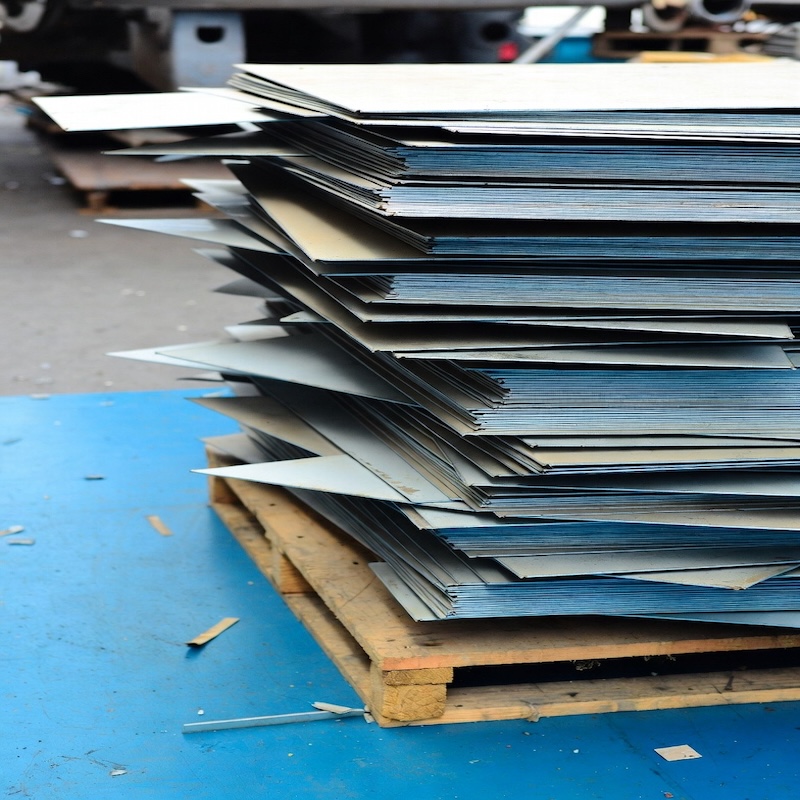
Assign solution treatment and aging responsibility
Name AMS 4914 and its revision, then state the ordered condition in the same line. If sheet arrives solution treated for forming and the fabricator will age the component, identify the aging recipe, furnace qualification, test-coupon plan, distortion allowance and authority that releases final properties. If the supplier delivers aged sheet, confirm whether the forming route remains viable. Published typical properties should guide design discussion, not become receiving limits by copy and paste. The design authority must set the applicable specification values, orientation and final-part verification.
| Decision field | Buyer input | Required supplier return |
|---|---|---|
| Identity | Ti-15-3-3-3 / UNS R58153 and exact AMS 4914 revision | Original heat chemistry, source mill, route and deviations |
| Condition | Solution treated, aged or program-defined delivery state | Thermal records, cooling route, property basis and responsibility split |
| Sheet geometry | Thickness, width/length, tolerance, flatness and rolling direction | Actual capability, measurement map and sheet orientation marks |
| Fabrication | Forming sequence, bend direction, aging, distortion and joining limits | Supplier processing boundary and buyer actions requiring validation |
| Release | Mechanical orientation, surface, dimensions, heat treatment and traceability | Lot/coupon plan, acceptance methods and indexed reports |
Where quotations diverge in practice
For a formed aerospace bracket or spring element, send the flat pattern, finished geometry, rolling-direction restriction, critical bend radii, forming temperature if any, and the planned aging point. Identify who owns springback compensation and dimensional inspection after aging. The material quotation should state sheet thickness, condition, source, AMS revision, flatness, surface and orientation marks. The fabrication plan should separately cover tool qualification, furnace uniformity, coupons, final property evidence and distortion control. Keeping those responsibilities visible prevents a solution-treated sheet certificate from being mistaken for proof of aged-part performance.
Receiving inspection and traceability traps
At receipt, match R58153, heat number, AMS 4914 revision and condition across labels, MTC and thermal records. Check actual chemistry and mechanical results with the correct specimen orientation. Verify thickness, flatness, surface and rolling-direction marks before sheets are nested or mixed. If aging occurs later, preserve heat and sheet identity through cutting and forming, and retain coupon location. A generic statement that the alloy is heat treatable does not prove the offered delivery condition. Any substitution to another beta alloy requires engineering disposition because similar strength language does not establish formability, heat-treatment response or certification equivalence.
Send one controlled RFQ return schedule
Send the same return schedule to every candidate and require line-by-line answers. Keep blank cells, options and exceptions visible. Compare the material route, dimensions, processing, inspection and certificate package before totals, because a lower price may describe a different deliverable. Ask each seller to date the return, name the quoted source and state how long technical and commercial assumptions remain valid. Record every clarification in the final order instead of leaving it in a separate email chain.
| RFQ group | Buyer states | Supplier returns |
|---|---|---|
| Program | Application, Ti-15-3-3-3/R58153, AMS 4914 revision and approvals | Offered source, route, condition, approval status and exceptions |
| Sheet | Thickness, tolerance, width/length, flatness and rolling direction | Capability, measurement map, orientation marks and actual size |
| Thermal | Delivery condition, solution/aging responsibility, recipe and cooling | Furnace/process records, coupon plan, properties and deviations |
| Fabrication | Bend route, surface, joining, distortion and prohibited repair | Processing boundary, risks and buyer decisions before award |
| Release | Chemistry, mechanical orientation, dimensions, surface and traceability | ITP, lot definition, sampling, criteria and indexed reports |
| Commercial | Trial and production quantity, packing, destination and date | MOQ, stock/production, schedule, validity and exclusions |
How Beiyu handles the same enquiry
Beiyu sits outside the five-company comparison. Its Ti-15-3-3-3 sheet enquiry route starts with R58153, the exact AMS 4914 revision and delivery condition. It then records thickness, width, length, tolerance, flatness, rolling direction, surface, solution-treatment and aging responsibility, fabrication sequence, inspection, heat-to-sheet traceability, quantity, protected packing and destination. The quotation states which properties apply to the delivered state and which depend on later buyer-controlled processing. Returned records identify the heat-treatment stage and the party responsible for final acceptance.
Use the Ti-15-3-3-3 titanium sheet, general titanium sheet suppliers comparison, titanium sheet and plate thickness guide, how to compare titanium quotations to verify the product route, broader supplier landscape and adjacent procurement controls. Send the drawing, quantity, inspection scope, required date and destination with the controlled schedule. Resolve every returned exception before award.
Related supplier lists and supply ranges
- titanium sheet and plate supply range
- Grade 2 Titanium Sheet Suppliers
- Grade 4 Titanium Sheet Suppliers
- Grade 7 Titanium Sheet Suppliers
- Niobium Sheet Suppliers
- Titanium Sheet Suppliers
- Titanium Tube Sheet Suppliers
- all supplier lists by product family
Specification detail with sources
Beiyu Titanium publishes this list and is not part of the comparison above. For readers who want the publisher’s own figures on the same basis they would ask of any supplier on this page, the material is specified to ASTM B265, and each order carries an EN 10204 type 3.1 certificate with heat and pour numbers by order scope.
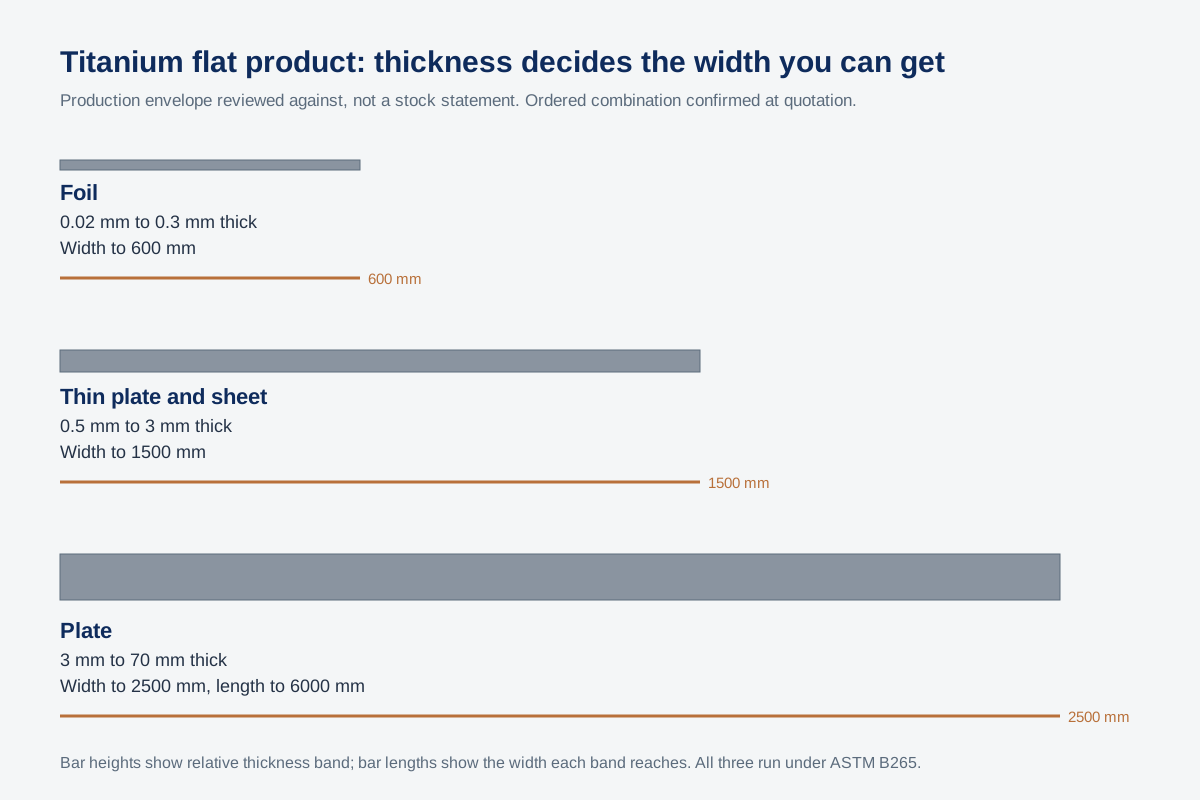
Beiyu supplies sheet and thin plate 0.5 to 3 mm thick in widths to 1500 mm, and heavy plate 3 to 70 mm thick in widths to 2500 mm, both in lengths to 6000 mm, with surface condition stated on the order.
These are Beiyu published supply figures and inspection parameters, not limits taken from the standard; limit values belong to ASTM B265 and are confirmed against the exact edition named on the purchase order. Certification is stated as a production capability, and no stock position, delivery time or price is implied by any figure on this page.