
Zr 702 / Zr 705Grades quoted
ASTM B658Pipe reference
ASTM B523Tube reference
Three routesCapillary, seamless, welded
Acceptance is by the ordered specification. Values are RFQ references only. Final grade, chemistry, dimensions, inspection and documentation are confirmed by the purchase specification and mill test certificate.
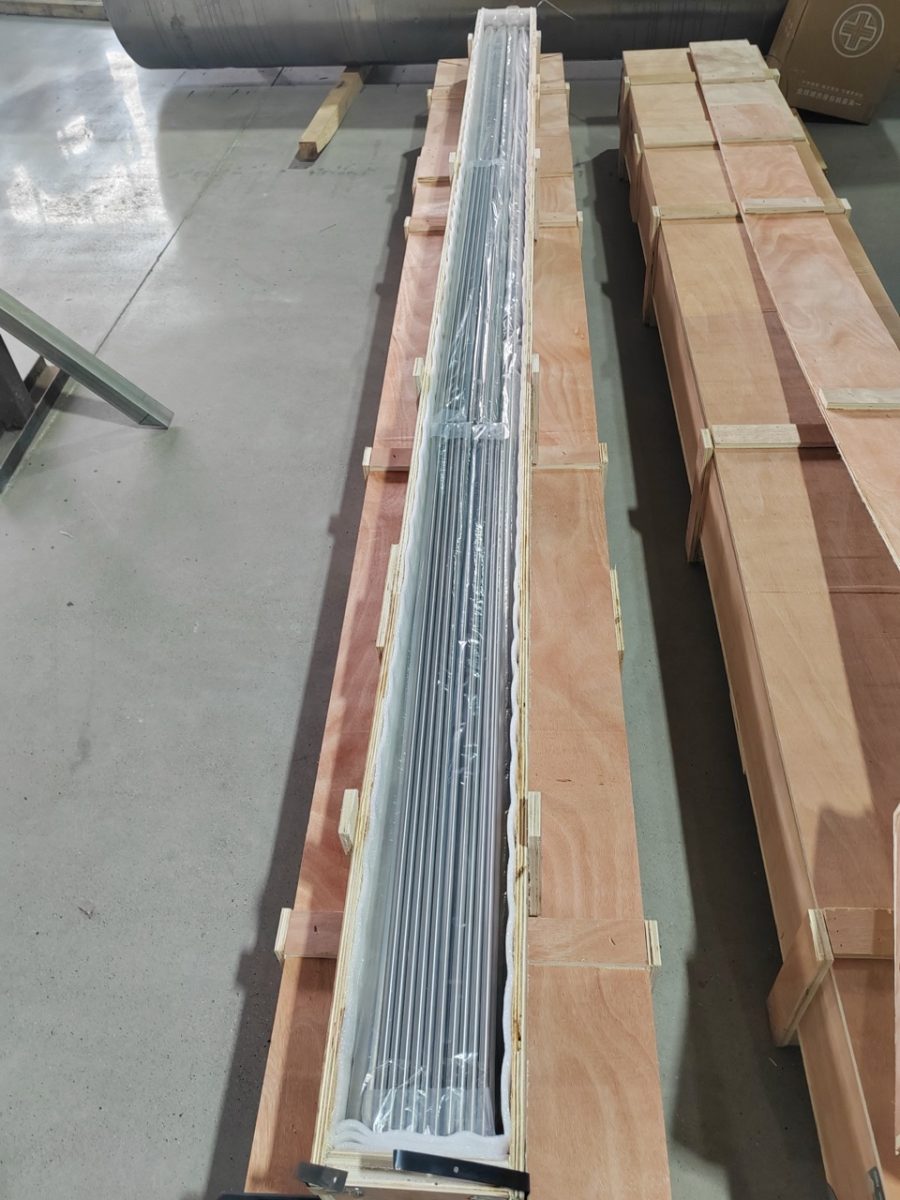
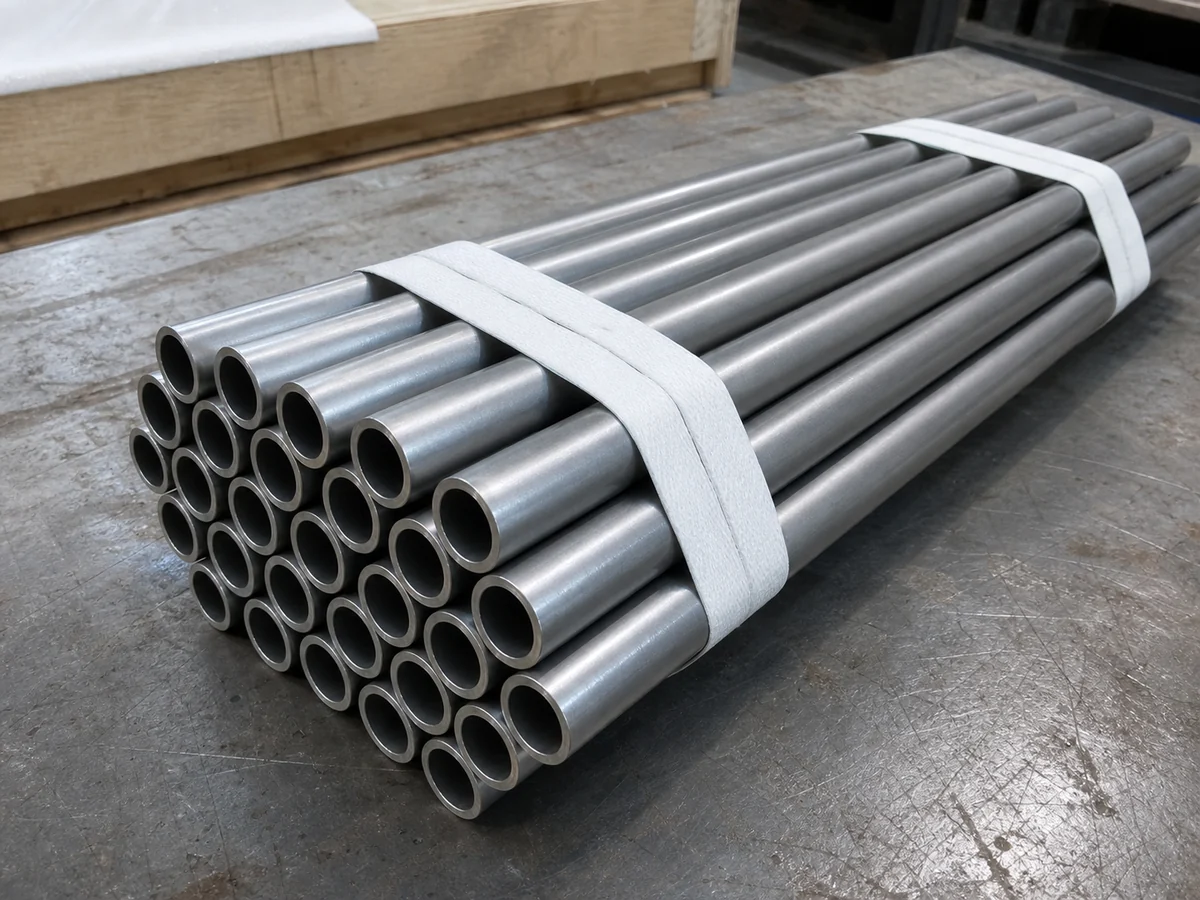
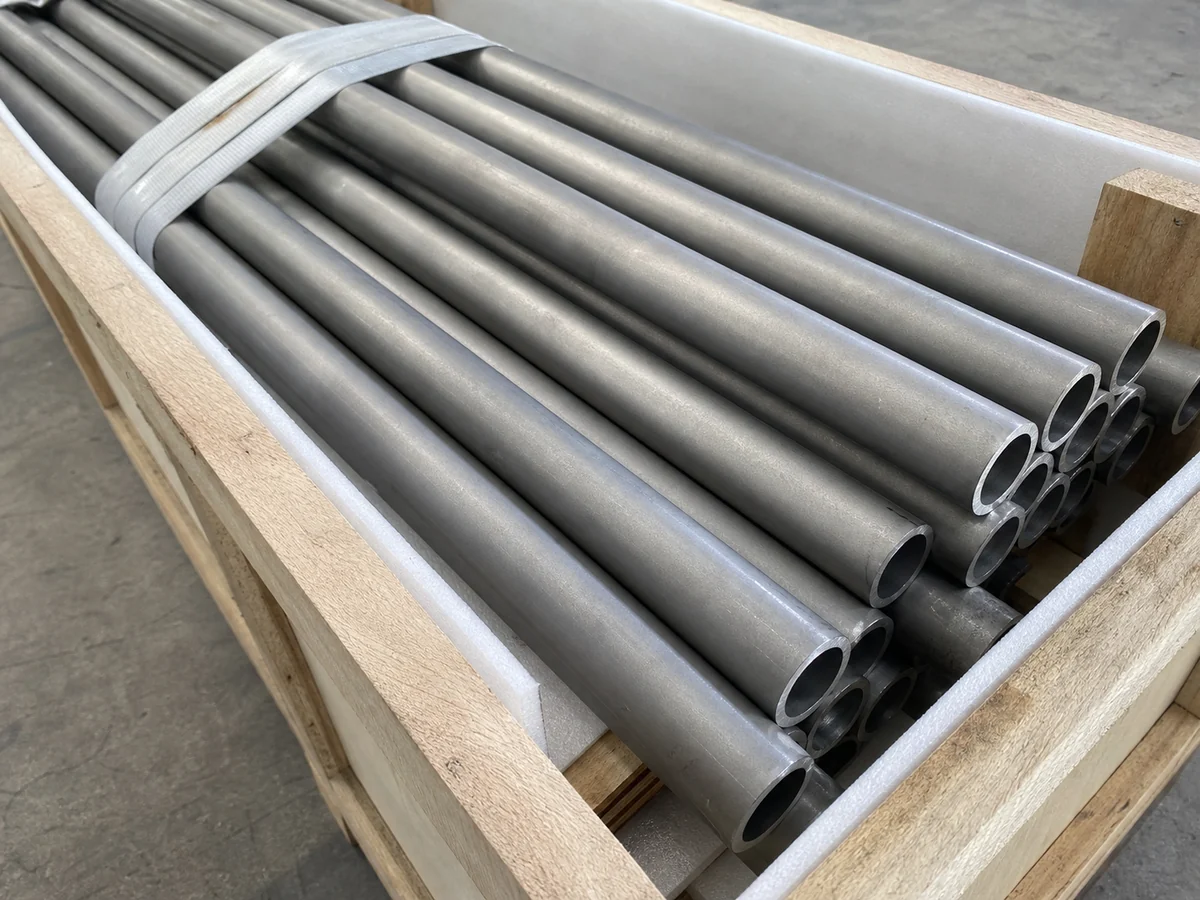
Zirconium pipe and tube is specified when a process stream attacks titanium and stainless steel, and some nickel alloys with them, but the duty does not reach the point where tantalum is called for. Beiyu Titanium supplies zirconium tube in three production routes under ASTM B658 and ASTM B523, in grades UNS R60702 (Zr 702) and UNS R60705 (Zr 705). State the route, outside diameter, wall thickness and length on the enquiry so the correct mill path and certificate scope are quoted.
Grades and standards
Two grades cover the industrial range. Zr 702 is unalloyed zirconium and carries the corrosion work. Zr 705 adds niobium and is ordered where strength governs the wall calculation rather than corrosion alone.
| Grade | UNS | What it is | Ordered when |
|---|---|---|---|
| Zr 702 | R60702 | Unalloyed zirconium | Corrosion is the governing requirement |
| Zr 705 | R60705 | Zirconium with niobium | Strength governs the wall calculation |
Chemical limits are set by the standard rather than by the mill. ASTM B658 lists them in its chemical requirements table, and the two grades Beiyu Titanium quotes differ mainly in niobium and in the zirconium plus hafnium floor.
| Element, percent | Zr 702 (R60702) | Zr 705 (R60705) |
|---|---|---|
| Zirconium plus hafnium, min | 99.2 | 95.5 |
| Niobium | not specified | 2.0 to 3.0 |
| Hafnium, max | 4.5 | 4.5 |
| Iron plus chromium, max | 0.2 | 0.2 |
| Oxygen, max | 0.16 | 0.18 |
| Carbon, max | 0.05 | 0.05 |
| Nitrogen, max | 0.025 | 0.025 |
| Hydrogen, max | 0.005 | 0.005 |
Values are the limits given in the chemical requirements table of ASTM B658/B658M-11e1. The standard also allows the purchaser and manufacturer to agree limits on elements it does not list, so a drawing carrying an extra element limit is quotable rather than out of scope.
The strength gap between the two grades is what usually drives a Zr 705 specification.
| Minimum property | Zr 702 (R60702) | Zr 705 (R60705) |
|---|---|---|
| Tensile strength, min | 380 MPa (55 ksi) | 550 MPa (80 ksi) |
| Yield strength, min | 205 MPa (30 ksi) | 380 MPa (55 ksi) |
| Elongation in 50 mm (2 in.), min | 16 percent | 16 percent |
Minimums are from the tensile requirements table of ASTM B658/B658M-11e1, with yield taken by the 0.2 percent offset method under Test Methods E8/E8M as that standard directs. Zr 705 carries roughly 45 percent more tensile strength and 85 percent more yield at the same minimum elongation, which is what lets a wall calculation come down.
Material is supplied in the annealed or stress relieved condition, the two conditions ASTM B658 permits. State which one the order requires, since the condition is part of what the certificate records rather than something read off the grade.
Both grades run against the same two standards for tube. ASTM B658 is the pipe standard and ASTM B523 is the tube standard. The factory sheet lists these two together against the tube form rather than splitting them by grade, so the grade and the standard are confirmed as separate lines on the order.
Typical size range
Three routes are quoted, and they are not interchangeable. The route decides the achievable diameter, the wall range and the maximum length in one piece.
| Route | Outside diameter | Wall thickness | Length |
|---|---|---|---|
| Capillary | 3 to 5 mm | 0.5 to 2 mm | up to 6000 mm |
| Seamless | 5 to 152 mm | 1 to 12 mm | up to 9000 mm |
| Welded | 6.35 to 1219 mm | 0.5 to 25.4 mm | up to 12000 mm |
These are production envelopes reviewed against each order, not a stock statement, and the ordered combination is confirmed at quotation.
Which of the three routes the drawing actually needs
Most zirconium tube enquiries arrive naming a diameter and a wall and leaving the route open, which is the field that changes the mill path. Only two of the routes overlap across a range: seamless and welded both reach 6.35 mm to 152 mm outside diameter, and inside that band the choice is made on the drawing rather than on the size. Capillary and seamless meet at a single diameter, 5 mm, and nowhere else.
| Outside diameter on the drawing | Routes that reach it | What decides the choice |
|---|---|---|
| 3 to below 5 mm | Capillary only | Wall runs 0.5 to 2 mm on this route. Instrument lines and sampling loops normally land here |
| Exactly 5 mm | Capillary or seamless | Wall required: capillary carries 0.5 to 2 mm, seamless carries 1 to 12 mm |
| Over 5 to 6.35 mm | Seamless only | Capillary stops at 5 mm and welded starts at 6.35 mm, so the wall has to sit in the 1 to 12 mm seamless range in this band |
| 6.35 to 152 mm | Seamless or welded | A drawing calling out no longitudinal weld takes seamless. A wall below 1 mm or above 12 mm takes welded |
| Above 152 mm | Welded only | Reaches 1219 mm. Column internals, large vessel nozzles and exchanger shells fall here |
Length tracks the route rather than the diameter: 6000 mm capillary, 9000 mm seamless, 12000 mm welded. A single piece requirement longer than the route allows becomes a field weld on site, and that changes the inspection scope, so it belongs on the enquiry rather than in a later revision.
Where the drawing is silent, quoting proceeds against the route the geometry allows and the assumption is written into the quotation for the buyer to confirm.
Applications
Zirconium tube is bought for duties where the oxide film holds in conditions that strip titanium. Common ones are sulphuric and hydrochloric acid service in chemical process plant, urea and organic acid plant, and pharmaceutical reactor and condenser duty where product purity depends on the wetted metal not contributing ions. Heat exchanger bundles and column internals are the usual assemblies.
Sulphuric and hydrochloric acid service in chemical process plant
Urea and organic acid plant tube bundles
Pharmaceutical reactor and condenser duty
Heat exchanger bundles and column internals
Corrosion notes
Zirconium is selected against a specific acid, at a stated concentration and temperature, rather than as a general upgrade over titanium. ASTM B658 sets chemistry and mechanical requirements and does not rank the two grades against one another for corrosion, so a corrosion selection has to come from the service conditions rather than from the grade number. Send the service conditions with the enquiry, including any oxidising species or halides present, and the material choice is reviewed against them rather than assumed from the grade.
Tolerances the standard sets, and the one case where they do not apply
Outside diameter tolerances under ASTM B658 are stated against nominal pipe size and apply to seamless pipe. Welded pipe tolerances are agreed between manufacturer and purchaser instead, so a welded order needs the tolerance written onto it rather than assumed from the standard.
| Nominal pipe size | Over | Under |
|---|---|---|
| 1/8 to 1 1/2 in. (3.2 to 40 mm), incl | 0.4 mm | 0.8 mm |
| Over 1 1/2 to 4 in. (40 to 100 mm), incl | 0.8 mm | 0.8 mm |
| Over 4 to 8 in. (100 to 200 mm), incl | 1.6 mm | 0.8 mm |
| Over 8 to 12 in. (200 to 305 mm), incl | 2.4 mm | 0.8 mm |
Two limits sit alongside that table and are easy to miss. Wall thickness may vary by up to 12.5 percent of the nominal wall at any point, and length may run up to 6.4 mm over the ordered length but never under it. Both are from the permissible variations section of ASTM B658/B658M-11e1.
The exception matters on thin wall work. Where the wall is 3 percent of the outside diameter or less, the standard classes the pipe as thin wall and the diameter table above no longer applies as written: it applies to the mean of the largest and smallest readings in a cross section, and out of roundness in that cross section is held to 1.5 percent of the specified outside diameter instead. The standard gives its reason in the same clause: thin wall pipe usually develops significant ovality during final annealing, straightening, or both.
Why a Zr 705 weld has a clock on it
This requirement is routinely missed on welded zirconium pipe orders. ASTM B658, the pipe standard, requires welds in grade R60705 to be stress relief annealed within 14 days of welding, to prevent delayed hydride cracking. The treatment is a hold at 600 C (1100 F) minimum for not less than 30 minutes per 25 mm of maximum thickness in a non reducing atmosphere, with a minimum of 15 minutes at temperature, followed by cleaning so the part is free of oxide scale contamination under Practice B614.
Zr 702 does not carry this requirement. Read the scope of the clause carefully before planning around it: ASTM B658 places the obligation on welds in the pipe as supplied, not on welds a fabricator makes later. Welds made downstream are governed by the fabrication code rather than by B658, and the same delayed hydride cracking mechanism is what the clause is written against. So if the pipe will be welded again after delivery, say so on the enquiry, and confirm the post weld requirement for that stage against the fabrication code. Where the order is for tube to ASTM B523 rather than pipe to B658, confirm the post weld requirement against that standard rather than assuming it reads across.
RFQ information needed
| Field | Why it changes the quote |
|---|---|
| Route (capillary, seamless or welded) | Sets the mill path, the achievable wall and the single piece length |
| Outside diameter and wall thickness, or nominal pipe size and schedule | Decides which routes can reach the size at all. The ASTM B658 tolerance table is keyed to nominal pipe size, so an order certified to it needs that rather than a bare diameter |
| Length, and whether a single piece is required | A single piece requirement beyond the route limit becomes a site weld |
| Grade (Zr 702 or Zr 705) | Strength governed walls are calculated on Zr 705 |
| Standard to be certified against | ASTM B658 and ASTM B523 are confirmed as a separate line from the grade |
| Certificate type | EN 10204 3.1 is the usual scope; a 3.2 line adds an independent party |
| Service conditions | Acid, concentration, temperature, and the full stream chemistry including any minor species |
Inspection, documentation and packing
Test frequency under ASTM B658 is set per lot rather than per piece: one longitudinal tensile test per lot, and one hydrogen and nitrogen analysis per lot of finished product. The manufacturer certifies that the material was made, sampled, tested and inspected to the specification and reports the results, and those results are tied to the heat number so the paperwork and the marked material match. Radiographic examination of butt welds is supplied where the order specifies it. Beiyu Titanium can supply zirconium tube produced under an ISO 9001:2015 quality system scope where the order calls for it.
Marking is a default rather than a negotiated item. Unless the order says otherwise, ASTM B658 has each length of 9.5 mm nominal diameter and larger marked with the manufacturer identification, the ASTM designation, the grade and the heat number, and smaller sizes bundled and tagged with the same information. Tube is capped and crated for sea freight, and any marking beyond the standard set is agreed before shipment.
Related products and alternatives
Where the duty does not need zirconium, the comparison usually runs against titanium tube to ASTM B338 first and against tantalum tube where the acid is more aggressive than zirconium handles. Zirconium bar and plate for the same projects are quoted in the same two grades, against their own size ranges and their own standards.
FAQ
Does ASTM B658 or ASTM B523 apply to my order?
Both are listed against the tube form on the factory sheet rather than split by grade, so the standard is confirmed as its own line on the order alongside the grade.
Can zirconium tube be supplied thinner than 1 mm wall?
Yes, on two of the three routes. Capillary carries 0.5 to 2 mm wall at 3 to 5 mm outside diameter, and welded carries from 0.5 mm at 6.35 mm outside diameter and above. The seamless route starts at 1 mm, so a sub millimetre wall between 5 mm and 6.35 mm outside diameter is the one combination none of the three reaches.
What is the largest diameter available?
1219 mm outside diameter, on the welded route.
Should I order Zr 705 for better corrosion resistance?
Zr 705 is ordered where strength governs the wall calculation, not as a corrosion upgrade. ASTM B658 sets the chemistry and strength limits for both grades and does not rank them against each other for corrosion, so corrosion selection is confirmed against your service conditions rather than read off the grade number.
What density should I use to estimate weight?
Use 6.51 g/cm3 for Zr 702 and 6.64 g/cm3 for Zr 705. These are handbook constants for the two grades, and they are the figures Beiyu Titanium works from when it estimates weight at quotation. The factory sheet itself does not print a zirconium density, so the quoted weight is confirmed against the ordered size rather than read off the constant alone.
Does zirconium pipe get pressure tested?
ASTM B658 calls for a hydrostatic proof test on each length of pipe that is 3.2 mm (1/8 in.) or larger in outside diameter with a wall of 0.4 mm (0.015 in.) or over, taking the fibre stress at three quarters of the minimum yield strength and capping the test pressure at 35 MPa (5000 psi). That threshold is set by ASTM B658 for pipe ordered under it. Where the order is for tube to ASTM B523, and the smallest capillary sizes in particular, the test scope is confirmed on the order rather than read across from the pipe standard.
Specification detail with sources
Zirconium tube is quoted in three routes on the Beiyu Titanium factory sheet: capillary at 3 to 5 mm outside diameter with 0.5 to 2 mm wall to 6000 mm, seamless at 5 to 152 mm outside diameter with 1 to 12 mm wall to 9000 mm, and welded at 6.35 to 1219 mm outside diameter with 0.5 to 25.4 mm wall to 12000 mm (Beiyu Titanium factory sheet, zirconium tube section). The tube form is listed against ASTM B658 and ASTM B523 together on that sheet rather than against individual grades, which is why the standard and the grade are confirmed as separate order lines here.
The grade designations are UNS R60702 for Zr 702 and UNS R60705 for Zr 705 (Beiyu Titanium factory sheet, zirconium grade column). The factory sheet does not print density or melting point for zirconium, unlike its tungsten, molybdenum, tantalum and niobium pages. The density figures used on this page, 6.51 g/cm3 for Zr 702 and 6.64 g/cm3 for Zr 705, are handbook constants and the values Beiyu Titanium uses in weight estimates, not factory sheet values; melting point is not stated here because no such figure is carried. In 15 years of titanium and refractory metal export work, the field most often missing from a zirconium tube enquiry is the production route, and it is the one that decides whether the size can be reached at all.
Which zirconium tube route the order means
Zirconium tube is not one product. Three production routes are quoted, and they overlap in diameter while differing in the wall they can carry and the length they can reach in one piece. An enquiry naming only a diameter and a wall leaves the route open, and the route is the field that decides the mill path rather than something a supplier can read off the size alone.
Hafnium is the other thing worth settling before the enquiry goes out. Both grades quoted here keep the hafnium that occurs with zirconium in the ore, and ASTM B658 allows up to 4.5 percent of it in each. Reactor grades, where hafnium is restricted instead, are a separate specification bought on a separate route, and a chemical plant is rarely buying one. The zirconium bar and plate page carries the same distinction for the solid forms.
Compare refractory metal products
Refractory metals categoryProduct
Material
Reference
Best for
Zirconium Bar and Plate
Zr702 / Zr705
ASTM B550 / B551
Chemical-process equipment parts
>
Tantalum Pipe and Tube
Ta / Ta alloy
ASTM B521
Acid-resistant pipe and tube
>
Niobium Pipe and Tube
Nb1 / Nb1Zr
ASTM B394
Tube and pipe RFQs
>
Tantalum Plate and Sheet
Ta / Ta alloy
ASTM B708
Plate, sheet and lining parts
>
Niobium Bar and Sheet
Nb1 / Nb1Zr
ASTM B392 / B393
Bar, sheet and machined blanks
>
Molybdenum Bar and Rod
Mo / TZM
ASTM B387
High-temperature rods and parts
>
Tungsten Bar and Rod
W / heavy alloy
ASTM B760 / B777
High-density and high-temperature parts
>
Zirconium Pipe and Tube
Zr702 / Zr705
ASTM B658 / B523
Acid-service tube and pipe
Related refractory metal products
Zirconium category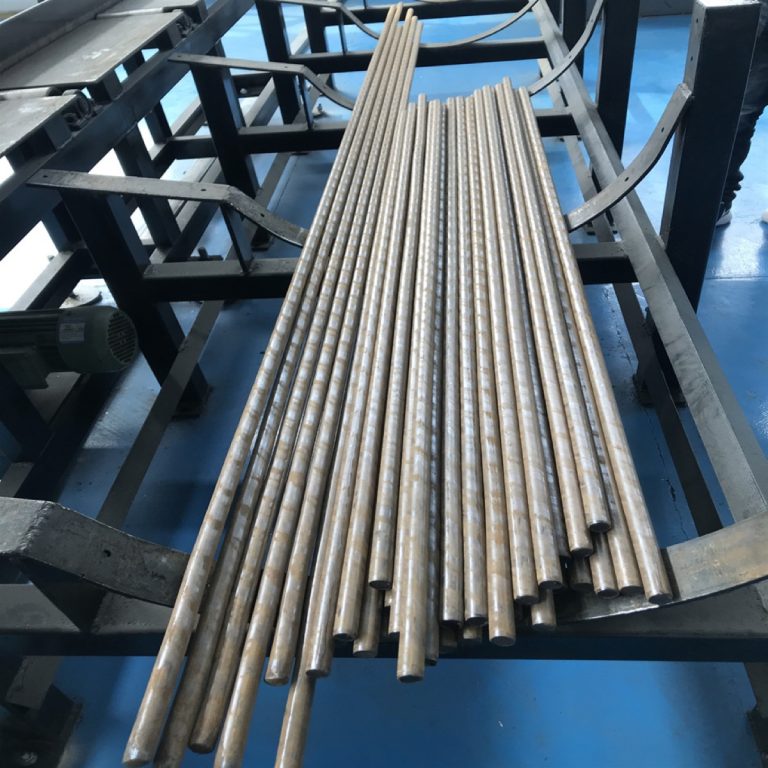
For a view of who else publishes this material and what each one states, see Zirconium Plate Suppliers: Five Company Pages Compared.
Request a quote for Zirconium Pipe and Tube
Send the route, outside diameter, wall thickness, length, grade, standard and certificate requirements. Beiyu replies with quotation and documentation scope.