
Pure nickel melts at 1455 °C (2651 °F, about 1728 K). The freezing point of nickel is listed as a secondary reference point on the International Temperature Scale of 1990: NIST gives it as 1728 K with an uncertainty of 1 K, and BIPM’s thermometry guide gives 1455.4 °C and names it as a point for calibrating thermocouples. Commercial nickel and nickel alloys do not melt at one temperature. Nickel 200 melts over 1435 to 1446 °C in Special Metals’ data (VDM gives 1435 to 1445 °C for Nickel 200 and 201), and the nickel alloys on this site start to melt between about 1260 and 1370 °C, depending on the grade. In service, the limits are set far below any of these figures.
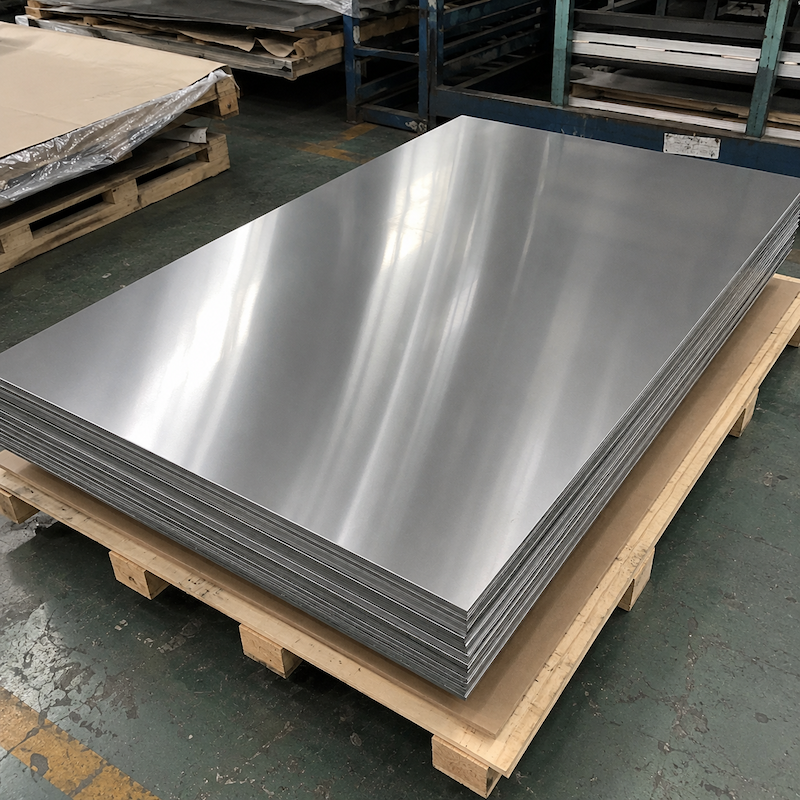
Pure nickel: 1455 °C and a temperature-scale reference point
| Source | Figure given | Notes |
|---|---|---|
| PubChem, element 28 (US National Institutes of Health) | 1455 °C (1728 K, 2651 °F) | Values credited to Jefferson Lab and Los Alamos National Laboratory (US Department of Energy) |
| NIST ITS-90 fixed-point database (SRD 60) | 1728 K, uncertainty 1 K | Listed as a secondary reference point: the normal freezing point, where solid and liquid nickel are in equilibrium at 101.325 kPa |
| BIPM, Guide to Secondary Thermometry (2022) | 1455.4 °C, uncertainty about 0.2 °C | Named, with palladium, as useful for calibrating thermocouples |
| US National Bureau of Standards, Research Paper RP1828 (1947) | 1455 °C ± 1 °C | The same paper lists an earlier gas-thermometer determination of 1452 °C (1911) |
The sources agree to within a degree or two. The 1728 K of the NIST database and the 1455 °C of PubChem are the same figure in two units; the BIPM guide carries one more decimal place and a smaller uncertainty.
Melting ranges of Nickel 200/201 and nickel alloys
A pure metal melts at a single temperature, while most alloys melt over a range between a solidus and a liquidus temperature, as the University of Cambridge’s materials teaching notes put it. Even commercially pure nickel is given as a range by its producers. The figures below are the producers’ published ranges, as set out on the grade pages of this site.
| Material | Melting range | Source |
|---|---|---|
| Nickel 200 | 1435 to 1446 °C (2615 to 2635 °F) | Special Metals, Nickel 200 & 201 bulletin SMC-061 (2006) |
| Nickel 200 and Nickel 201 | 1435 to 1445 °C (2610 to 2630 °F) | VDM Metals, data sheet No. 1101, Revision 02 (2022) |
| Alloy 825 (UNS N08825) | 1370 to 1400 °C (2500 to 2550 °F) | Special Metals and VDM, as on the Alloy 825 page |
| Inconel 600 (UNS N06600) | 1354 to 1413 °C (2470 to 2575 °F); VDM gives 1370 to 1425 °C | Special Metals; VDM, as on the Inconel 600 page |
| Inconel 625 (UNS N06625) | 1290 to 1350 °C (2350 to 2460 °F); other producers give 1288 to 1349 °C and 1288 to 1343 °C | Special Metals (2013); Haynes; ATI, as on the Inconel 625 page |
| Inconel 718 (UNS N07718) | 1260 to 1336 °C (2300 to 2437 °F); other producers give 1257 to 1260 °C for the lower bound and 1335 to 1343 °C for the upper | Special Metals SMC-045 (2007) and other producers, as on the Inconel 718 page |
Special Metals prints a range for Nickel 200 only, while VDM gives one range for both grades; the two producers’ figures differ by a degree, so they are shown as separate rows rather than merged. Composition, properties and the standards for each grade are on its own page: Nickel 200 and 201, Alloy 825, Inconel 600, Inconel 625 and Inconel 718.
Nickel against other metals
| Metal | Melting or freezing point | Source |
|---|---|---|
| Tungsten | 3410 °C | ASM Handbook data (reference value used on this site) |
| Titanium, unalloyed | 1668 °C | ASM Handbook data (reference value used on this site) |
| Iron | 1538 °C | PubChem, element 26 |
| Nickel | 1455 °C | PubChem, element 28; NIST SRD 60 |
| Copper | 1084.62 °C | ITS-90 defining fixed point (freezing point) |
| Aluminium | 660.323 °C | ITS-90 defining fixed point (freezing point) |
Nickel melts about 83 °C below iron (calculated) and well below titanium. Tungsten’s figure and the other refractory metals are compared on the tungsten melting point page, and titanium’s on the titanium melting point page.
Melting point and service temperature
| Point | What the sources say | Source |
|---|---|---|
| Nickel 200 in service | Normally limited to service below 315 °C (600 °F); at higher temperatures Nickel 200 can suffer graphitization, and Nickel 201 is preferred above 315 °C | Special Metals SMC-061 (2006); ASM Handbook and producer data, as on the pure nickel category page |
| ASME Boiler and Pressure Vessel Code, Section VIII, Division 1 | Nickel 200 approved for service up to 315 °C (600 °F); Nickel 201 up to 677 °C (1250 °F) | Special Metals SMC-061 (2006) |
| Nickel-base superalloys | Many operate, or keep useful strength, up to about 80 % of their absolute melting temperature | NASA CR-165605 (1982); NASA CR-120940 |
The rows describe different things. The Nickel 200 and 201 limits are grade-specific, while the NASA figure describes nickel-base superalloys generally and is not a rating for any single grade. For a particular alloy, the service temperature is taken from that grade’s producer data, not from its melting range.
Supply forms
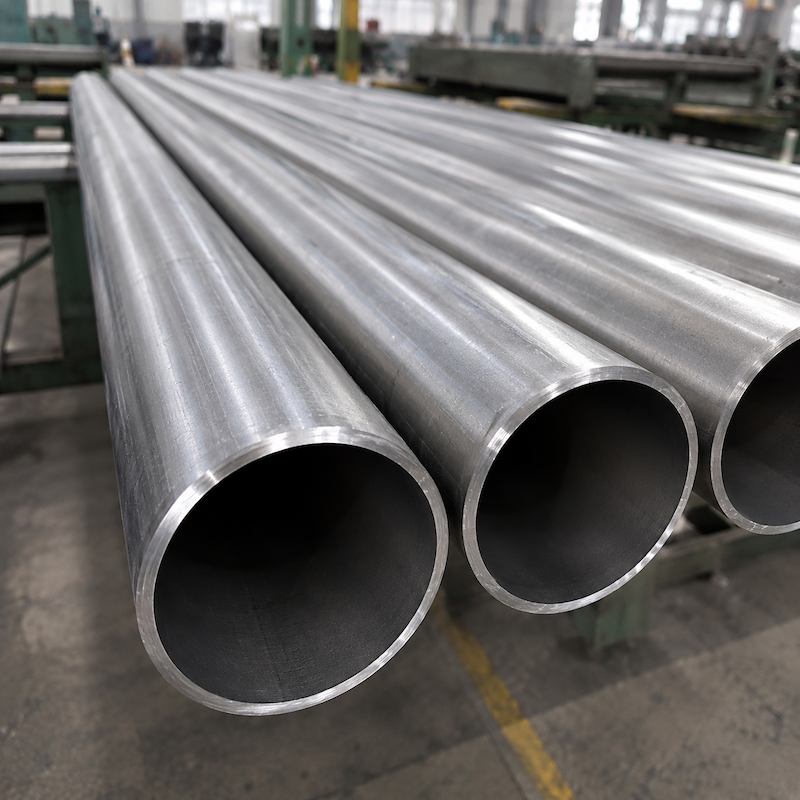
| Form | Range on this site |
|---|---|
| Pure nickel capillary tube | 1 mm to 5 mm OD, wall 0.1 mm to 2 mm, lengths to 6000 mm |
| Pure nickel seamless tube | 5 mm to 325 mm OD, wall 0.5 mm to 12 mm, lengths to 12000 mm |
| Pure nickel welded tube | 6.35 mm to 1219 mm OD, lengths to 12000 mm |
| Pure nickel wire | 0.5 mm to 6.0 mm |
| Nickel alloy plate | 3.0 mm to 70 mm thick, widths to 2500 mm, lengths to 6000 mm |
| Nickel alloy sheet | 0.8 mm to 3.0 mm thick, widths to 1200 mm |
For pure nickel, ASTM B160 covers rod and bar, ASTM B161 seamless pipe and tube, and ASTM B162 plate, sheet and strip, where the order names the standard; the pure nickel range lists the tube and wire forms. Nickel alloy products include Inconel 600 plate, Inconel 718 bar and Alloy 825 tubing. State the grade, the standard, the size and the documents required on the enquiry.
Common questions
Is the melting point of nickel exactly 1455 °C? To within about a degree. NIST’s temperature-scale database lists 1728 K (1455 °C) with an uncertainty of 1 K, and BIPM gives 1455.4 °C with an uncertainty of about 0.2 °C. The 1947 National Bureau of Standards paper gave 1455 °C ± 1 °C and records an earlier 1911 gas-thermometer value of 1452 °C.
What is the melting point of nickel in Fahrenheit and kelvin? 1455 °C is 2651 °F and about 1728 K.
Does nickel melt at a higher temperature than iron? No. Iron melts at 1538 °C and nickel at 1455 °C, both from PubChem.
What is the boiling point of nickel? The two values credited in PubChem differ: 2913 °C from Jefferson Lab and 2730 °C from Los Alamos National Laboratory.
Specification detail with sources
PubChem (element 28) gives the melting point of nickel as 1728 K (1455 °C or 2651 °F), credited to Jefferson Lab, and 1455 °C from Los Alamos National Laboratory. The NIST ITS-90 fixed-point database (SRD 60) lists the freezing point of nickel as a secondary reference point at 1728 K with an uncertainty of 1 K, and the BIPM Guide to Secondary Thermometry (Specialized Fixed Points above 0 °C, 2022, §4.4) gives 1455.4 °C with an uncertainty of about 0.2 °C and names it as useful for calibrating thermocouples. National Bureau of Standards Research Paper RP1828 (1947) reported 1455 °C ± 1 °C. Special Metals bulletin SMC-061 (2006) gives Nickel 200 a melting range of 1435 to 1446 °C (2615 to 2635 °F), and VDM Metals data sheet No. 1101, Revision 02 (2022), gives Nickel 200 and 201 1435 to 1445 °C (2610 to 2630 °F).
The University of Cambridge’s DoITPoMS notes describe a pure material as melting at a single temperature at constant pressure and most multi-component systems as melting between a solidus and a liquidus. Iron’s 1538 °C is from PubChem (element 26); aluminium’s 660.323 °C and copper’s 1084.62 °C are defining fixed points of the International Temperature Scale of 1990 (BIPM, ITS-90, Table I). NASA contractor reports CR-120940 and CR-165605 (1982) describe many nickel-base superalloys as operating, or keeping useful strength, up to about 80 % of their absolute melting temperature. Special Metals bulletin SMC-061 (2006) says Nickel 200 is normally limited to service below 315 °C because it can suffer graphitization above that, prefers Nickel 201 there, and states ASME Section VIII, Division 1 approval for service up to 315 °C for Nickel 200 and 677 °C for Nickel 201.