
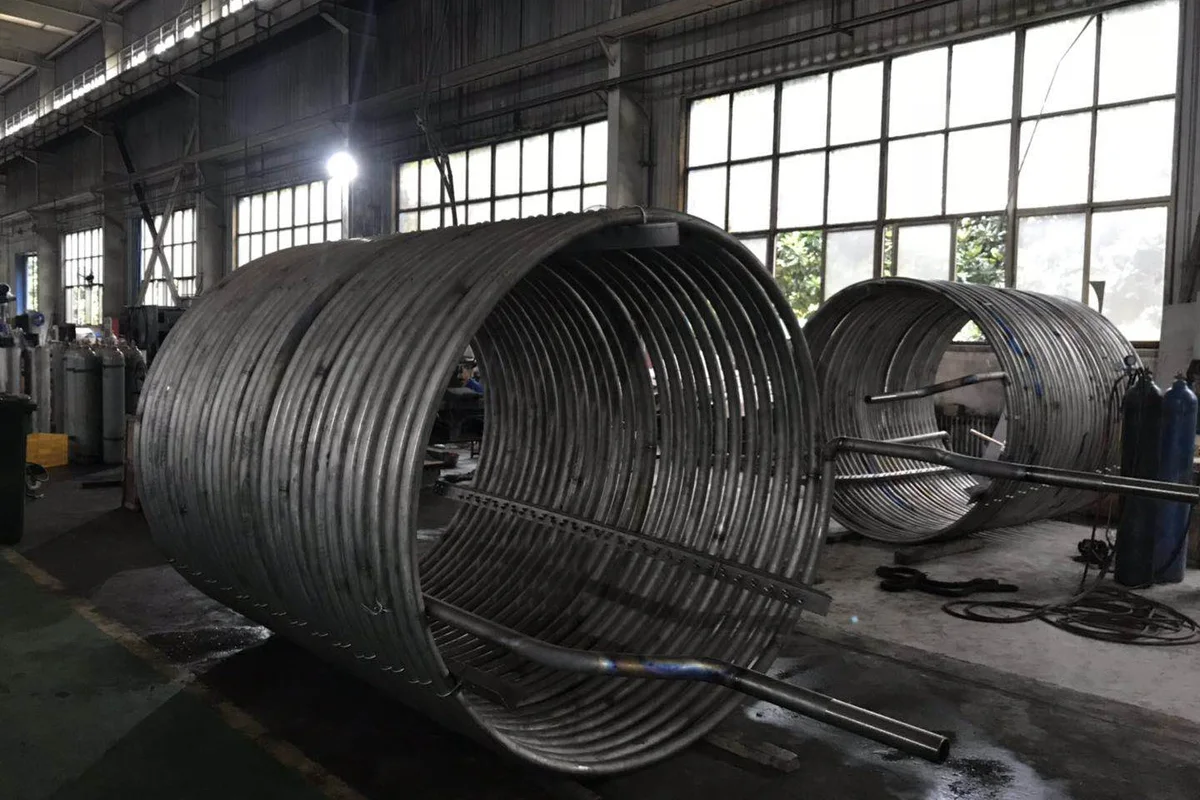
A titanium chemical-equipment enquiry can cover a heat exchanger, pressure vessel, reactor, column, tank, piping spool or only the reactive-metal material package. Company pages differ on equipment family, solid versus clad construction, design/code role and installation scope. This comparison records five first-party fabrication pages without transferring one company’s approvals or capabilities to another.
How the five chemical-equipment fabricator pages were selected
We checked titanium chemical process equipment fabricator and titanium pressure vessel heat exchanger fabricator on 1 September 2026, followed by targeted company-domain checks. Eligible results were accessible company-owned pages that explicitly described titanium chemical-process equipment fabrication. Beiyu, marketplaces, directories, duplicate domains, raw-material-only pages and pages limited to unrelated consumer equipment were excluded. Sequence records the dated discovery set after those exclusions; it is not a fabricator score.
| Company page | Equipment scope recorded | Materials, codes or engineering fields stated | Project question before comparison |
|---|---|---|---|
| Titanium Fabrication Corporation (TiFab) | Reactors, shell-and-tube heat exchangers, ozone components, eductors and pipe spools | Titanium, zirconium and high-nickel materials; ASME-code plant-equipment wording on the reviewed page | Which legal facility, code edition/stamp, design responsibility, material and inspection plan apply to this item? |
| TITAN Metal Fabricators | Shell-and-tube, immersion, bayonet, pipe-in-pipe and hairpin heat exchangers | Reactive-metal scope and HTRI/Aspen design-tool wording; page-specific size/weight fields | Confirm the selected exchanger type, thermal/mechanical responsibility, code basis and actual project envelope |
| SPF Japan | Columns, vessels, heat exchangers and piping in solid and clad routes | Titanium, zirconium, niobium and tantalum; several pressure-code routes listed by project conditions | Which base metal/cladding system, code/edition, approval route and shop scope are quoted? |
| Örnalp Unozon | Titanium pressure vessels, heat exchangers, tanks and piping | Scope described from design through installation with international-standards wording | Name the required code, notified/authorized inspection route, site scope and contractual boundary |
| Toho Technical | Titanium heat exchangers for refinery, chemical and food uses | Forged/machined tube sheets, Grades 2, 3 and 7 by condition, and U-bend/U-tube routes | Which material, exchanger construction, tube/tube-sheet route, code and guaranteed design values apply? |
A company page is evidence of published scope, not project acceptance. Code wording needs a legal manufacturer, shop location, code edition, design conditions, stamp or conformity route and inspection plan. None can be inferred from the word “fabricator” alone.
Define the design and fabrication boundary before price
| Boundary | Controlled enquiry field | What can go wrong if omitted |
|---|---|---|
| Thermal/process versus mechanical design | Process data, duty, design responsibility and required calculation package | One proposal may price build-to-print while another includes design |
| Solid reactive metal versus clad | Wetted material, backing material, clad method, thickness and transition details | Two vessels with a titanium surface can use different fabrication and inspection routes |
| Code and jurisdiction | Code/edition, design pressure/temperature, corrosion allowance, legal destination and conformity route | A general code reference may not satisfy the installation jurisdiction |
| Shop versus site scope | Fabrication, testing, preservation, shipping splits, field assembly and installation responsibility | A lower shop price can exclude transport, site welding, testing or commissioning |
Material selection also needs actual process chemistry. State the fluid, composition, concentration, contaminants, operating and upset temperatures, pressure/vacuum and cleaning cycle. A grade mentioned on a website is not an automatic corrosion recommendation for an unnamed service.
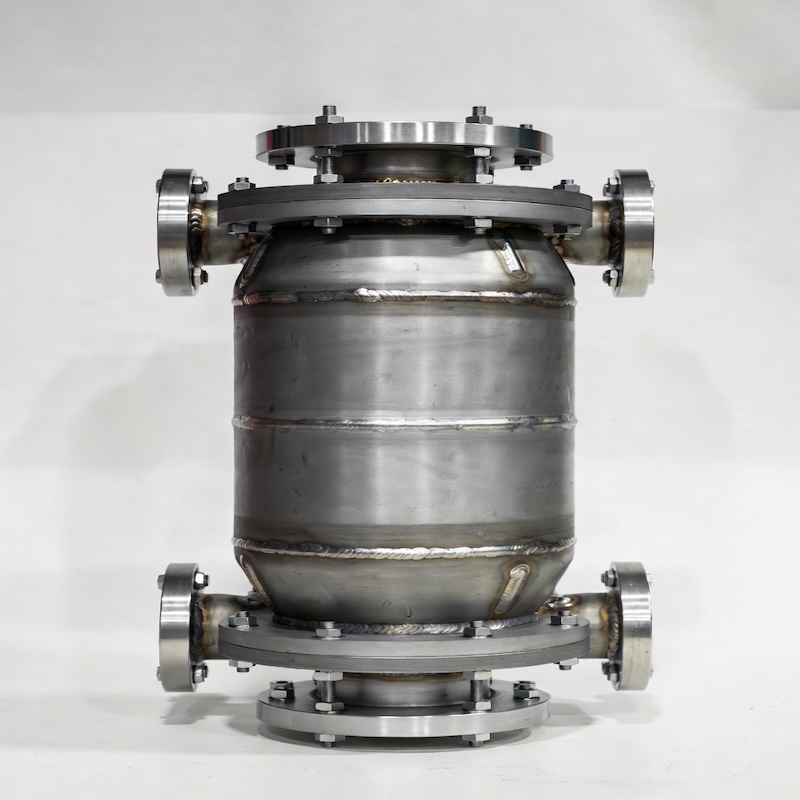
Send one controlled titanium equipment enquiry
| Enquiry line | Owner/EPC input | Required fabricator return |
|---|---|---|
| Service and duty | Fluid chemistry, flow/duty, operating/design pressure and temperature, vacuum/upset/cleaning cases | Design assumptions, missing data and excluded conditions |
| Equipment definition | Type, datasheet, drawings, nozzle/scope schedule and design responsibility | Build-to-print or design scope, deliverables and interface list |
| Code and materials | Code/edition, jurisdiction, material grades, solid/clad construction and corrosion allowance | Legal manufacturer/shop, conformity route, material mapping and permitted alternatives |
| Fabrication and inspection | WPS/PQR/welder requirements, forming, heat treatment, NDE, leak/pressure tests and acceptance criteria | ITP, hold points, subcontracted steps, procedures and report set |
| Documentation | Calculations, drawings, MTCs, weld map, NDE, test dossier, MDR and language/format | Document register, review cycle, traceability and final dossier contents |
| Delivery and site boundary | Incoterm, destination, transport envelope, preservation, field work and required date | Shop/site split, packing, schedule, validity, commercial exclusions and warranty boundary |
Where Beiyu fits
Beiyu is outside the five-company set. Its chemical-industry page and titanium shell-and-tube heat-exchanger page are routes for project and material enquiries. Beiyu’s response is scoped to the quoted material, component or equipment package; this article does not claim an ASME code stamp, full EPC responsibility or one universal fabrication envelope.
A useful first enquiry includes process conditions, equipment type, design code and edition, material, solid or clad route, drawings, welding/NDE requirements, documentation, quantity and delivery location. Missing design authority or jurisdictional requirements should be resolved before a commercial comparison.
How to use this comparison
Shortlist by equipment family, material system and required jurisdictional route. Issue one controlled datasheet and responsibility matrix. Compare proposals only after design scope, legal manufacturer, shop, code, materials, fabrication, inspection, document package, delivery split and exclusions align.
Related Beiyu pages
- Titanium materials for chemical industry
- Titanium shell-and-tube heat exchanger
- How to compare titanium quotations
- How to vet a titanium supplier
Published by Beiyu Titanium. Beiyu is outside the five-company set. The order is a dated discovery record, not a ranking for quality, code scope, capacity, price, delivery or project performance.
Related supplier lists and supply ranges
- Titanium Fasteners
- Grade 2 Titanium Flange Suppliers
- Grade 5 Titanium Fastener Suppliers
- Grade 5 Titanium Forged Block Suppliers
- Grade 7 Titanium Strip Suppliers
- On-Site Sodium Hypochlorite Generator Manufacturers
- all supplier lists by product family
Specification detail with sources
Beiyu Titanium publishes this list and is not part of the comparison above. For readers who want the publisher’s own figures on the same basis they would ask of any supplier on this page, the material is specified to ASTM B265, ASTM B338 and ASTM B348, and each order carries an EN 10204 type 3.1 certificate with heat and pour numbers by order scope.
Sheet and thin plate run 0.5 to 3 mm thick in widths to 1500 mm; heavy plate runs 3 to 70 mm thick in widths to 2500 mm; foil and strip run 0.02 to 0.3 mm thick in widths to 600 mm. This item is quoted from the drawing rather than from a fixed size table, so the ordered dimensions, tolerances and acceptance criteria come from the drawing and the purchase order.
These are Beiyu published supply figures, not limits taken from the standard; limit values belong to the standards named above and are confirmed against the exact edition on the purchase order. Certification is stated as a production capability, and no stock position, delivery time or price is implied by any figure on this page.