
Titanium fasteners are considered when corrosion resistance, low mass or high specific strength matters. Grade 2 (UNS R50400) is commonly evaluated for corrosion-led duties, while Grade 5 / Ti-6Al-4V (UNS R56400) is evaluated for higher-load bolts and studs. For general-use inch-series fasteners, ASTM F468 covers specified bolts, cap screws and studs, while ASTM F467 covers nuts; metric orders use the applicable metric specification or the buyer’s drawing. Titanium threads can gall, so the mating materials, surface treatment, lubricant and installation procedure must be agreed for the service.
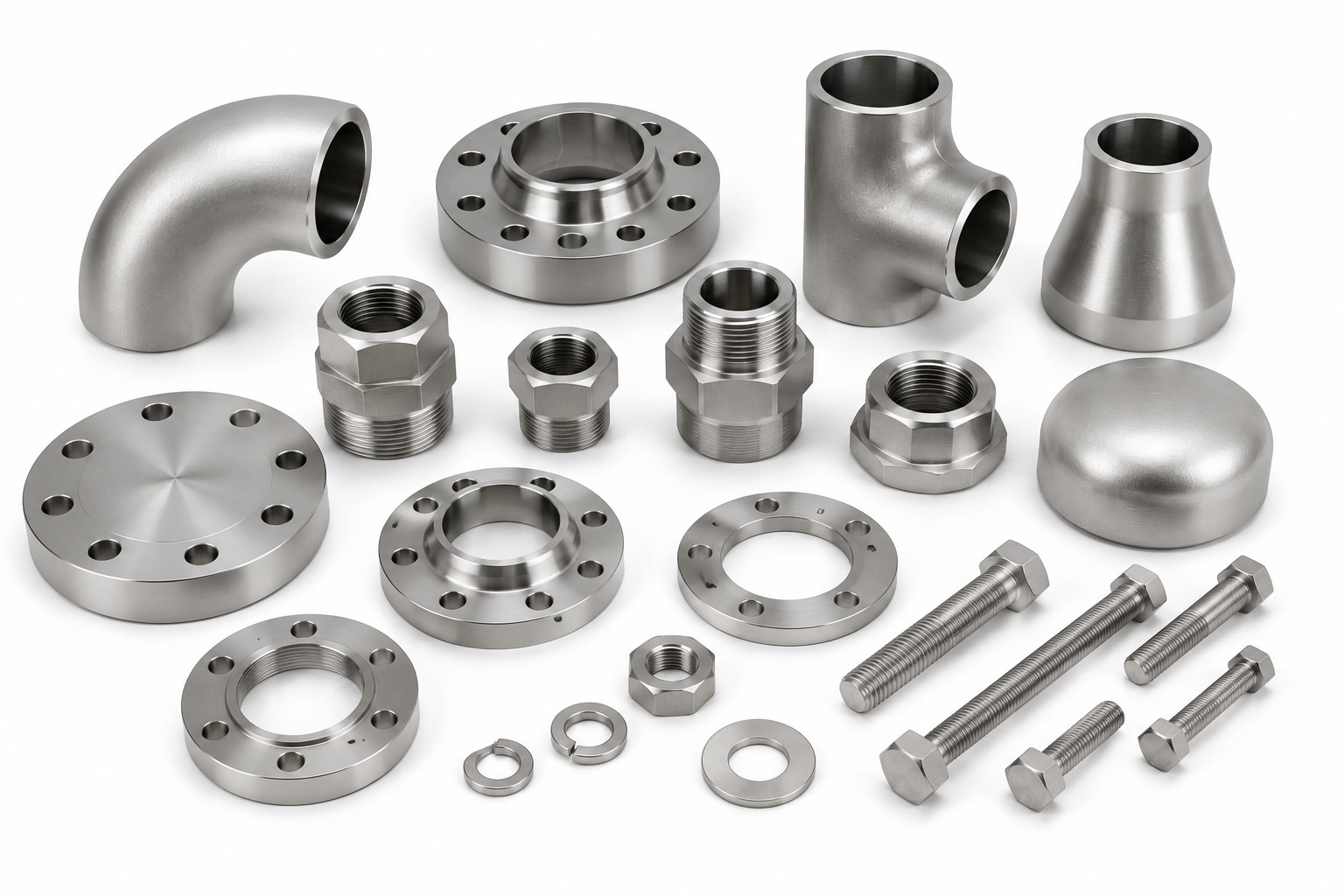
Beiyu Titanium supplies Grade 2 and Grade 5 titanium fasteners as bolts, screws, nuts, studs, threaded rod and drawing-based washers. EN 10204 3.1 MTC and heat or lot traceability are supplied when included in the quotation and purchase order.
A fastener is small relative to the assembly, but a seized, corroded or incorrectly loaded joint can drive disproportionate maintenance and safety cost. This guide explains grade selection, the standard boundary, application questions and the galling controls that belong in a titanium fastener RFQ.
Why titanium is considered for fasteners
Titanium fasteners are evaluated where conventional steel or stainless fasteners do not meet the combined corrosion, mass or material-compatibility requirement:
| Property | What the guide states |
|---|---|
| Resistance in many chloride environments | Titanium’s passive oxide film provides strong resistance in many aerated chloride services. Suitability still depends on grade, temperature, chemistry, aeration, joint geometry and crevice conditions, so the actual corrosion case still requires review. |
| High specific strength | Grade 5 combines high strength with a density around 60% of steel, which can reduce joint mass where the complete design and preload procedure support its use. |
| Low magnetic response and material compatibility | These properties can be relevant in selected instrumentation and medical applications, but the finished component must follow the governing application specification. |
The trade-offs include cost, galling risk, different torque-tension behaviour and the need to verify galvanic and service compatibility across the complete joint.
Grade 2, Grade 5 and Grade 23 boundaries
| Grade | What the guide states |
|---|---|
| Grade 2, UNS R50400 | Commonly considered when corrosion performance and formability govern and the required load is moderate. |
| Grade 5, Ti-6Al-4V, UNS R56400 | Commonly considered for higher-load and mass-sensitive fasteners where the ordered fastener specification, dimensions and installation procedure support it. |
| Grade 23 ELI, UNS R56401 | ASTM F136 is a wrought ELI material specification for use in the manufacture of surgical implants. It does not by itself define the finished bone screw, fixation device or its regulatory acceptance. |
Do not select by grade name alone. State the governing standard or drawing, thread system, dimensions, mechanical requirements, service environment and inspection scope. Required properties depend on the ordered specification, size, product form, condition and revision.
Where titanium fasteners are used
| Sector | What the guide states |
|---|---|
| Marine and offshore assemblies | selected seawater, splash-zone and subsea joints after checking crevice geometry, galvanic couples and preload requirements. |
| Chemical-processing equipment | joints where the fastener material must be compatible with the process environment and the equipment materials. |
| Aerospace and mass-sensitive structures | drawing- or specification-controlled fasteners where specific strength and traceability are design inputs. |
| Medical devices | application-controlled components using the specified implant material and finished-device requirements, not a general industrial fastener callout. |
| Desalination and power systems | selected seawater and brine-service joints after the complete corrosion and loading case is reviewed. |
These are selection contexts, not blanket approvals. The engineer or buyer must confirm grade, joint design, environment and governing code for the actual assembly.
Galling and installation controls
Titanium-on-titanium threaded contact is prone to adhesive wear and galling. Seizure risk depends on surface finish, fit, cleanliness, speed, preload, temperature, mating material and whether an approved lubricant or coating is used.
| Galling and installation control |
|---|
| Specify the mating material and thread class rather than ordering the bolt in isolation. |
| Where the service permits it, select an application-compatible lubricant, anti-seize or engineered coating. |
| Define the installation method and qualified torque or tension procedure; do not copy a steel-bolt torque value. |
| For oxygen, vacuum, medical, high-temperature or contamination-sensitive duties, obtain application approval before selecting any lubricant or coating. |
Forms and standards
Titanium fasteners can be supplied as bolts, cap screws, socket screws, studs, nuts, threaded rod and drawing-based washers. The specification must match the form:
- ASTM F468 covers specified general-use inch-series nonferrous bolts, cap screws, socket head cap screws and studs within its scope.
- ASTM F467 covers specified general-use inch-series wrought nonferrous nuts within its scope.
- F468M and F467M are separate metric specifications. A drawing, aerospace specification or customer standard may govern instead.
- Washers require their own drawing or applicable specification; they are not brought under F468 or F467 merely by being ordered with a bolt-and-nut set.
What belongs on a titanium fastener RFQ
| Field to state on a fastener RFQ |
|---|
| Fastener form, grade, UNS and governing standard or drawing revision. |
| Thread system, nominal size, pitch, length, head or drive type, tolerance and mating material. |
| Quantity, production route, surface finish, coating or lubricant requirement. |
| Service environment, design temperature and whether corrosion or load governs selection. |
| Inspection, testing, marking, packing and document scope, including whether EN 10204 3.1 MTC and heat or lot traceability are required. |
Inspection and documentation
The quotation and purchase order should define the required chemistry and mechanical-property records, dimensional and thread inspection, marking, traceability and any additional testing. An EN 10204 3.1 MTC can be included when agreed, but the document content and traceability route must match the ordered material, manufacturing route and governing specification.
FAQ
What grade are titanium bolts made from?
Grade 5 is widely considered for higher-load bolts and studs, while Grade 2 is considered for corrosion-led duties with moderate load. The final choice depends on the governing standard, dimensions, environment and joint design.
Why do titanium fasteners gall?
Adhesive wear can occur when titanium threaded surfaces slide under contact pressure. Mating material, finish, fit, cleanliness, installation speed, preload and an approved lubricant or coating all affect the risk.
What standards cover titanium fasteners?
ASTM F468 covers specified general-use inch-series nonferrous bolts, cap screws and studs, and ASTM F467 covers specified general-use inch-series nuts. Their metric counterparts are separate. Drawings or application-specific standards may govern instead.
Does ASTM F136 specify a finished medical screw?
No. ASTM F136 specifies wrought Ti-6Al-4V ELI material for use in surgical implant manufacture. Finished-device design, processing, testing and regulatory requirements must be specified separately.
What an application list does not tell the person raising the order
Knowing where titanium fasteners are used does not tell a buyer what to write on the purchase order. The application decides the grade. The order still has to decide the acceptance basis and what is reported.
| Decided by the application | Still decided by the order |
|---|---|
| Which grade suits the service environment | Governing standard, named alongside the grade |
| Whether strength or corrosion drives the choice | Delivery condition, stated apart from surface finish |
| The size and thread called out on the drawing | Examination scope and its acceptance class |
| The service temperature | Certificate type and reporting scope |
Two documents govern a fastener, and they are not the same one
A fastener is made to a dimensional standard and accepted to a material standard. An enquiry that names only one leaves the other to a default, and the default is rarely the one the drawing assumed.
| Document | What it fixes | What it leaves open |
|---|---|---|
| Dimensional standard | Thread form, head style and length tolerance | The composition the item is accepted against |
| Material standard with the grade | Composition limits and mechanical minimums | Thread and head geometry |
| Purchase order | Which of the two govern, and the reporting scope | Nothing, once both are named |
Beiyu supplies fastener stock and machined fasteners with an EN 10204 3.1 mill test certificate and heat number traceability, reporting scope set by the order. Naming both documents on the enquiry removes the most common cause of a rejected fastener certificate.
Specification detail with sources
Titanium fastener selection has a strength arithmetic and a galling arithmetic, and both are published. ASTM B348 sets annealed minimums of 895 MPa tensile and 828 MPa yield for Grade 5 bar, roughly 2.6 times the tensile floor of Grade 2 under the same standard, which is the quantitative version of the corrosion-led versus load-led split this page draws between the two grades. On the galling side, ASTM G98 is the button-on-block test that assigns a threshold galling stress to a material couple, the number to ask a coating or lubricant supplier for when its treatment is claimed to solve the thread-seizure risk described above.
Beiyu Titanium carries the two stock routes fastener manufacture usually starts from: hexagonal bar up to 17 mm across flats against ASTM B348 for machined bolts and nuts, and cold-drawn wire from 0.8 to 6.0 mm diameter against ASTM B863, whose factory application list includes standard-parts manufacture. Both routes are quoted in Grade 2 and Grade 5, and in Beiyu’s supply practice the mating-material, coating and thread lines this page asks for are reviewed on the same RFQ as the stock, so the galling controls are priced with the metal instead of being discovered at installation.
Request titanium fasteners
Review the Titanium Fasteners Supplier product page, then send the fastener form, grade, thread standard, dimensions, quantity, service, coating or lubricant requirement and document scope. Beiyu will confirm the applicable manufacturing and inspection route before quotation.