
Product Details
Titanium Capillary Tube | Small Diameter Titanium Tubing
Review grade, standard, size, surface, inspection and packing details before quotation.
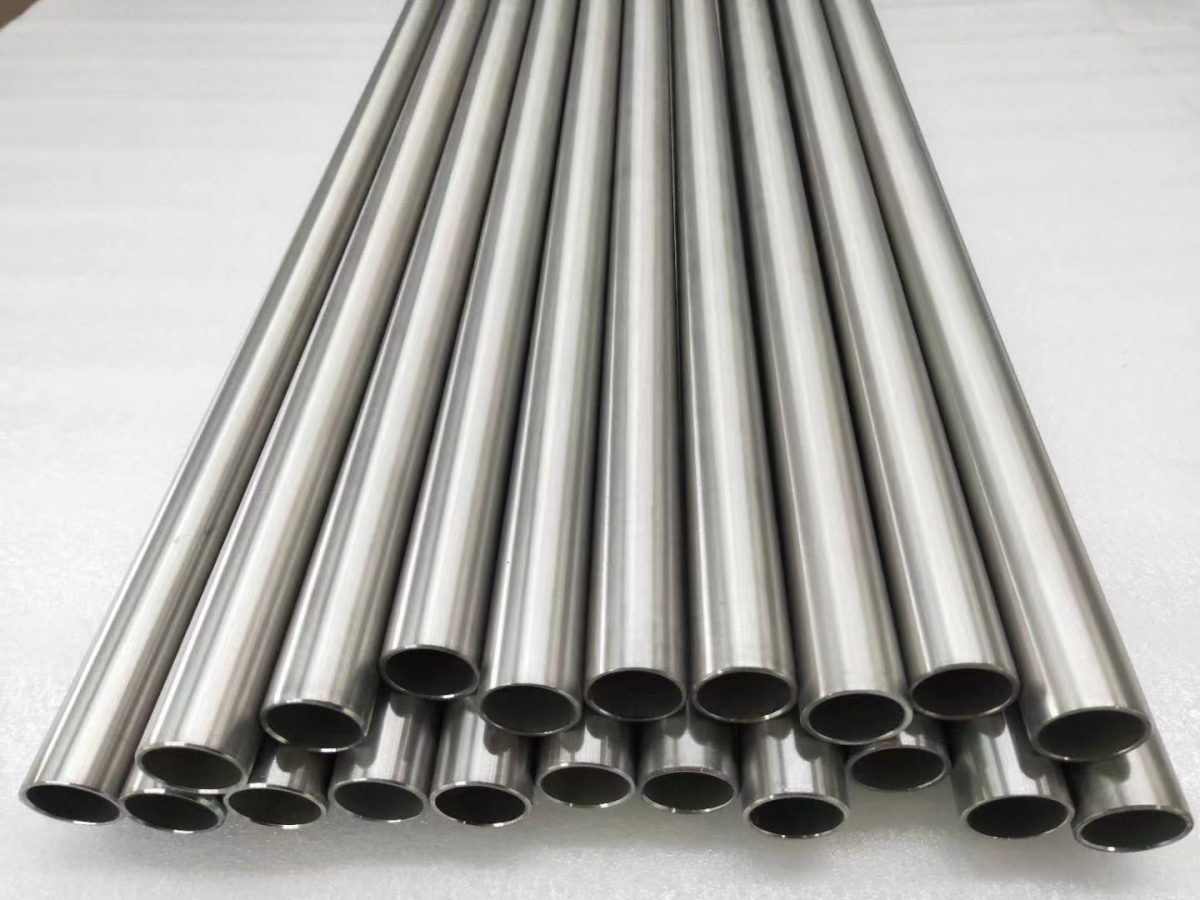
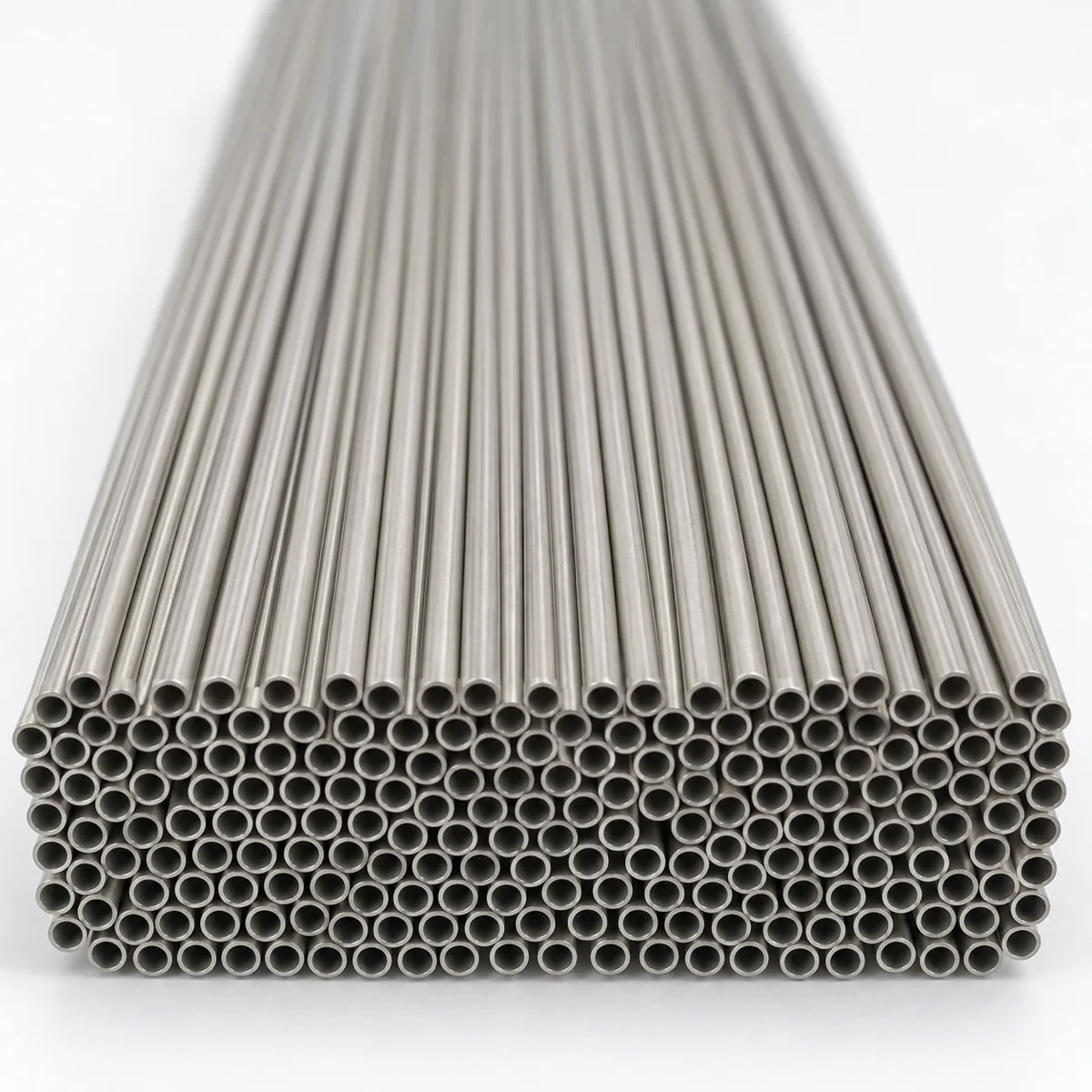
Titanium Capillary Tube | Small Diameter Titanium Tubing
Titanium capillary tube for small-diameter tubing assemblies, instrumentation, chemical dosing, medical-related components and precision industrial applications. RFQs should specify titanium grade, OD, ID or wall thickness, length, tolerance, surface condition, straightness and documentation requirements.
- Common grades: Grade 1, Grade 2 and project-specified titanium alloys
- Common standard reference: ASTM B338 or drawing-based specification
- RFQ details: OD, ID, wall thickness, length, tolerance, surface finish and certificate package
- DocumentsMTC and EN 10204 3.1 on request
- TraceabilityHeat number and inspection scope confirmed
- RFQ detailsGrade, standard, size, tolerance, quantity
- PackingExport protection by product form and length
Product Introduction
Small diameter titanium capillary tube requirementApplicable standard or RFQ reference
Grade, OD, ID or wall, length, tolerance and cleaning requirementCore information needed for quotation
OD, ID, wall thickness, cut length, burr condition and straightnessDimensional review before production
MTC / EN 10204 3.1Traceability documents when required
Acceptance is by the ordered specification. Final grade, chemistry, dimensions, inspection and documentation are confirmed by the purchase specification and mill test certificate.
Titanium Capillary Tube for Small-Diameter Tubing Applications
Beiyu supplies titanium capillary tube for precision tubing assemblies, chemical dosing lines, instrumentation, medical-related parts, laboratory equipment and corrosion-resistant small-diameter components. Titanium capillary tube is normally selected when the design needs a small outside diameter, controlled bore size, corrosion resistance and stable tube geometry.
For capillary tube projects, the most important RFQ details are outside diameter, inside diameter, wall thickness, length, tolerance and surface condition. Buyers should also confirm whether the tube is required as straight length, coil, cut-to-length piece or drawing-based component.
Grades and Standards
| Common grades | Grade 1 and Grade 2 commercially pure titanium; other titanium grades can be reviewed by drawing or specification. |
|---|---|
| Standard reference | ASTM B338 may be used for titanium condenser and heat exchanger tubes. Some capillary tube orders are controlled by customer drawing or internal specification. |
| Typical condition | Annealed condition, with tube form and surface condition confirmed by size and application. |
| Common supply form | Straight tube, coil tube, cut pieces or drawing-based small tube components. |
Size, Tolerance and Surface Condition
Capillary tube RFQs should clearly state OD, ID or wall thickness, length, dimensional tolerance, straightness, ovality and end condition. Surface condition may include pickled, bright, polished or cleaned surface depending on tube size and final use.
If the tube will be assembled into a precision device, buyers should mark critical dimensions and inspection points on the drawing. For small-bore tubes, the inside diameter tolerance and cleanliness requirement are often more important than the nominal size alone.
Common Applications
- Chemical dosing and corrosion-resistant fluid transfer
- Instrumentation and small tube assemblies
- Medical-related components specified by drawing
- Laboratory equipment and sampling lines
- Small heat transfer or electrochemical components
Inspection and Documentation
Buyers can request mill test certificate, EN10204 3.1 documentation, heat number traceability, chemical composition, mechanical properties and dimensional inspection. Depending on the drawing, inspection may include OD, ID, wall thickness, length, straightness, surface condition and visual inspection of tube ends.
Packaging and Export Information
Small titanium tubes should be packed to prevent bending, bore contamination and surface damage. Straight lengths may require rigid protection, while coiled tubes should be secured by coil diameter and wrapped to avoid surface scratches. Labels should identify grade, size, quantity and heat number when traceability is required.
Titanium Capillary Tube Specification Snapshot
| Alloy / grade | Grade 1 / Grade 2 CP titanium; Grade 9 by requirement. |
|---|---|
| Specification | ASTM B338 basis where applicable; dimensions and tolerances per customer drawing. |
| Size | Small-bore tubing can be quoted from about 1 mm outside diameter and thin-wall requirements from about 0.1 mm, subject to RFQ review. |
| Condition / surface | Annealed; bright or pickled surface by order. |
| Use | Instrument lines, precision assemblies and small-diameter tubing applications. |
| Certificate | EN 10204 3.1 MTC with heat-number traceability. |
Capillary work is tolerance work: state OD, wall, length, straightness or coil form, cleanliness requirement and end condition. A drawing shortens the review.
Related guides: titanium tube grade selection guide
RFQ Information Needed
- Titanium grade and standard or drawing number
- OD, ID or wall thickness, length and tolerance
- Straight tube, coil tube or cut-to-length requirement
- Surface condition, end condition and cleanliness requirement
- Quantity, destination and packing requirement
- Certificate and inspection documentation requirements
FAQ
What information is needed to quote titanium capillary tube?
Send the titanium grade, OD, ID or wall thickness, length, tolerance, quantity, surface condition and certificate requirement. A drawing is recommended when the bore size or end condition is critical.
Can titanium capillary tube be supplied as cut pieces?
Cut-to-length requirements can be reviewed when the RFQ includes target length, tolerance, end condition and quantity.
Which titanium grade is commonly used for capillary tube?
Grade 1 and Grade 2 are common commercially pure titanium options. The final grade should be selected according to corrosion environment, forming requirement and drawing specification.
Common applications
Review export and fabrication support22
Ti
Titanium
47.867 u
4.51 g/cm3
Small diameter titanium capillary tube requirement
4.51 g/cm3
Small diameter titanium capillary tube requirement
Small flow control linesConfirm grade, size, tolerance, surface, packing and certificate scope before quotation.Medical and laboratory componentsConfirm grade, size, tolerance, surface, packing and certificate scope before quotation.Sensor and instrument tubingConfirm grade, size, tolerance, surface, packing and certificate scope before quotation.Precision small-diameter tube workConfirm grade, size, tolerance, surface, packing and certificate scope before quotation.
Why capillary sizes are ordered on tolerance, not on nominal size
At capillary dimensions the nominal size stops being the controlling field. The tolerance on wall and bore, and how concentric the two are, decide whether the tube performs, and none of that is implied by an outside diameter alone.
| Field | What it controls | Where it belongs |
|---|---|---|
| Outside diameter with tolerance | Fit into the receiving component | Stated together, not diameter alone |
| Wall thickness with tolerance | Bore size and pressure behaviour | Its own line |
| Delivery condition | The metallurgical state as delivered | Stated apart from surface finish |
| Examination scope | What is inspected and to which acceptance class | The purchase order text |
What the certificate carries
| Field | Beiyu position |
|---|---|
| Certificate type | EN 10204 3.1 mill test certificate |
| Traceability | Heat number, carried through to the delivered pieces |
| Grade with its UNS number | Given together and consistent with the standard the order names |
| Reporting scope | Set by the order |
An enquiry that carries both tolerances and the examination scope can be quoted without a clarification round.
Compare related titanium tube products
Titanium tube and pipe categoryProduct
Reference
RFQ focus
Grade 2 Seamless Tube
ASTM B338
Heat exchanger tube
>
Grade 7 Pipe
Ti-0.15Pd
Corrosion-service pipe
>
Grade 12 Tube
Ti-0.3Mo-0.8Ni
Chemical process tube
>
Titanium Welded Pipe
ASTM B862
Large pipework
>
Titanium Coil Tubing
ASTM B338 / B861
Coiled heat transfer tube
>
Titanium Capillary Tube
Small diameter
Instrument tube
Titanium Bicycle Tubing
Grade 9
Frame tube sets
>
3Al-2.5V Tubing
Grade 9
Structural tube
>
Related RFQ pages
Titanium tube and pipe categoryA supplier comparison for this family, built from one search on one day and read from each company's own site, is at Titanium Capillary Tube Suppliers: Five Pages Compared.
Request a quote for Titanium Capillary Tube | Small Diameter Titanium Tubing
Send grade, standard, size, condition, quantity and certificate requirements. Beiyu replies with quotation, lead time and documentation scope.
Specification detail with sources
ASTM B338 permits a wall thickness variation of plus or minus 10 percent, and on a capillary wall of 0.1 mm that allowance is only 0.01 mm, which is why small-bore titanium tube is accepted on measured OD, ID and wall rather than on a nominal size line. At this scale the bore dominates the function: on a 1 mm bore, losing 0.1 mm of inside diameter cuts the flow section by 19 percent, so the drawing should mark which two of OD, ID and wall are the controlled dimensions.
Beiyu Titanium draws capillary tube from 1 to 5 mm outside diameter with walls from 0.1 to 2 mm and lengths to 6,000 mm, the smallest of its three tube envelopes, in Grade 1 and Grade 2. A capillary order should fix two of the three dimensions, state the cut length and burr condition, and add the bore cleanliness requirement, which Beiyu treats as part of the technical specification rather than as a packing note.