
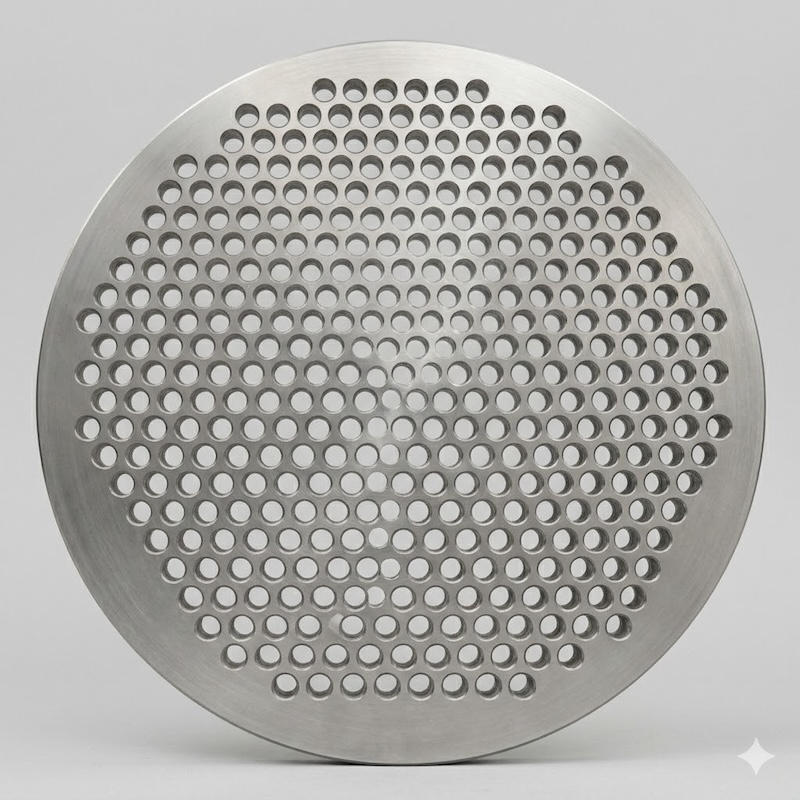
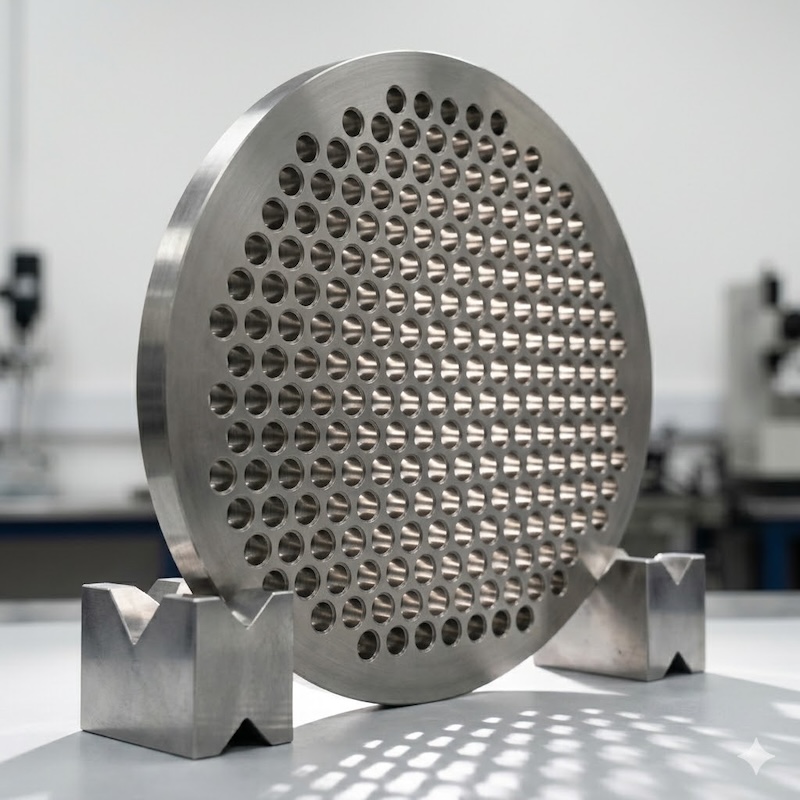

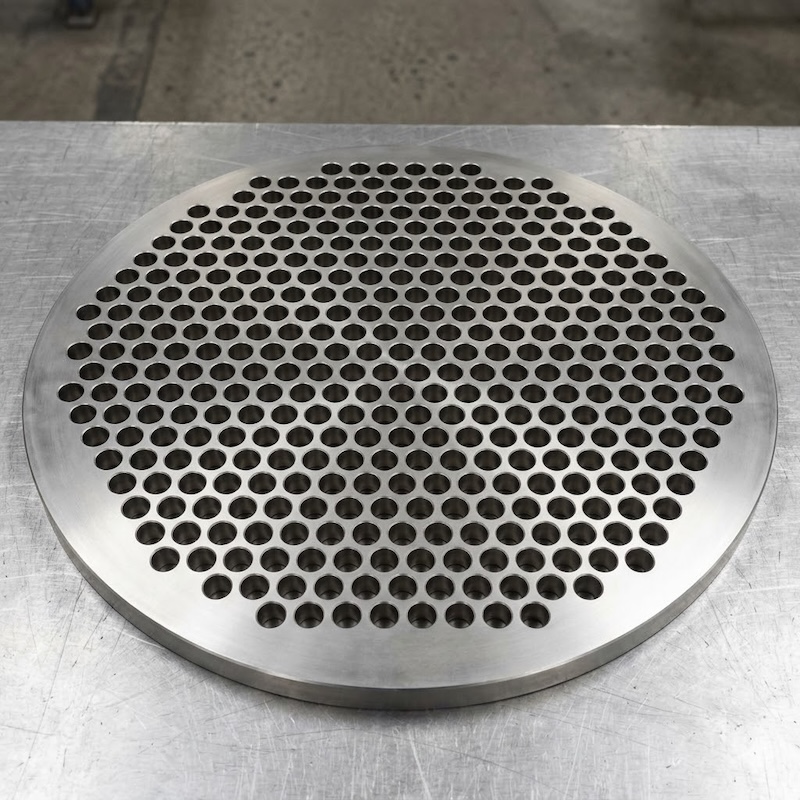
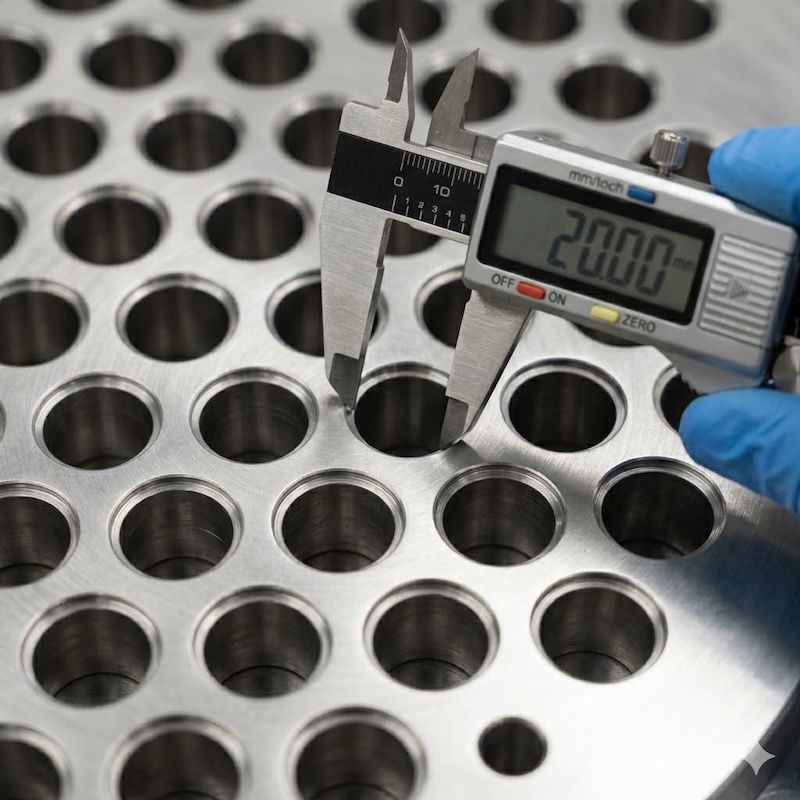




Grade 2Common tube-sheet material
Tube-hole layoutMachined by drawing
Dimensional reportHole pattern inspection
MTC / 3.1Traceability on request
Acceptance is by the ordered specification. Final dimensions, tolerances, grade, inspection and documentation are confirmed by the drawing, purchase order and mill test certificate.
Grade 2 Titanium Tube Sheets for Heat Exchanger Assemblies
Supply envelope: the rolled plate row runs 3 mm to 70 mm thick in widths to 2500 mm and lengths to 6000 mm; the forged disc row runs outside diameter 50 mm to 2000 mm at thickness 20 mm to 500 mm.
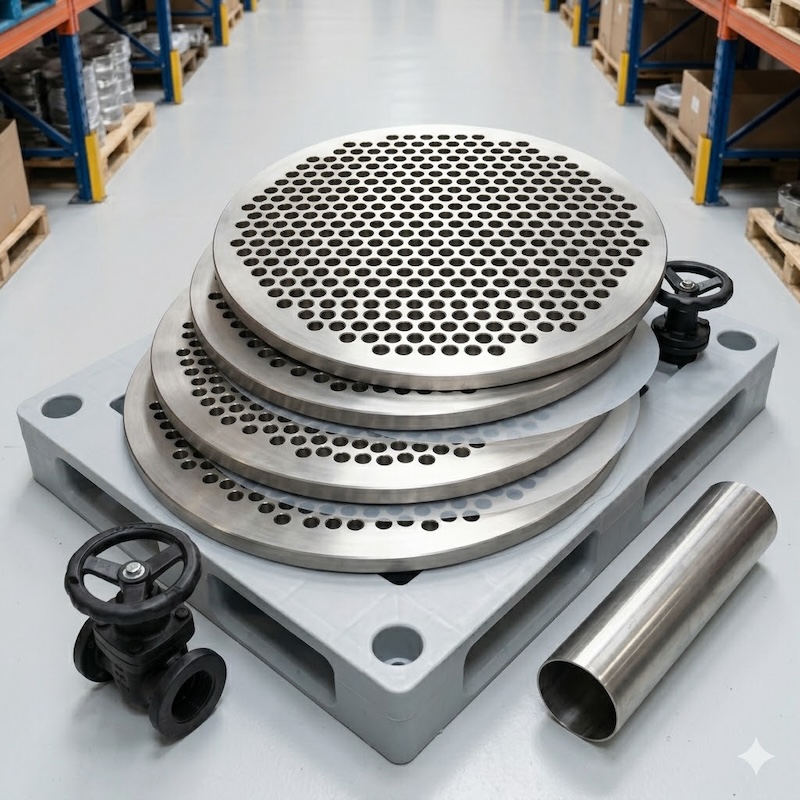
Beiyu supplies Grade 2 titanium tube sheets and tube plates for heat exchangers, condensers, evaporators, seawater systems and chemical equipment. Tube sheets are used to locate and support titanium tubes, and the hole pattern, tolerance and sealing surface must match the heat exchanger design.
Grade 2 titanium is commonly used when corrosion resistance and weldability are required. For more demanding chemical service, Grade 7, Grade 12 or titanium clad material may be considered depending on the process medium and design requirements.
Material, Drawing and Machining Scope
| Common material | Grade 2 commercially pure titanium, UNS R50400. |
|---|---|
| Related forms | Solid titanium tube sheet, titanium clad tube sheet and drawing-based machined tube plate. |
| Machining scope | Cutting, drilling, hole layout machining, sealing face machining and custom drawing-based machining. |
| Required input | Drawing with OD, thickness, hole quantity, hole diameter, pitch, tolerance and sealing face details. |
Hole Pattern and Tolerance Requirements
RFQs should include tube sheet diameter, thickness, material grade, tube OD, tube hole diameter, hole quantity, pitch, layout pattern, tolerance, sealing surface requirement and quantity. If the tube sheet will be welded or expanded with tubes, the buyer should specify tube expansion requirements and surface cleanliness requirements.
For replacement tube sheets, drawings or measured samples should identify nozzle locations, bolt holes, gasket surfaces, pass partition grooves and any machining references needed for installation.
Common Applications
- Shell and tube heat exchangers
- Condensers and evaporators
- Seawater cooling and desalination equipment
- Chemical equipment and corrosion-resistant vessels
- Titanium tube bundle assemblies
Inspection and Documentation
Buyers can request material certificate, EN10204 3.1 documentation, heat number traceability, chemical composition, mechanical properties, dimensional inspection and hole layout inspection. Depending on thickness and design conditions, ultrasonic testing, PMI testing, liquid penetrant testing or third-party inspection can be specified.
Packaging and Export Information
Machined tube sheets should be protected against surface damage, hole edge damage and contamination during packing. Wooden cases or pallets may be used depending on diameter, thickness and weight. Labels should identify drawing number, grade, heat number, quantity and purchase order reference.
RFQ Information Needed
- Material grade and standard requirement
- Drawing with diameter, thickness, hole pattern and tolerance
- Tube OD, tube hole diameter and pitch
- Sealing face, grooves, bolt holes and nozzle details
- Quantity, destination and packing requirement
- Inspection, NDT and certificate requirements
FAQ
What information is most important for titanium tube sheet quotation?
The drawing is the most important input. It should show material grade, diameter, thickness, hole layout, tube hole diameter, tolerance, sealing surfaces and any bolt holes or grooves.
Can a titanium tube sheet be made from clad plate?
Titanium clad tube sheet may be considered when the process side requires titanium corrosion resistance and the backing material provides structural support. The material combination and design code should be confirmed by the project engineer.
What inspection is commonly requested for tube sheets?
Dimensional inspection, hole layout inspection, material certificate and heat number traceability are common. UT, PMI, liquid penetrant testing or third-party inspection can be specified when required.
RFQ Details for Titanium Tube Sheets
For Grade 2 titanium tube sheets, buyers should provide plate thickness, outside diameter or rectangular size, tube-hole pattern, tube-hole tolerance, groove requirement, sealing face requirement, drawing revision and connected tube size. Heat exchanger projects should also state whether ASTM B265 or ASTM B381 material is required, whether ultrasonic testing or PMI is needed, and how heat number traceability should be marked on the finished tube plate.
Related Heat Exchanger RFQ Pages
Tube sheet orders are usually coordinated with titanium tubes, flanges, fittings and the complete heat exchanger scope.
Common applications
Review fabrication and machining support22
Ti
Titanium
Shell-and-tube heat exchangersConfirm medium, temperature, drawing tolerance, inspection and documentation scope before quotation.Condenser tube platesConfirm medium, temperature, drawing tolerance, inspection and documentation scope before quotation.Chemical equipment rebuildsConfirm medium, temperature, drawing tolerance, inspection and documentation scope before quotation.Drawing-based titanium machined partsConfirm medium, temperature, drawing tolerance, inspection and documentation scope before quotation.
Compare related titanium components
Precision machined parts categoryProduct
Material
Reference
RFQ focus
Titanium Shell and Tube Heat Exchanger
Gr2 / Gr7 / Gr12
Drawing
Complete heat exchanger units
>
Titanium Heat Exchanger Coil
Gr2 / Gr7 / Gr12
ASTM B338 / B861
Coiled tube heat transfer
>
Titanium Blower
Gr2 / Gr7
Drawing
Corrosive gas handling
>
Titanium Pump
Gr2 / Gr7 / Gr12
Project spec
Corrosive liquid transfer
>
Titanium Valve
Grade by medium
Project spec
Chemical and seawater valves
>
Titanium Ball Valve
Grade by medium
Project spec
Valve replacement projects
>
Grade 2 Titanium Tube Sheet
Grade 2
Drawing
Heat exchanger tube plate
Related RFQ pages
Precision machined parts category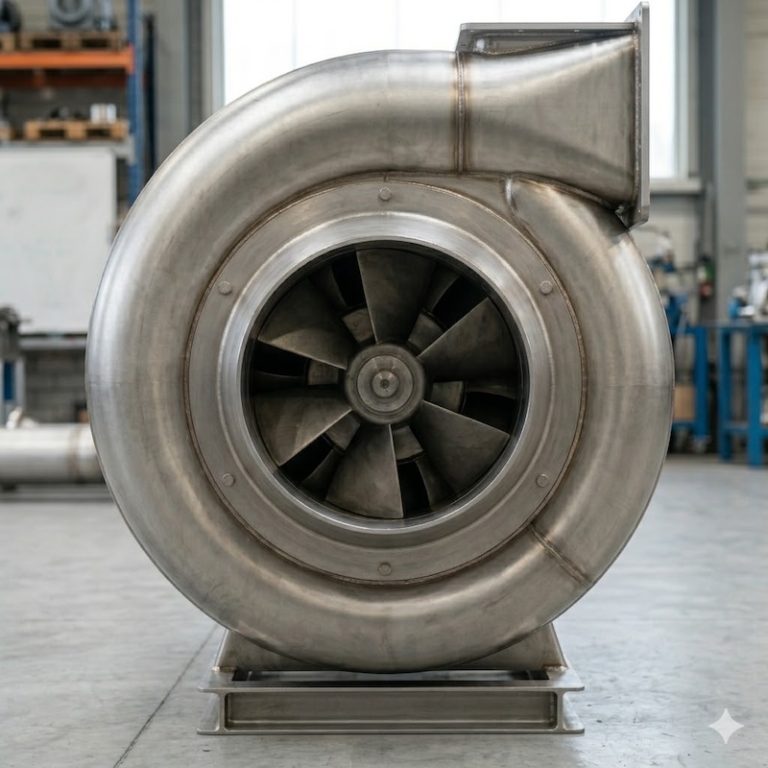
Specification detail with sources
A titanium tubesheet is bought from one of two rows in the Beiyu Titanium supply ranges. The rolled plate row runs 3 mm to 70 mm thick in widths to 2500 mm and lengths to 6000 mm and is quoted against ASTM B265. The forged disc row runs outside diameter 50 mm to 2000 mm at thickness 20 mm to 500 mm and is quoted against ASTM B381.
Which row a tubesheet comes from is a specification decision rather than a size one, and the two do not overlap cleanly: a 1800 mm diameter tubesheet at 60 mm thick is available from either row, while the same diameter at 200 mm thick exists only in the forged row. The enquiry should say which product specification the certificate is to report against, because that choice also decides which set of acceptance requirements the piece is checked to.
A supplier comparison for this family, built from one search on one day and read from each company's own site, is at Titanium Tube Sheet Suppliers: Five Company Pages Compared.
Request a quote for Grade 2 Titanium Tube Sheet | Heat Exchanger and Condenser Tube Plate
Send grade, drawing or standard, dimensions, quantity, inspection scope and delivery destination. Beiyu replies with quotation, lead time and documentation scope.