
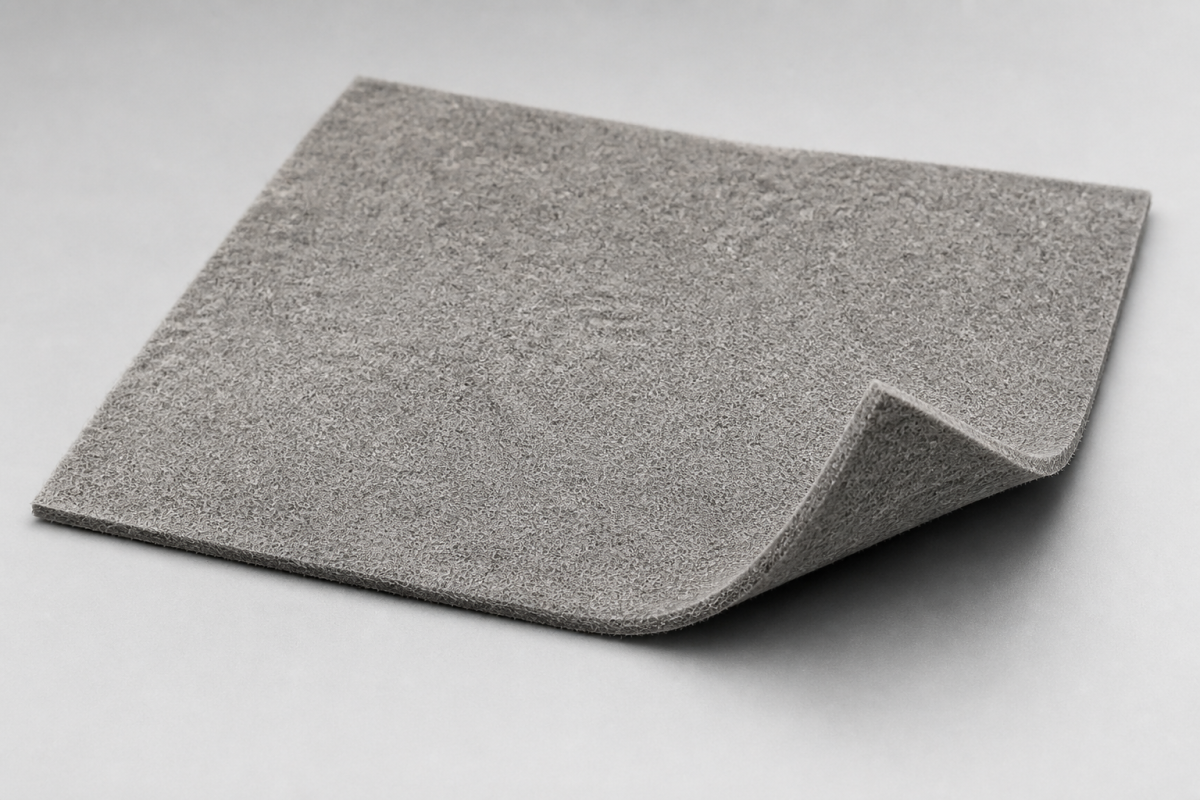
Titanium fiber felt is a fibrous, sintered porous medium; it is not powder-sintered titanium plate. For filtration or an electrolyzer porous-transport-layer enquiry, porosity alone is insufficient. Material identity, fiber and pore fields, thickness under a stated compression, permeability, surface/contact treatment, cleanliness and delivery form must stay separate. Five company-owned pages met the rule.
How the five company sources were selected
We froze the query titanium fiber felt supplier sintered PTL manufacturer on 1 September 2026. Eligible sources were company-owned pages expressly offering titanium fiber felt and exposing a material, fiber, porosity, pore, thickness, size, treatment or application field. Beiyu, geographies excluded by site policy, marketplaces, directories, third-party lists and powder-sintered plate pages were removed. The sequence is the dated discovery set after exclusions, not a performance score.
A public page can identify a likely supply route. It cannot prove the allocated lot, current schedule, final inspection result or suitability of material not yet produced or assigned. Those points remain dated quotation fields.
Company pages that met the rule
| Company source | Page role | Visible fields | RFQ check |
|---|---|---|---|
| Filture | Fiber felt and PTL page | Pure-titanium route; porosity, pore-size, fiber-diameter, thickness and sheet-size fields; cut/composite/treatment options | Return the numeric method, compression state, surface route and final geometry |
| Qixin Titanium | Grade 1/high-purity felt page | Thickness, porosity, pore-size and maximum-size fields; filtration and PEM uses | The page contains conflicting thickness statements; preserve the conflict and reconfirm the offer |
| Yunch Titanium | Vacuum-sintered felt page | Published porosity, thickness and pore-size fields plus filtration uses | Keep certification labels attributed and request current numeric and document returns |
| Sai Filter | PEM fiber-felt page | Fiber construction and porous-transport-layer context | Request material, thickness, porosity, permeability and treatment values rather than importing unsourced numbers |
| JMYUN | PEM electrolytic felt page | Manufacturer/fabrication context and anode-side use | Reconfirm current material, geometry, treatment, cleanliness and test offer |
The pages do not share one measurement basis. Porosity, pore size, thickness and permeability can move with method and compression, while a surface treatment can change contact resistance and corrosion behaviour. A useful comparison therefore requires a test method and delivery state next to every numeric value.
Keep fiber structure, compression and surface separate
| Decision | Choices visible in the source set | Required written return |
|---|---|---|
| Material | Commercially pure titanium grade/purity and fiber route | Material identity, chemistry basis and lot traceability |
| Fiber/pore field | Fiber diameter, nominal/mean/max pore descriptors | Named measurement method, statistic, sampling and result |
| Bulk structure | Porosity, thickness, areal mass and permeability | Test methods and thickness/permeability at the stated compression |
| Surface/contact | Untreated or project-specific cleaning/coating/contact treatment | Treatment identity, coverage, resistance/corrosion test and handling |
| Delivery form | Felt-only sheet, cut part or bonded/diffusion composite | Layer stack, orientation, cut geometry, flatness and packaging |
A value copied from a powder-sintered plate page cannot qualify a fiber felt. Even between felt pages, a pore or thickness number without method and compression is not directly comparable. The drawing and test plan should define the porous structure, surface and delivery state as separate acceptance lines.
A page conflict is a verification prompt, not a finding that a company cannot supply the item. Preserve the observed conflict, request a clean technical return and make the purchase order control the final identity, geometry, responsibility and acceptance route.
Send one controlled RFQ
| RFQ line | Buyer input | Supplier return |
|---|---|---|
| Duty/material | Filtration or PTL duty, medium, temperature and titanium identity | Offered material and suitability assumptions |
| Fiber/pore | Fiber-diameter and pore descriptors with requested methods | Method, distribution/statistic and lot result |
| Thickness/porosity | Nominal thickness, compression state, porosity and tolerances | Measured values and sampling plan |
| Flow/contact | Permeability/pressure-drop basis or electrical contact target | Test setup, result, units and exclusions |
| Surface/geometry | Treatment, cleanliness, sheet/cut shape, layer stack and flatness | Process route, drawing and final inspection |
| Commercial | Quantity, clean packing, required date and destination | Current schedule, validity, documents and exceptions |
Remove any source that cannot return the exact material, deliverable, finished geometry and acceptance evidence. Compare commercial terms only after the technical lines, responsibility boundary and document scope are aligned.
Where Beiyu fits
Beiyu is outside the five-company set. Its titanium fiber-sintered-felt route asks for material identity, fiber and pore fields, porosity, thickness and compression basis, permeability or contact requirement, surface treatment, sheet/cut geometry, cleanliness, packaging and documents. Final availability and numeric acceptance remain quotation and purchase-order fields.
The fields in this section describe only Beiyu’s published enquiry route. They do not score the companies above and do not transfer to another company’s catalogue.
Related Beiyu pages
- Titanium fiber sintered felt
- Sintered porous titanium plate pages compared
- Sintered porous titanium plate
- How to compare titanium quotations
Published by Beiyu Titanium. Beiyu is outside the five-company set. The sequence is a dated discovery snapshot after the stated exclusions, not a rating or endorsement.