
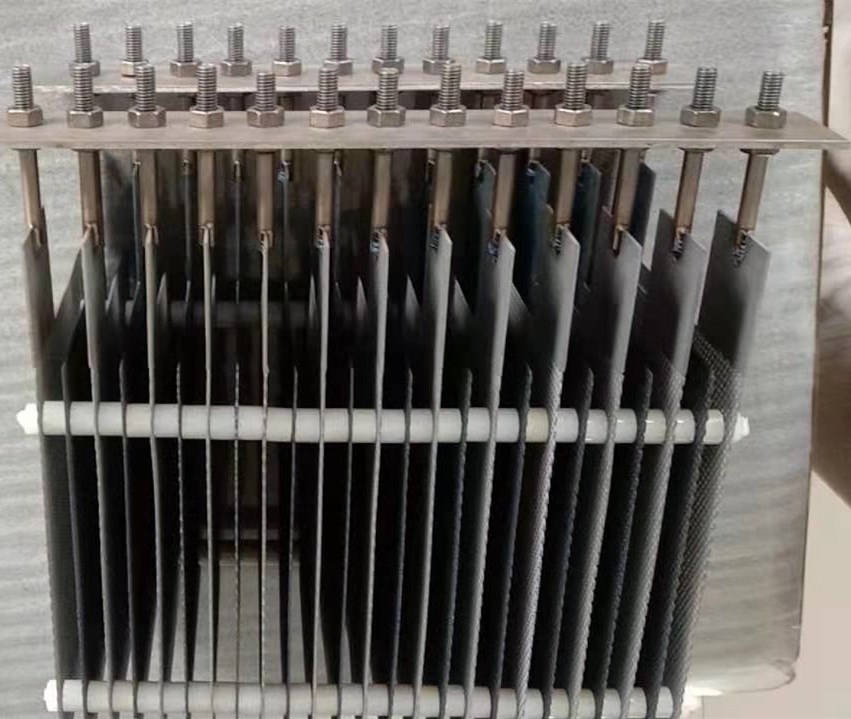
NaClOWater-treatment chlorine generation
Cell drawingRequired before quotation
Active areaDefined by capacity target
InspectionAssembly and document scope by PO
Acceptance is by the ordered specification. Values and coating notes are RFQ references only. Final chemistry, coating, dimensional inspection and documentation are confirmed by the purchase specification and mill or coating records.
Chlorine Generator for Water Treatment Systems
A chlorine generator for water treatment uses an electrochemical cell to generate active chlorine or sodium hypochlorite from chloride-containing solution. Titanium is commonly used in the anode structure because the cell environment requires corrosion-resistant conductive components. The exact equipment design depends on water chemistry, salinity, flow rate, capacity target, power supply and maintenance plan.
Beiyu quotes chlorine generator and titanium anode cell components according to the buyer's drawing, process requirement and material specification. This product should be treated as an equipment or component RFQ, not a generic off-the-shelf item.
Grade and Standards
Chlorine generator cells commonly use Grade 1 or Grade 2 titanium substrates with MMO coating requirements defined by the equipment design. The RFQ should state whether the order covers a complete cell, anode group, replacement anode, cathode part or drawing-based titanium assembly.
Size, Tolerance and Surface
Confirm cell size by drawing, including electrode length, width, thickness, spacing, active area, terminal layout, gasket interface and connection method. Coated surfaces, uncoated contact areas and sealing faces should be identified before quotation.
Product Scope
- Titanium anode cell components for sodium hypochlorite generation.
- Water-treatment chlorine generator parts based on buyer drawings.
- Electrochemical assemblies where titanium substrate, coating requirement and connection design are specified.
- Replacement components for existing water treatment equipment when drawings or samples are available.
Technical Information Needed
For quotation, provide the water treatment application, flow rate, target chlorine output if known, electrolyte concentration, operating temperature, cell drawing, anode dimensions, cathode material, connection method and power supply parameters. If the buyer already has a coating specification for the titanium anode, include coating type and expected working media in the RFQ.
Applications
Chlorine generators may be used in drinking-water treatment, swimming pool systems, industrial circulating water, wastewater disinfection, aquaculture, seawater disinfection and sodium hypochlorite generation units. The design and material selection should follow the buyer's water chemistry and engineering requirement.
Inspection and Documentation
Buyers may request dimensional inspection, material certificate for titanium substrate, coating specification record, electrical connection check, visual inspection and packing list. Performance testing requirements should be agreed before production if the buyer needs cell output verification or factory testing.
Packaging and Export Information
Titanium anode assemblies and electrochemical cell parts should be packed to protect coating surfaces, threaded connections and cable terminals. Individual separation, soft wrapping, wooden case packing and clear labels are recommended for export shipments.
FAQ
What information is needed to quote a chlorine generator?
Send application, target output, flow rate, water chemistry, cell drawing, anode size, coating requirement, connection design and inspection requirements.
Can replacement titanium anodes be quoted?
Yes, when drawings, samples, photos or existing equipment specifications are available for technical review.
Is the anode coating important?
Yes. The coating should match working media, current density and service requirement. Buyers should provide the required coating specification when available.
Engineering Review Before Quotation
A chlorine generator project should be reviewed from both material and process sides. If the buyer only sends a product name, the quotation may miss key details such as electrode spacing, anode coating, working current, water salinity, operating cycle and cleaning method. For replacement parts, photos and dimensions of the existing cell can help identify connection design and packing needs.
If the equipment will be exported as components rather than a complete system, specify which items are included: titanium anode, cathode, cell body, gaskets, fasteners, cables or power supply. Separate packing lists and labels reduce confusion during installation.
RFQ checklist: application, target chlorine output, water chemistry, anode drawing, coating requirement, cell dimensions, connection method, quantity, inspection request, packing requirement and destination country.
Common Applications
Water treatment systems
Disinfection equipment
Sodium hypochlorite generation
Electrochemical cell replacement parts
Compare titanium equipment products
Titanium anode category| Product | Material | Reference | Best for | Link |
|---|---|---|---|---|
| Chlorine Generator for Water Treatment | Titanium anode cell | Cell drawing | Water-treatment chlorine generation systems | Current page |
| Sodium Hypochlorite Anode Group | MMO titanium assembly | Cell drawing | NaClO generator replacement groups | View |
| MMO Coated Titanium Anodes | Grade 1 / Grade 2 substrate | Coating specification | General MMO anode requirements | View |
| Ru-Ir Titanium Anodes | Ru-Ir MMO coating | Drawing specification | Chlorine evolution applications | View |
| Titanium Electrodes | MMO / Pt coating | Drawing specification | Custom electrode assemblies | View |
Related titanium products
Chemical equipment category
Specification detail with sources
An electrolytic chlorine unit is specified from its electrodes outward, and the electrode side is where Beiyu Titanium publishes concrete detail. The Beiyu Titanium supply ranges sort titanium anodes by coating series rather than by shape: ruthenium coatings are classified for chlorine evolution and carried as anodes for sodium hypochlorite electrolysis and chlor alkali service, iridium coatings are classified for oxygen evolution, and platinum is carried as a paint plating series. The titanium substrate is common to all three, so naming titanium does not narrow the selection.
The cell body and pipework draw on the mill rows instead. Plate runs 3 mm to 70 mm thick in widths to 2500 mm, seamless tube runs outside diameter 5 mm to 325 mm with wall 0.5 mm to 12 mm, and pipe fittings run DN15 to DN1200 in elbows, reducers, tees, stub ends and caps. Three fields decide the coating, and they decide it before any dimension is settled: the brine or electrolyte composition and concentration, the required chlorine or hypochlorite output, and the current density the cell is to run at. The electrode form is a fourth field the enquiry needs, but it sets the substrate geometry rather than the coating.
For a view of who else publishes this material and what each one states, see On-Site Sodium Hypochlorite Generator Manufacturers: Five Sources Compared.
Request a quote for Chlorine Generator for Water Treatment | Titanium Anode Cell
Send drawing, grade or coating requirement, dimensions, operating data, quantity and certificate needs. Beiyu replies with quotation, lead time and documentation scope.